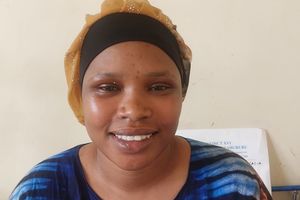
Ascar Eunia founded Breesl Ventures Limited

In the critical moments between a medical crisis and hospital care, every second counts.
For many in Kenya, this window of opportunity is often lost to inefficient emergency services, unreliable transport, and, ultimately, preventable deaths.
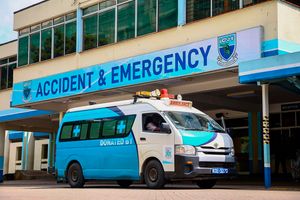
Ascar Eunia, noting gaps in the healthcare system, founded Breesl Ventures Limited in 2021, an ambulance service provider offering emergency response services to individuals and corporates.
“Many people in Kenya lose their lives simply because they are not taken to the hospital on time,” said Eunia in an interview with Powering SMEs, adding that the company entered the sector intending to ensure emergency response teams arrive within 10 minutes of being called.
Targeting the 10-minute window
In a sector where response times are often slow, particularly in rural areas, such a benchmark would represent a significant improvement in emergency care delivery. Breesl places strong emphasis on the quality of care provided during transit, where critical interventions often determine patient outcomes before arrival at the hospital.
“To achieve this, we conduct rigorous training and upskilling for our team of emergency medical technicians (EMTs) every three months,” she explains, noting that the sessions are designed to ensure consistency in response protocols and adherence to clinical standards during emergencies.

The enterprise aims to overcome poor rural infrastructure and cultural scepticism by training EMTs every three months.
About five years since its launch, starting with a single ambulance, the company has grown into a four-vehicle fleet currently serving Nairobi, Kakamega and Siaya. It is a high-cost business, where a fully equipped and branded ambulance requires an investment of about Sh5 to Sh6 million.
Eunia highlights a staggering systemic deficit. While WHO recommends 20 to 30 ambulances for every 1,000 patients, Kenya operates with a fragmented fleet of only 1,000 to 1,200 vehicles—many of which are not fully operational.
For a population of 55 million, she estimates the country actually needs over six million more ambulances to truly safeguard its citizens.
“It is a crisis, and unfortunately, nobody is talking about it,” she says, pointing to what she describes as persistent weaknesses in emergency response systems, including limited coverage, slow response times and uneven access to pre-hospital care.
“If you look at emergency response times, particularly in rural parts of the country, the ratings are quite poor,” she says, adding that delays in reaching patients remain a major challenge outside major towns. Poor infrastructure, particularly road conditions and limited access routes, often makes it difficult for ambulances to reach patients quickly or navigate remote locations.
She also points to cultural scepticism in certain communities, where awareness of formal emergency services remains limited. This can affect how quickly families seek medical assistance or engage with ambulance services during emergencies, ultimately influencing response outcomes on the ground.
“People in the village really need these services, but most of the ambulances are not willing to operate in such areas because of poor infrastructure,” she explains, adding that most residents in rural areas would rather go to traditional doctors than call an ambulance when in need.
To counter these challenges, the business has expanded its role beyond emergency transport into community-level engagement and awareness. “We carry out sensitisation sessions aimed at improving understanding of emergency response, while also offering basic first aid training to equip residents with skills to stabilise patients before professional help arrives,” she says.
It has also established a network of community responders who provide immediate assistance at the scene while ambulances are en route, helping to bridge the gap created by distance and response delays.
The company has further developed a financing approach that takes into account the realities of rural incomes.
Community-led financing
Recognising that many households cannot afford one-off emergency payments, it works with organised groups such as chamas, church groups and boda boda associations to create more accessible payment arrangements for emergency services.
Under this arrangement, members contribute a small collective monthly fee, which gives them access to emergency response services whenever needed, reducing the burden of having to raise large sums at the point of crisis.
Read: How Makueni County drove postpartum-haemorrhage deaths to zero — and what still stands in the way
Building a capital-intensive business in a sector shaped by systemic challenges has not been easy. The operating environment is affected by periodic doctor strikes that strain referrals and hospital admissions, flooding that disrupts transport routes in some regions, and broader logistical bottlenecks linked to infrastructure limitations, particularly road networks that slow down emergency movement.
Despite these constraints, she says the work continues to be guided by its impact on patients and families who might otherwise struggle to access timely care, noting that each successful response reinforces the importance of reducing delays in emergencies.
Breesl plans to expand its fleet into more underserved regions, expansion that is expected to extend emergency response coverage to areas where access to timely medical care remains limited, particularly in cases involving maternal and child health emergencies.
The company is also seeking to strengthen partnerships with healthcare providers to improve coordination between emergency response teams and medical facilities.
This, Eunia says, is intended to ensure patients receive timely and appropriate care once they are transported from the scene, especially in regions where referral systems remain constrained.
Follow our WhatsApp channel for breaking news updates and more stories like this.