When you drive through Juja, just off the Thika Superhighway, there’s a section where the land dips suddenly into quarries — one of the many abandoned cavities left behind by years of stone mining.
At the edge of one such hollow, you meet an unusual but much-needed repurposing of waste land: a network of chimneys, treatment tanks, and scrubber systems humming with activity. It’s a waste treatment plant — and perhaps the unlikely posterchild of Kenya’s evolving approach to hazardous waste management.
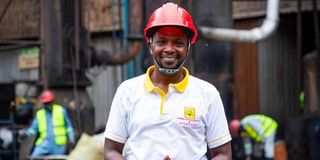
The man behind it, Charles Kangere, still remembers when this same land was a menace. “Abandoned quarries in Juja used to be havens for thugs and even hyenas,” he says, “We asked ourselves, why not turn a wasted land into a place that gives waste new value?”
That question sowed the seed for Tranbiz Hazardous and Recycling Waste Solutions, the company he founded in 2009. They began with a single truck and a small rented space in Nairobi’s industrial area. They have, as Charles offers, grown into one of Kenya’s most innovative waste management enterprises — serving more than 800 hospitals and 400 industries across the country.
Charles was not always in the waste business. An engineer by training, he spent years servicing boilers and incinerators for hospitals and factories. “I was employed but had a side hustle,” he recalls. “I’d be called to fix incinerators or even build them from scratch.”
Those visits opened his eyes to a costly problem. Hospitals were struggling to manage medical waste, which wasn’t their core business. “It was becoming expensive for them,” he says. “So, I thought — what if we collected all that waste, brought it to one place, and disposed of it properly? It would be cheaper and safer.”
Waste transfer process at Tranbiz Hazardous and Recycling Waste Solutions Juja facility, August 15, 2025.
Photo credit: Pool
That idea — to centralise waste management as a service — inspired the idea of Tranbiz. At first, Charles handled everything himself: collecting, transporting, and burning waste using a small incinerator. His first clients were hospitals whose incinerators he had once repaired. When they realised outsourcing was more cost-effective, the business began to grow. The poetic way to say it is that he built his business from ashes, as 15 years later, Tranbiz has transformed from a one-man operation into a complex facility with over 100 employees. At the Juja rehabilitated quarry, waste is received, sorted, treated, and recycled. Every day, trucks marked “Medical Waste Only” roll in from hospitals across the country, their contents destined for the facility’s high-capacity incinerators. But incineration, Charles explains, is only part of the story. “When we started getting large volumes of industrial waste, we realised there’s a huge carbon footprint in burning everything. Especially plastics. It didn’t make sense to incinerate all of it.”
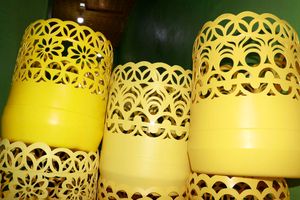
So, Tranbiz relooked at their operations. Instead of destroying everything, they began segregating and processing industrial waste. Paper and cartons are separated for recycling. Plastics are sorted by type, shredded, and pelletised into raw material sold to local manufacturers. “We discovered there’s value in waste; nothing should really go to waste.”
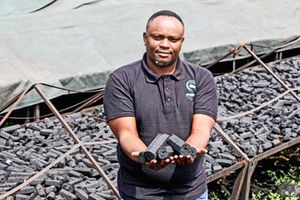
The company even experiments with repurposing incineration ash, mixing it with cement to make paving blocks. Though not yet a commercial line, the innovation points to their commitment to adding value at every stage.
A walk through the facility reveals an intricate system of pipes, tanks, and filters. Medical waste is treated through high-temperature incineration, reaching 1,200 degrees Celsius. “Our incinerators have two chambers — the primary burns the waste, and the secondary burns the smoke and particles, then the gases pass through a five-stage scrubbing system that filters emissions before release.”
The scrubbers are part of a continuous improvement effort. Every six months, the company undergoes environmental audits to ensure emissions meet safety standards. “Whatever comes in here does not come out the same way,” he adds. “If it comes out, it’s as a different product — clean air, ash, or recycled material.”
For sensitive waste such as medical records or pharmaceutical rejects, Tranbiz has an airtight chain of custody system. “Some of this waste is very personal; clients accompany us from collection to destruction. We have CCTV surveillance, 24-hour guards, and non-disclosure agreements. Once waste enters, it never leaves in its original form.”
Tranbiz Hazardous and Recycling Waste Solutions Juja facility, August 15, 2025.
Photo credit: Pool
Most of the equipment in the yard — from shredders to incinerators — have no foreign manufacturer’s label. That’s because Charles and his team fabricate them locally, further paying homage to his enduring legacy of innovation and local talent utilisation. “The machines you see here, we built them ourselves,” he says proudly, pointing to a freshly painted blue incinerator awaiting commissioning.
Local fabrication, he explains, cuts costs and fosters innovation, though materials remain expensive. “A refractory brick costs over Sh300, and we use more than 10,000. If we could get local manufacturers producing these materials, or import concessions for what we can’t make, we’d go even further.”
His engineering background has helped him improvise. “We don’t just burn waste. We design systems that recover value, reduce emissions, and fit our context,” he says. It’s a rare combination of technical know-how and entrepreneurial instinct — one that’s made Tranbiz stand out in an industry still finding its footing. Its impact is felt beyond the gates of their Juja plant. “All our 100 workers are from the local community,” Charles says. The company also buys recyclable waste from locals, creating a small circular economy where collectors can earn by supplying usable material.
Partnerships have been equally critical. Tranbiz’s partnership with Kenya Climate Innovation Centre (KCIC) has offered the growing green economy enterprise a much-needed hand.
“KCIC helped us invest in recycling. Through their grant, we’re now setting up production for fencing posts and dam liners made from recycled plastic.”
They have also provided training, exposure, and capacity building — crucial support in a capital-intensive sector where commercial loans carry prohibitive interest rates. The business also collaborates with KePro and HaPro, producer responsibility organisations that help link recyclers to manufacturers. “We’re all working toward the same goal — to reduce the amount of waste that ends up in dumpsites,” he says.
Despite steady growth, they have faced challenges. The biggest is limited infrastructure for hazardous waste disposal across Kenya. “We don’t have enough facilities with proper capacity,” he explains. “Handling hazardous material requires training, regular medical checks, and specialised safety gear. All that is expensive — and at the end of the day, the client has to pay for it.”
The demand for waste solutions keeps rising. In Nairobi alone, he notes, 24,000 metric tons of industrial waste are produced annually. “If we are doing about 25 percent of that, and there are only three or four companies like ours, it means there’s a massive opportunity,” he says.
That opportunity has already taken Tranbiz beyond Kenya’s borders. “We’ve expanded into Uganda,” he says. “Our Kenyan clients moved there and wanted the same service standards, so we followed them. Next, we want to move into Rwanda and Tanzania.”
What is the ultimate goal, you ask? Charles, doesn’t hesitate. “Our vision is that everything gets recycled. No waste should end up in the wrong place,” he says. “Imagine if all the plastic we recover from rivers and landfills could become valuable again. Those collecting it could earn a living — and we’d have a cleaner world.”
That vision may sound ambitious, but he points to signs of progress. “Have you noticed how hard it’s becoming to find discarded PET bottles these days? It’s because they’re being collected and brought to places like this for reuse. That’s the power of recycling.”
In reclaiming waste and wasted land, Charles Kangere has done more than build a business; he’s reshaped how Kenya thinks about what it throws away. “Waste is not the end of something,” he says as he watches a truck unload another day’s collection. “It’s the beginning of something new.”