When David Mwangi set out to restructure his family’s daily meals, his main objective was to secure a sustainable, lean, and nutrient-dense source of protein.
In markets where beef, goat, and chicken have long dominated dinner plates, high-quality white meat often commands a premium price or faces volatile supply chains. However, where others saw an entrenched dietary routine, Mwangi recognised a pronounced agricultural gap, characterised by untapped demand for accessible protein, underutilised micro-farming spaces, and a lack of structured technical knowledge across the micro-livestock value chain.
That realisation laid the groundwork for Rabbit Crew Kenya, a commercial rabbit farming enterprise he founded in Kiserian Town, Kajiado County. The venture serves as a practical showcase for commercial rabbit production, farmer training, equipment manufacturing, and market development.
“I started with Sh9,750 and bought 13 rabbits for my backyard setup to meet our household needs, but I quickly encountered the harsh realities of livestock husbandry, including unverified breeding stock, unexplained kit mortalities and inconsistent feeding formulas,” he says.
Instead of stepping back, he used these initial failures to study the nuances of the rabbit value chain. He systematically expanded his stock, selecting breeds known for rapid growth rates, high dressing percentages, and strong mothering instincts.
His facility currently has a capacity of 1,000 rabbits. The farm breeds top-performing commercial lines, notably the New Zealand White and California White. Prized for their high meat-to-bone ratio, rapid growth cycles, and light bone structure, these breeds serve as the primary choice for commercial meat production.
He also strategically uses other popular Kenyan hybrids for purebred and crossbreeding to introduce body size, hardiness, and genetic vigour into meat-producing lines.
The farm sells commercial breeding stock to emerging farmers at prices ranging from Sh750 to Sh3,500 per mature hybrid doe or buck, depending on lineage, weight, and age.
"Our core product offering is rabbit meat, though we also sell breeding stock to farmers starting their own rabbitries. Besides this, we build specialised rabbit hutches fitted for proper ventilation and waste management," he explains.
He adds that they also train farmers and supply accessories such as feeders, drinkers, hay racks, and nest boxes, essentially covering everything in the rabbit value chain.
For Mwangi, rabbit production responds directly to rising food insecurity and nutrition gaps in Kenya, as the meat is rich in essential amino acids, high in protein at 20 to 21 per cent by weight, low in cholesterol, and packed with critical micronutrients like iron.
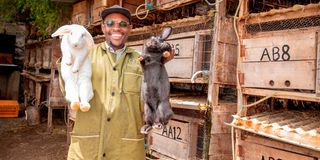
David Mwangi is the founder of Rabbit Crew Kenya, acommercial rabbit farming enterprise based in Kiserian, Kajiado County.
Photo credit: Pool
At the farm's abattoir unit, dressed carcasses sell whole or sliced at Sh900 per kilogramme, while value-added boneless fillet fetches Sh1,625 per kilogramme. The venture taps into sustainable agriculture by commercialising waste products. The manure serves as an organic soil conditioner packed with nitrogen, phosphorus, and potassium, which growers can apply directly to crops without risking root burn.
The farm packages dry cured manure at Sh300 per 50-kilogram bag while rabbit urine, which functions as a potent organic pesticide and liquid fertiliser, is collected through sloped hutch drainage systems and sold at Sh100 per litre.
"We call ourselves partners in food security in Kenya. We support households seeking alternative sources of white meat, while aiding farmers looking for organic soil enrichment through rabbit urine and manure," he explains.
"It creates a complete circular economy, with direct food production on one end and soil nutrition for organic kitchen gardens on the other," he says.
Running a commercial rabbitry comes with distinct operational hurdles. In the early years, kit mortality caused by gastrointestinal complications, respiratory infections, and poor hutch hygiene threatened to stall operations. To solve this, Mwangi overhauled his housing designs and feeding protocols. He introduced raised, self-cleaning wire mesh hutches that isolate waste from the animals, eliminating dampness and reducing coccidiosis risks.
"We build indoor and outdoor rabbit hutches at Sh600 per unit when the farmer provides materials," he explains, adding that prospective breeders should expect to spend approximately Sh4,700 per fully furnished unit for accessories, construction materials, and labour combined. For commercial breeding setups, he recommends constructing three hutches for every breeding doe. This ratio ensures one hutch houses the mother while the additional two accommodate the male and female kits separately as they mature.
Another major challenge facing the sector is consumer awareness. Unlike beef or chicken, rabbit meat is not yet fully mainstream in Kenyan households.
"The biggest obstacle in producing rabbits comes down to operational management-mitigating mortalities through strict feeding intervals, exact rations, high-quality hay, and controlled breeding selections,” he says.
The second hurdle is consumer perception and marketing. He notes that rabbit meat is not yet a staple in mainstream culinary culture here, and a significant part of their daily work involves educating consumers and building reliable market linkages to remain sustainable.
To bridge this gap, Mwangi works closely with animal feed manufacturers, commercial timber merchants, specialised hay growers, and hospitality venues ranging from boutique hotels to direct home consumers. The operational economics of rabbit farming rest heavily on feed conversion efficiency, a metric where these animals outperform many traditional livestock.
A rabbit, he says, can convert from 25 up to 33 per cent of the feed it consumes into body weight, compared to roughly 18 to 20 per cent for cattle. This biological efficiency makes the enterprise particularly attractive for smallholder farmers operating on limited parcels of land in peri-urban zones, where expansive pastures are unfeasible.
He emphasises that precision feeding, combining commercial pellets with high fibre Rhodes grass or alfalfa, prevents common digestive ailments such as enteritis, which has historically plagued novice breeders.
Rabbit Crew Kenya employs two full-time staff and engages seven others on a contract basis. Mwangi says integrating local craftspeople and technicians into the business has helped build a micro-economy around the enterprise, creating additional employment opportunities in Kenya.
“We have contracted local carpenters to make standardised wire-mesh hutches for our out-grower farms, creating jobs while ensuring consistency in the equipment used by farmers,” he says.
He adds that building a collaborative agribusiness network, rather than viewing other producers as competitors, has helped stabilise input costs and streamline distribution channels for dressed meat delivered to urban markets.
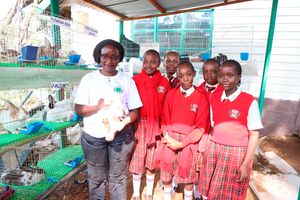
Recognising that many agricultural ventures flounder due to a deficit of technical expertise, Rabbit Crew Kenya has made capacity building a central pillar of its operations, training more than 3,000 farmers nationwide. The farm hosts individual and group on-demand practical masterclasses at Sh2,500 per participant. These sessions cover the complete production cycle, from breeding and record-keeping, housing structure, to disease prevention and management, hygienic slaughter, packaging, and direct-to-consumer marketing.
Addressing veterinary health remains a fundamental pillar of the farm's daily protocols. Unlike poultry, which often requires heavy prophylactic antibiotic regimens, he says rabbits thrive in clean, well-ventilated environments where biosecurity takes precedence over pharmaceutical intervention.
“Regular disinfection of watering systems, rigorous quarantine protocols for incoming breeding stock, and strict adherence to sanitation schedules have allowed us to maintain exceptionally low mortality rates across its breeding herd,” he says.
According to Mwangi, this emphasis on animal welfare safeguards profitability while ensuring that the final meat product meets the highest standards of food safety and quality assurance. He frequently uses digital platforms to demystify rabbit husbandry, debunk myths surrounding meat consumption, and share management tips with nationwide aspiring agripreneurs.
Bridging the gap between traditional small-scale practices and modern commercial standards, the enterprise continues to inspire youth and women in agriculture to view rabbit production as a respectable, viable business capable of generating steady, year-round revenue.
"If you want to keep rabbits commercially, your very first step must be training. You need grounded information on what is happening in your local market context, what to feed, how to house them, and where to sell. Above all, avoid the get-rich-quick mentality," he says.
He adds that rabbit farming is an agribusiness like any other, requiring capital, structure, and patience.
“One should avoid assuming it is simple just because the animals are small and instead seek proper guidance from someone with hands-on experience,” he concludes.