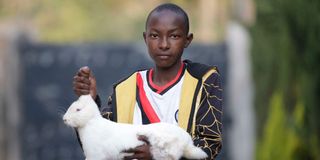
Three years ago, when Francis Karanja was in Grade Five, he became interested in rearing rabbits. He asked his mother to buy him some to help improve his performance in the Agriculture class at school.
His mother, Ms Rachel Chebet, appreciated her son’s decision, but promised to buy the animals at a later date, as their living space was not suitable for keeping rabbits or poultry.
In 2025, Ms Chebet bought iron sheets, timber, wire mesh and nails, and built a rabbit coop at a cost of Sh10,000. She also used some of the money to buy four medium-sized rabbits — two males and two females — at Sh500 each. The Grade 8 student at Michinda Mixed Comprehensive School in Elburgon, Nakuru County, says he was relieved when his mother fulfilled her promise.
“Since the rabbits arrived during a school break, I had the chance to find food for them, which made me happy when I saw them eating in some of the nine spacious cubicles,” Karanja recalls, adding that, after three months, one of the does gave birth to seven kits, and the other to five.
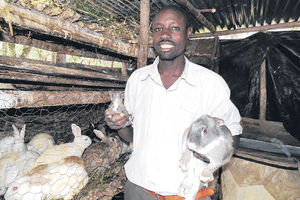
Francis Karanja feeds one of his rabbits on July 16, 2026. He sells mature rabbits at between Sh 500 and Sh 700 depending on the size.
Photo credit: John Njoroge | Nation Media Group
Read: Small animals with five yields, big cash
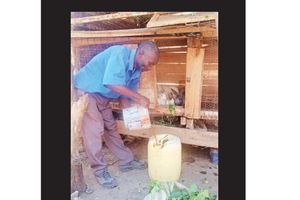
Francis Karanja, a Grade Eight learner at Michinda Day and Boarding Comprehensive School in Elburgon, Nakuru County together with his mother, Ms Rachel Chebet harvest urine on July 16, 2026. A litre of urine retails at Sh70 at the local market.
Photo credit: John Njoroge | Nation Media Group
He uses the money from these sales to buy pellets to complement the feed, as well as geometrical sets, pens, and other learning materials.
He adds that, with his mother's support, he has been able to keep records of his rabbits, especially when they give birth, and do a daily count every evening after school. Karanja believes that this will help him to become more responsible and make it easier to manage his business in the future. Through CBE, Karanja says he has learnt more about feeding the rabbits and harvesting their urine, which he collects and stores properly every day after school.
To balance his schoolwork with his rabbit project, Karanja uses a personal timetable to help him manage his time effectively. He currently has over 100 rabbits, and his target is to have more than 600 by December this year.
“I plan to rear rabbits on a large scale to harvest enough urine and manure to meet customer demand during the planting season. Demand has increased in recent months because urine and manure are more effective at killing pests, especially in potato and vegetable farming, and for other crops,” he said. He added that when he moves up to senior school, he will support his parents by paying his own fees with the money he has made from sales and savings.
New Content Item (1)
Photo credit: John Njoroge | Nation Media Group
She added that she rarely buys him things or gives him pocket money because the project provides for him and has been successful since its inception.