Halving the rate of Value Added Tax (VAT) on fuel will deliver a revenue loss of about Sh12.9 billion in the next three months, but the Treasury has built a buffer of up to Sh588 billion in its finances from the sale of public assets and external borrowing to cover the shortfall.
These funds are from the proceeds of the sale of stakes in Kenya Pipeline Company (KPC) and Safaricom , and a Eurobond that was issued in February.
The government also retains the option of drawing down a tranche of up to $1 billion (Sh129 billion) from a $1.5 billion (Sh193.8 billion) United Arab Emirates (UAE)-backed commercial loan, which was negotiated in 2024 at an annual interest rate of 8.25 percent.
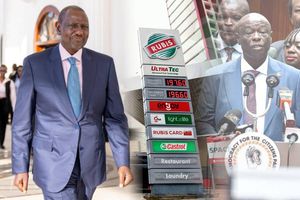
On Friday, Central Bank of Kenya (CBK) Governor Kamau Thugge said that Kenya is hopeful of securing additional funding from the World Bank before the end of June, under the institution’s rapid response financing scheme to cushion the economy from the shocks related to the Iran war.
Central Bank of Kenya Governor Kamau Thugge.
Photo credit: File | Nation Media Group
Although the governor did not specify the amount expected from the World Bank, he said it would be close in size to the $750 million (Sh97 billion) that was already factored into the current budget under the Development Policy Operation (DPO) framework—which is yet to be disbursed.
The cash pile has helped close the budget deficit for the current fiscal year and created crucial headroom in covering emerging shocks such as the war in Iran.
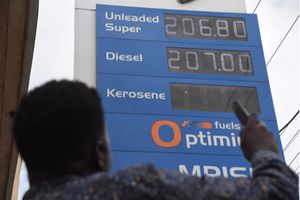
On Wednesday, the Treasury announced emergency measures to cut VAT on fuel from 16 per cent to eight per cent for the next three months in response to a public outcry following the sharp jump in pump prices in the latest review.
In March, the Kenya Revenue Authority (KRA) collected Sh8.59 billion in VAT from petroleum products, meaning that the tax move could see the State ceding about Sh4.3 billion monthly or Sh12.9 billion over the next three months.
In total, Kenya collects Sh328 billion annually in VAT, with fuel products accounting for about a third of the revenue, or Sh100 billion. Ordinarily, given the country’s persistent failures to meet its tax revenue collections, even a monthly shortfall of about Sh4 billion from fuel VAT would be a cause for concern.
However, the alternative revenue from debt and asset sales will prove crucial in closing a wider budget gap in case revenue falls further behind target as a result of the Middle East war.
“The government has been very clever and opportunistic at times in acting fast to get additional financing. They have made several issuances recently that have allowed them to push out the maturity profile of Eurobond debt, and additional finance is available to them from the World Bank,” said David Cowan, Africa Economist at global lender Citi.
“They also still haven’t drawn down $1 billion from the $1.5 billion UAE-backed loan…If things turned against them, the money is there.”
The State concluded the Sh106 billion sale of a 65 per cent stake in Kenya Pipeline Company through an initial public offering in March, and is about to close the sale of a 15 per cent share in Safaricom to South Africa’s Vodacom Group in a deal worth Sh244.5 billion.
Kenya also issued two Eurobonds of Sh290.7 billion ($2.25 billion) in February, utilising Sh53.6 billion to refinance existing papers, with the balance of Sh236.7 billion going towards budgetary support.
The expectation now is that the cash pile will be used to cushion the exchequer from the emerging global shocks, giving the Treasury room to cut some taxes, such as the fuel VAT, without being boxed into a corner.
Even without the VAT cut, the State would still risk a fall in collections due to reduced consumption of fuel on account of the higher pump prices, given that this is a consumption tax whose collections are dependent on uptake of a product.
The cost of fuel, especially diesel, is also a major factor in determining the prices of other goods and services in the economy.
The prices charged on final consumers take into account the transport costs at all levels of production and movement of goods. For agriculture or food products, these include the ploughing costs incurred by farmers and the cost of transporting produce from farms to the market.
Food and fuel are the largest items on the inflation basket at about 32.9 percent and 14.6 percent respectively, making them the key drivers of inflation in the country.
VAT is also just one of several levies and taxes charged on motorists at the pump, on top of product costs.
In a litre of petrol that is now priced at Sh197.60 in Nairobi, a consumer pays Sh14.64 per litre in VAT at the new revised rate of eight percent, Sh21.95 in excise duty, Sh25 in road maintenance levy (RML) and Sh5.40 towards the petroleum development levy (PDL).
For diesel, the price per litre of Sh196.63 includes VAT of Sh14.57, excise duty of Sh11.37, RML of Sh25 and PDL of Sh5.40.
Other charges on the fuels ranging between Sh0.03 and Sh3.22 per litre include railway development levy, petroleum regulatory levy, merchant shipping levy and import declaration fees.
Consumers also pay oil marketing companies’ margins of Sh17.39 and Sh17.31 per litre of petrol and diesel, respectively.