President William Ruto is walking a tight rope as the US-Iran conflict starts to pile pressure on Kenyans, with the State keen on the upshot of the global economic crisis.
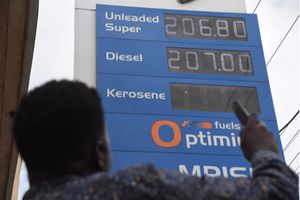
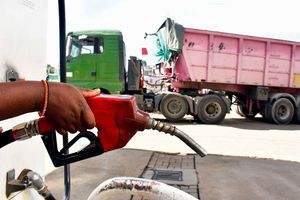
Global fuel prices had their first impact locally when fuel prices skyrocketed on Tuesday, triggering an immediate rise in the cost of living at a time reputable institutions like the World Bank have lowered economic growth forecasts.
The Energy and Petroleum Regulatory Authority (Epra) had set petrol and diesel prices at Sh206 a litre on April 15 but has since lowered them to Sh197, an amount still high enough to drive up food and commodity prices.
With oil prices high across the world, Kenyans will be hit from within the economy where commodity and service prices have started rising, and from outside due to a heavy reliance on imports.
Economists have also warned that the disruption of fertiliser supply, since Kenya sources about a quarter of the agricultural input from the Gulf region, could trigger a spike in food prices as production is projected to fall.
Following assessments on overall impacts the conflict will have on Kenya’s economy, at least three institutions have lowered Kenya’s Gross Domestic Product (GDP) growth projections, preparing the country for a bleak future ahead.
The World Bank last week cut Kenya’s 2026 economic growth projection from 4.9 per cent to 4.4 per cent, citing external pressures brought by the Middle East conflict, in its April economic update that reviewed Sub-Saharan African countries.
“Sub-Saharan Africa’s economic recovery is losing momentum, with 2026 growth projections revised downwards to 4.1 per cent, weighed down by geopolitical spillovers, high debt-service burdens, and structural weaknesses limiting job creation,” the multilateral lender said.
The economic assessment warned the conflict could drive up energy prices and disrupt trade flows, fueling inflation on the whole.
A vessel at the Strait of Hormuz, off the coast of Oman’s Musandam province, April 12, 2026.
Photo credit: REUTERS/File Photo
The World Bank’s projection came just a week after Global rating agency firm, Fitch, also cut its economic growth projections for Kenya from 5.2 per cent to 5 per cent, projecting a surge in inflation fueled by the Middle East conflict.
“Kenya stands out as one of the Sub-Saharan Africa economies most exposed to the Middle East conflict, prompting us to revise down 2026 real GDP growth to 5 per cent, from 5.2 per cent pre-conflict,” Fitch said in an April 1 forecast.
Among areas Kenya is projected to be hit is in the importation of fuel since much of the consumption comes from the Gulf States of Saudi Arabia, UAE and Oman, and the importation of fertiliser since about a quarter comes from the region.
A disruption in fertiliser supply could reduce agricultural production and raise food prices, while high fuel prices will affect the entire economy due to the product’s reliance across sectors, the World Bank has warned.
In separate projections, the World Bank and the Central Bank of Kenya (CBK) also expect diaspora remittances to fall by Sh40 billion to Sh50 billion this year, due to the conflict’s impact on Kenyan workers in the Gulf region.
The CBK last week projected that this year’s diaspora remittances would fall by about Sh41 billion ($313 million) on expectations of lower inflows from the Gulf, where about 10 per cent of remittances to Kenya come from.
It said it expects about Sh659 billion remittances to come in this year, down from a projection of Sh700 billion at the start of the year.
“We expect a slight deceleration because of the direct impact (of the conflict) on the remittances from the Gulf area where about 10 per cent of our inflows come from. But there are also potentially indirect effects arising from the possible economic growth slowdown in other countries, for example the US,” the CBK said.
This followed an economic update by the World Bank last week also projecting risks in remittance flows for countries such as Kenya “which could face monthly losses of up to $40 million (Sh5.2 billion).”
A fall in remittances will lower economic activities in the country, since majority of Kenyans working abroad send cash back home to support economic activities such as payment of school fees and projects such as construction.
The global rating agency, Fitch, also raised its annual inflation forecast for Kenya from 4.6 per cent to 5.5 per cent, an indication that tougher times await Kenyans for the remained of the year, due to impacts caused by the Middle East conflict.
“Higher cost of living would prompt a sharp rise in public dissatisfaction. Uptick in protests is likely if fuel prices rise,” the rating agency also warned.
The government has been particularly worried over a possible resurgence of public protests as a result of a cost-of-living crisis, and President William Ruto has rushed to implement urgent mitigatory measures, including further cutting Value Added Tax (VAT) on fuel.
When the Energy and Petroleum Regulatory Authority (Epra) first announced higher fuel prices on April 14, it said VAT would be lowered from 16 to 13 per cent.
While speaking in Kisii on Wednesday, President Ruto said the tax had been lowered further to 8 per cent and a Sh6.5 billion subsidy introduced, to cushion Kenyans from even higher prices.
The Middle East crisis threatens to deliver the most severe economic shock Kenya has faced since the Covid-19 pandemic.
Photo credit: NMG
His reaction came after opposition leaders threatened calling for public protests if he would not lower the prices.
The Kenya National Chamber of Commerce and Industry (KNCCI) on Thursday welcomed the move to cut VAT on fuel, noting that the increase in fuel prices had placed “pressure on businesses and households already facing a high cost of living.”
“Kenyan businesses cannot absorb another fuel shock of this magnitude without serious consequences for jobs, prices, and economic stability,” said KNCCI CEO Kenneth Mutai.
KNCCI stated that about Sh700 billion worth of trade is exposed due to the Middle East conflict, with most affected sectors expected to be in export of tea, horticulture, meat and coffee.
The chamber, however, terms the government’s temporary reduction of VAT on fuel as insufficient, observing that “Kenya cannot continue to manage fuel shocks through short-term measures”
The other problem Kenya faces is a possible weakening of the shilling, which has maintained stability at around 130 units to the US Dollar for more than a year.
Experts say the shilling faces the risk of losing ground should the Middle East conflict persist and continue rattling the global economy for longer, though cautioning that sufficient US Dollars in the market and under CBK reserves could still cushion the market for some time.
Import prices are, however, expected to rise as global suppliers raise them to cover for an increase in energy costs, triggering a competition for available US Dollars in the market to pay for the imports.
The rise in global energy prices is, however, expected to raise prices of commodities the country imports, putting pressure as the need for US Dollars increases in order to pay external suppliers, which could weaken the shilling.
An increase in prices of goods for import means that businesses have to seek more dollars to purchase imports.
On the export side, companies selling tea, meat, fruits and flowers to the Middle East will particularly be hit hard due to the impact the conflict has had on their economies, depleting disposable incomes of customers in the region.
enya exported goods valued Sh164.6 billion to the Middle East in 2024, with the United Arab Emirates (UAE) leading at nearly two-thirds of the exports.