Diesel consumers have been denied a Sh14 a litre cuts in the new fuel pricing cycle to September 14 after the State opted to transfer the relief to petrol and kerosene.
In the latest review that takes effect from August 15, 2026, diesel prices dropped by Sh5 to Sh217.86 per litre in Nairobi while prices of petrol and kerosene remained unchanged at Sh214.03 and Sh191.38 per litre respectively in the month ending September 14.
Had the delicate balance not been done, a litre of diesel should have dropped by Sh19.28 per litre to Sh203.58 in the capital city in line with the fall in global global, regulatory disclosures show.
The State used diesel to cross-subsidise petrol users, preventing the cost of the petrol from rising by at least Sh8.64 per litre to Sh222.67 in Nairobi.
Cross-subsidisation allows the National Treasury to share the subsidy burden with consumers of at least one of the three grades of fuel.
The cross-subsidy comes after the State nearly depleted the subsidy kitty it has used to cool costly fuel since April in response to the Iran war.
MPs earlier flagged the cross-subsidy as illegal because it is not supported by the law and disadvantages consumers of one grade of fuel.
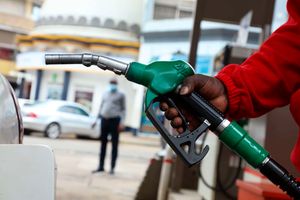
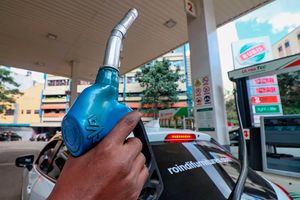
A pump attendant fuels a customer's vehicle at the Rubis Koinange Service Station in Nairobi on Tuesday, July 14, 2026.
Photo credit: Dennis Onsongo| Nation Media Group
The energy regulator opted for the cross-subsidy to ease pressure on inflation and Kenya's middle class, who use petrol to power private cars. Kenya relies heavily on diesel as a core economic driver for public transport, agriculture and backup power generation.
Fluctuations in diesel pump prices directly trigger economic-wide inflation, impacting the cost of moving goods, tilling land and running thermal power plants during grid shortfalls.
Inflation edged up to 6.5 per cent in July from 6.4 percent in June, driven by elevated transport, fuel and food costs linked to geopolitical tensions.
A rise in the landed petrol costs or price of product in global markets and shipment to the Mombasa port prompted the State to deploy the cross-subsidy to cushion petrol users at the expense of diesel consumers.
“In the period under review, the maximum allowed petroleum pump prices for diesel decreases by Sh5 per litre while the price of super petrol and kerosene remain unchanged due to additional government stabilization support measures of Sh938 million,” Joseph Oketch, the acting Director General of the Energy and Petroleum Regulatory Authority (Epra) said in the notice.
The escalating prices of fuel have led to a sharp jump in cost of living, with inflation hitting a two-year high of 6.7 percent – the highest in slightly over two years.
Photo credit: File | Nation Media Group
Landed costs of petrol rose by 6.9 per cent to $948.92 (Sh123,112.8) per cubic metre last month from $886.92 (Sh115,015.26) for similar quantity in June.
Diesel prices dropped by 13.08 per cent to $855.59 (Sh111,004.24 per cubic metre last month from $984.37 (Sh127,692.47) for the same quantity in June, setting the stage for the price drops.
The State however opted to deny diesel consumers the significant price cuts and instead use the product to cross-subsidise users of petrol.
But the model (cross-subsidisation) has been contested in the courts with petitioners arguing that it is illegal and unfair to a segment of consumers.
The State heavily subsidised pump prices between April and June this year in the wake of the US-Iran war which disrupted fuel supplies globally and led to skyrocketing prices.
The heavy deployment of the billions of shillings in the subsidy scheme nearly depleted the PDL kitty, forcing the government to turn to cross-subsidy in a bid to cushion consumers without choking the Exchequer.
The Exchequer has struggled to pay the subsidy arrears owed to oil marketers, throwing the capital-intensive industry into a cash-crunch.
PDL is raised via collections of Sh5.40 per litre of diesel and petrol and Sh0.40 for every litre of kerosene. One of the critical roles of the kitty is subsiding pump prices whenever global costs of fuel surge.