Petroleum taxes and margins enjoyed by oil marketing companies will come into sharp focus as the government races against time to lower the cost of fuel within the next seven days, in a bid to avert yet another economic shutdown.
With international oil prices well beyond the government’s control, and the fuel subsidy kitty all but exhausted, a raft of taxes applied on petroleum products will become the focal point for State negotiators seeking to appease Public Service Vehicle (PSV) operators.
The PSV owners yesterday announced they had suspended by one week a paralysing nationwide strike to give room for dialogue with the government.
Currency Index USD ($) Local Currency
Rank Priority Highest Price Lowest Price
Kenya is one of the countries with the highest taxation on fuel in the world, a situation made worse every time there is an uptick in global oil prices.
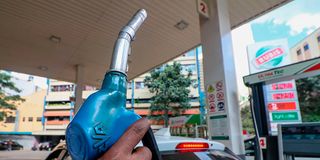
A litre of petrol is currently retailing at Sh214.25 in Nairobi while diesel is selling for a record Sh232.86, having dropped by Sh10.06 after an adjustment announced on Monday night.
The promise of further talks with public transport stakeholders puts on the table possible moves that the government could take to lower prices, with tax cuts and profit margins for oil marketers looking like the most viable options. The government also has an option of borrowing a loan to subsidise fuel prices, but this option may not be viable within seven days.
The Ruto taxes driving fuel prices high
The Treasury currently takes Sh74.05 and Sh67.83 as taxes for every litre of petrol and diesel sold in Kenya, indicating the legroom available to lower pump prices amid growing public outrage over costly fuel.
The Roads Maintenance Levy (RML) is the single-biggest tax on fuel at Sh25 per litre of petrol and diesel followed by VAT of eight percent, excise duty, Petroleum Development Levy (PDL), Railway Development Levy and the Import Declaration Fee.
The other taxes are the Merchant Shipping Levy, anti-adulteration levy of Sh18 per litre of kerosene and the Petroleum Regulatory levy.
Fuel prices on display at a Rubis Energy service station on Koinange Street in Nairobi on May 15, 2026.
Photo credit: Wilfred Nyangaresi | Nation Media Group
But the government has already locked Sh12 from the RML to secure loans for the roads sector, leaving it with a possible Sh13 to tinker with and lower prices.
The heavy taxation has worsened matters at a time when global fuel prices have skyrocketed due to the US-Israel war on Iran, putting pressure on governments to adopt measures to cushion consumers.
Interior Cabinet Minister Kipchumba Murkomen on Tuesday said the deal suspending the strike was reached following consultations with PSV operators, adding negotiations "at a higher level" would be conducted within the next week.
"We have had a breakthrough not because we are satisfied, but we want to give negotiations a chance," said Edwin Mukabane, the national chairman of the Federation of Public Transport Sector.
Interior Cabinet Secretary Kipchumba Murkomen (center) briefs the media outside Harambee House in Nairobi on May 19, 2026 after stakeholders in the transport sector called off the nationwide matatu strike.
Photo credit: Francis Nderitu | Nation Media Group
"If this is not taken seriously within the seven days, the strike will be back on," he added.
But the government has generally shied away from lowering fuel taxes to cushion consumers from steep price increases, save for the halving of VAT to eight percent on April 15 when the effect of the Iran war started hitting home.
An analysis shows that taxes account for 34.5 percent of every litre of petrol and 28 percent of a litre of diesel, from 45.4 percent and 41.3 percent respectively in March, following the halving of VAT to eight percent.
Countries such as South Africa, Zambia and Namibia are some of the African economies that have lowered taxes in order to cushion consumers against costly fuel in the wake of the Middle East conflict.
Globally, economies such as Spain, Hungary, Slovenia, and Austria have lowered fuel taxes as most net importers of refined fuel take a beating from the Middle East conflict.
On Monday, the government opted to increase the subsidy on diesel by Sh10.06 per litre, again avoiding a tax cut but helping to lower diesel prices to Sh232.86 per litre. The reduction, however, failed to end the strike as it fell short of protesters' demands.
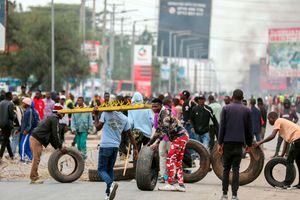
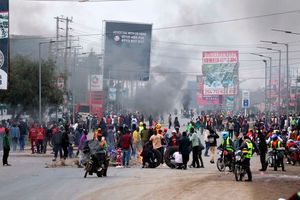
The two-day strike saw major roads in Nairobi remain empty, while businesses and schools remained closed.
Energy CS Opiyo Wandayi said that the government is committed to achieving an amicable solution to the soaring fuel prices, stating that billions of shillings have been spent on subsidies over the past two price review cycles.
Energy and Petroleum Cabinet Secretary Opiyo Wandanyi (center) speaks to the media outside Harambee House in Nairobi on May 19, 2026 after stakeholders in the transport sector called off the nationwide matatu strike.
"On subsidy alone between last month and this month, the government has applied Sh13.9 billion to manage the cost of petroleum products," he said.
Margins for oil marketers are Sh17.39 and Sh17.31 per litre of petrol and diesel. The margins refer to the compensation that oil marketers rely on to stay afloat, given that the prices of fuel in Kenya are controlled.
A near depletion of the subsidy kitty is casting into doubt the government's ability to further subsidise pump prices, leading to growing public outrage and soaring inflation.
Kenya is already hanging on to hopes of a financial bailout of Sh75 billion from the World Bank as woes from the US-Israel war on Iran deepen.
The Sh13.6 billion applied to subsidise pump prices from April 15 to June 14 has nearly depleted a kitty that had Sh17 billion at the start of April. The kitty is funded by the Petroleum Development Levy of Sh5.40 per litre of petrol and diesel and Sh0.40 per litre of kerosene.
The push to lower pump prices further is also key to keeping a lid on inflation, which rose to 5.6 percent last month, a seven-year high.
The Treasury CS John Mbadi on Monday said a cabinet meeting to pursue ways of lowering pump prices will be convened when President William Ruto returns from a trip to Azerbaijan and Kazakhstan.
The State has already decried a tax hole of an estimated Sh24 billion due to the reduction of VAT to eight percent in the two monthly cycles since April 15.