Hello

Your subscription is almost coming to an end. Don’t miss out on the great content on Nation.Africa

Ready to continue your informative journey with us?

Hello

Your premium access has ended, but the best of Nation.Africa is still within reach. Renew now to unlock exclusive stories and in-depth features.

Reclaim your full access. Click below to renew.

Abubakar Hassan
Caption for the landscape image:

Kenya woos Turkish apparel investors amid Agoa doubts

Scroll down to read the article

Investments Principal Secretary Abubakar Hassan addresses business community from Nakuru County on August 15, 2025 during the County Investment Roundtable at Sarova Woodlands Hotel.

Photo credit: Boniface Mwangi | Nation Media Group

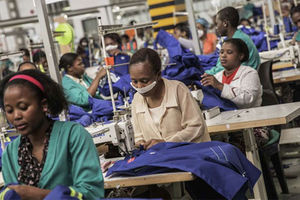
Kenya is now wooing Turkish textile and garment giants to set up base and produce in the country as it looks to diversify away from reliance on export to the US market on preferential terms under the Africa Growth Opportunity Act (Agoa) arrangement.

According to the State Department for Trade and Investments, Kenya is banking on its preferential access to the European Union market under the Economic Partnership Agreement (EPA) to table a strong case for Turkish textile and garment giants to set up shop and produce in the country.

“We want the people of Turkey to come and produce in Kenya, and one of the sectors that we are targeting is textiles. Right now, we know what is going on with Agoa and access to the US market, even though we have secured an extension,” Investments Principal Secretary, Abubakar Hassan, said on the sidelines of the fifth edition of the Turkiye-Africa Business and Economic Forum, which took place in Istanbul between October 16-17, 2025.

“We need to think ahead and diversify, and we know that Turkey is good in textiles and garments, focusing on the European market with which we enjoy an Economic Partnership Agreement and enjoy duty-free access”, he added.

Kenya signed its EPA with the EU in September 2023, following the February 2021 decision by East African Community Heads of State allowing countries wishing to engage the EU directly in line with the principle of variable geometry, which allows for progression in cooperation efforts among groups within the community at different speeds.

Kenya’s trade ties with the US are currently shaky due to the recently raised US trade tariff on Kenyan goods and the expiry of the Agoa, which provides duty-free access to the US for thousands of products from 32 eligible African countries.

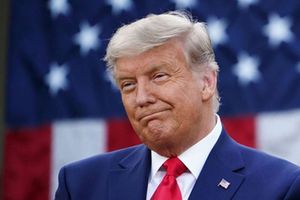
President Trump, on April 2, 2025, imposed a 10 per cent tariff on imports from some African nations, including Kenya. Mr Trump invoked the International Emergency Economic Powers Act to impose a baseline tariff on all US trading partners in a bid to address what he termed as ‘absence of reciprocity in our bilateral trade relationships’.

Kenya is also among African countries set to be hardest hit by non-renewal of the Agoa deal with projections by the UN Conference on Trade and Development indicating that the country’s average weighted trade tariff with the US will nearly triple to 28 per cent on expiry of the preferential trade deal, signaling a major blow to jobs and investments in the country’s textile and apparel sector.

More than half of Kenyan exports to the US are comprised of clothing, macadamia, coffee, titanium ores and concentrates, and black tea. Three-quarters of US-bound exports benefit from duty-free access to the US under the Agoa policy, while some 300,000 jobs in Kenya are tied to the arrangement.

Kenya’s textile and apparel industry is one of the biggest Agoa beneficiaries, earning a record Sh60.57 billion from textile exports to the US in 2024 — a growth of 19.20 percent over Sh50.82 billion in the prior year.

Kenya says that textiles and apparel will be a key pillar in its efforts to trim the trade deficit with Turkey. In 2023, Kenya’s exports to Turkey were valued at $23.7 million (Sh3.06 billion), dominated by tropical fruits, while imports from Turkey into Kenya stood at $272 million (Sh35.15 billion), dominated by nitrogenous fertiliser. 

“We are here to have bilateral talks with the Minister for Trade in Turkey to see how we can address the trade imbalance. What we have also come here to discuss is how Turkish investors can come and produce in Kenya and still be able to serve the European market. Right now, more than 70.0 per cent of our textile exports go to the US, and we believe that Turkey will be the best partner to come and invest in Kenya to serve the European market,” Abubakar says.

Follow our WhatsApp channel for breaking news updates and more stories like this.