The concession deals for the first batch of assets at the Mombasa and Lamu ports to private investors will cost an estimated Sh79.69billion, the National Treasury has revealed, with the Kenya Ports Authority (KPA) making a co-investment of Sh7.79 billion.
It wasn’t immediately clear how KPA would fund its investment in the planned concession deals.
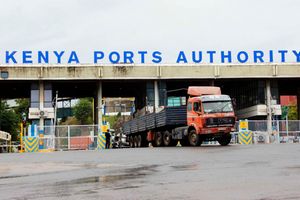
The State-owned ports manager has already been granted approval to float tenders for the concession of Mombasa port berths 11-14, Mombasa port container terminal I, Lamu container terminal berths 1-3 and the Lamu Special Economic Zone under a public-private-partnership (PPP) model.
Preparations are also underway for a second batch of Sh80billion concession deals that will cover more KPA assets, which include: Mombasa container terminal II (berths 20-22), container terminal berths 23-24, cargo terminal berths 1-5 and 7-10, Mbaraki Wharf, and the inland container depots in Embakasi and Naivasha.
The concessions from the two batches of KPA assets are expected to attract Sh151.9 billion, excluding the Sh7.79billion co-investment by the State firm in the first set.
Treasury granted the second approval of a feasibility report for the concession of the first batch of assets at the Mombasa and Lamu ports to private investors in August, paving the way for KPA to open bids for the deals.
The approved feasibility report covers the first phase of the concession programme, which targets four assets at the Mombasa and Lamu ports.
The concession of Mombasa port berths 11-14, Mombasa port container terminal I, Lamu container terminal berths 1-3 and the Lamu Special Economic Zone under a PPP model is listed as a priority under Kenya’s fourth medium-term plan.
“These assets are operationally interconnected and may share common infrastructure and interfaces, including yards, access channels, terminal support facilities, and landside logistics systems,” the Treasury said in a disclosure as it kicked off recruitment of an advisor to guide the planned PPP deal.
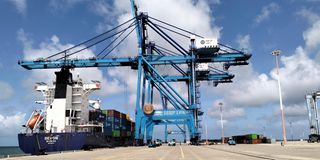
A section of the Lamu Port site in Kililana, Lamu West on June 5,2025. The Lamu Port is part of the mega state projects transforming Lamu into and industrial and economic hub in the region.
Photo credit: Kalume Kazungu | Nation Media Group
“Consequently, decisions taken in relation to one asset have material implications for the performance, efficiency, and bankability of the other assets within the portfolio,” it added.
Treasury had initially listed four KPA assets for concession under the PPP model. These includeed: Lamu Port Container Terminal (Berths 1-3), Mombasa Port (berths 11-14), Mombasa Port Container Terminal I (berths 16-19), and the Lamu Special Economic Zone.
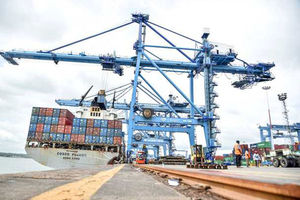
Containers at the Mombasa Port.
Photo credit: POOL|NMG
“Given the scale of the assets, their shared demand drivers, and the strategic objective of transitioning to a landlord port model, it is necessary that these assets are assessed and structured under the PPP framework on a portfolio basis, rather than through fragmented, asset-by-asset transactions,” the Treasury said.
In March KPA started the search for an investor to run the Shimoni fish port under a landlord-model PPP arrangement. The Shimoni deal could open up the planned lease out of some operations at the Mombasa and Lamu ports.
“Shimoni Port is one of the projects identified under the Kenya Vision 2030 to support the exploitation of the blue economy resources for accelerated socio-economic development,” Treasury said.
A landlord PPP model is a structured deal whereby the public sector retains ownership of land and foundational infrastructure while leasing it to a private investor who is then tasked with financing, constructing, and operating the facility.