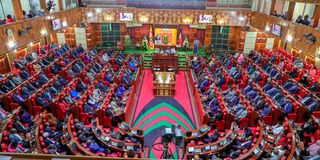
MPs have approved a sessional paper on the privatisation of Kenya Pipeline Company (KPC) where the government will retain not less than 35 percent ownership in the company.
This even as opposition MPs vowed to move to the High Court to block the sale of the parastatal, citing an ambush by the Executive.
Six united opposition MPs led by Deputy Minority Leader Robert Mbui accused the House Leadership of conspiring to sneak in the sessional paper through a Supplementary Order Paper.
The original Order Paper did not list the sessional paper on the privatisation of KPC as one of the motions to be transacted last evening.
The MPs decried the passage of the Sessional Paper on KPC privatisation in a record 28 minutes, with Kenya Kwanza-allied lawmakers getting a chance to debate.
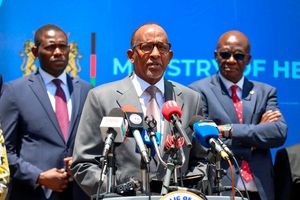
“The Order Paper was distributed yesterday (Tuesday) and had nothing to do with KPC. The Supplementary Order Paper was sneaked in at 3.30 pm in what ambushed MPs,” Mr Mbui, who is a member of the House Business Committee (HBC) which sets the agenda of the House, said at a press conference last evening.
“We will go to court for a determination because the House has been compromised. We are asking Kenyans to move to court even as the united opposition prepares to go to court.”
While seconding the debate on the motion, Majority Leader Kimani Ichung’wah said the government proposes to privatise 65 percent of the government’s shareholding in Kenya Pipeline, with the government retaining a strategic 35 percent.
“This means we will still maintain control, as no single investor will be able to take up the entire 65 percent,” Mr Ichung’wah said.
“It is therefore high time I invite all Kenyans to start saving in preparation to buy shares in this company.”
According to the Supplementary Order Paper, pending lawsuits amounting to Sh5.75 billion will be given priority for settlement.
“That the Privatisation Commission ensures that all liabilities (debt and credit) and risks affecting the valuation of KPC are comprehensively assessed, transparently disclosed, and factored into the transaction valuation before proceeding with the IPO (initial public offering)," the revised Order Paper states in policy resolutions relating to Sessional Paper No 2 on Privatisation of KPC.
It commits to cater for unresolved compensation claims worth Sh3.8 billion by residents of Makueni County due to historical grievances linked to pipeline operations, loss of approximately Sh400 million in the Mzima pipeline project due to stalled execution and procurement lapses, a garnishee order of Sh485 million in favour of M/s Zakhem International following contractual disputes over the Line V project, and the potential loss of public funds amounting to Sh192.6 million after M/s Asharami Synergy took over the LPG facility despite prior investment by KPC.
The Treasury expects to raise approximately Sh100 billion from the privatisation of the KPC shares through an IPO at the Nairobi Securities Exchange (NSE).
The Treasury said the proceeds from the KPC sale will be used to fund priority public services and infrastructure.
A Sessional Paper on the Privatisation of KPC through an IPO shows that the proceeds of the sale will enable the government to raise funds budgeted for in the 2025/26 budget that is required to implement economic and social objectives.
The Treasury paper, tabled on Tuesday, 5, 2025, said the proceeds from the transaction will support critical development priorities, reduce reliance on borrowing, and deepen Kenya's capital markets.
The Privatisation of Kenya Pipeline Company Limited was included in the Privatisation Programme approved by the Cabinet in December 2008 and gazetted on August 14, 2009, to facilitate the mobilisation of resources for additional investments, the enhancement of transparency and corporate governance, broadening of shareholding in the economy, development of the Capital markets and raising of resources to support the government budget.
The KPC was established in 1973 as a State corporation to provide an efficient, safe, and cost-effective means of transporting and storing petroleum products. The company started commercial operations in 1978.