What next? WHO rules Kenya expected to follow on Ebola
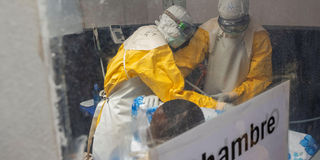
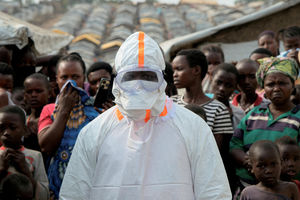
Medecins Sans Frontieres (MSF) doctors treat a patient inside the Kitatumba Ebola treatment center, as aid agencies intensify efforts to contain a new Ebola outbreak involving the Bundibugyo species, in Butembo, North Kivu province, Democratic Republic of Congo, September 23, 2026.

On June 6, 2026, the World Health Organisation (WHO) teamed up with the Africa Centres for Disease Control and Prevention to launch the continental preparedness and response plan from June 2026 to November 2026 on the ongoing Ebola virus outbreak.
The plan forms a critical manual for African countries that require strategy and preparedness on how to curb the spread of the Ebola virus, and the appropriate measures to take.
They are drawn from critical lessons learned during the 2007 and 2012 Ebola virus disease outbreaks in DRC, Uganda, Guinea, Liberia and Sierra Leone.
“The only way to beat this outbreak is through close partnership, working together under the leadership of the affected countries in one coordinated effort, guided by a simple principle: one plan, one budget, one team,” said Dr Tedros Adhanom Ghebreyesus, WHO Director-General.
Dr Jean Kaseya, Director-General of Africa CDC, said: “Ebola moves fast. Africa must move faster. This joint plan gives the continent a clear path to act with speed and unity: to save lives, support the affected countries and protect neighbouring communities.”
Kenya has become the latest country in the African continent to declare a case of Ebola and is also among the member states that are included in the joint plan.
However, several actions taken by Kenya, specifically by the Ministry of Health, contradict the protocols outlined in WHO guidelines.
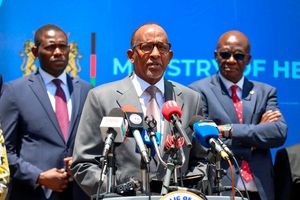
International Health Regulations which Kenya is legally bound by, require countries to report confirmed or suspected Ebola cases to the World Health Organisation. Despite confirming the case on Sunday, Cabinet Secretary Aden Duale only announced the case on Tuesday. The Health Ministry says it did this to reduce panic among citizens.
WHO gives further guidelines on what countries should do after declaring a case of Ebola.
The first pillar is activating an emergency coordination framework through a command structure and rapid resource teams. The Ministry of Health yesterday urged the public to source information and updates about the Ebola virus through their official social media platforms and their toll-free line 719.
Second is immediate response and containment. This can be achieved through contact tracing and surveillance, infection prevention and control as well as stepping up laboratory capacity and testing. The Ministry of Health as of Wednesday, communicated that 57 people have been identified through contact tracing after the first Ebola patient died on Tuesday.
The third pillar is Immediate Infection Prevention and Control (IPC). This includes physical screenings at hospitals and clinics. Healthcare workers must also utilise comprehensive Personal Protective Equipment (PPE) for all interactions with suspected or confirmed individuals.
This pillar also calls for safe and dignified burials, as Ebola is still highly infectious after death. However, when NTV exclusively visited the burial site for the first Ebola deceased patient on Tuesday, our team noted that only one of the staff members under the Ministry of Health was dressed in full Personal Protective Equipment. The other official was dressed in a cotton shirt, trousers, white gumboots and a facemask. They also used thinner rubber gloves, instead of the thick household gloves that are recommended by WHO.
The worker in the full protective gear also discarded his materials using his exposed hands and they rinsed their boots under a water tank located near the gravesite of the victim. Further, the family members who attended the burial did not disinfect communally after the ceremony, in line with WHO guidelines that outline a combination of dignity but caution as families lay their kin to rest.
Next is cascading measures to international points of entry by tightening screening measures at airports, seaports and land border crossings. This includes non-contact temperature and health questionnaires.
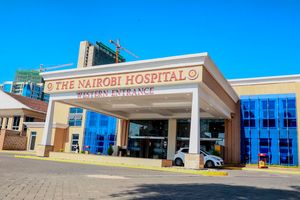
The 40-year-old Ebola patient was first screened at JKIA’s port health and immigration desk. However, the patient was allegedly not very open in the questionnaire about experiencing a fever and other symptoms associated with Ebola.
“When he presented here, we believe that the patient knew he was ill and he reached out to his relatives who transported him from the airport to the hospital and you can still pass through the screening and more so because he had been under treatment for the past month [in the DRC], it is potentially possible that because of the medication he was under, it gave a false reading.” Dr Patrick Amoth, the Health Ministry’s Director General for health, stated on Tuesday.
The World Health Organisation has also outlined its advice against countries issuing sweeping travel bans or trade restrictions, as the restriction of movement could affect response teams, medical workers and critical medical supplies.
Finally, risk communication and community engagement in public spaces such as places of worship, schools, markets, arenas and other public spaces which are meant to be supported with universal hand washing/hygiene stations.
Community engagement is encouraged in these spaces through the government partnering with local community leaders and health volunteers who can establish a two-way feedback loop, door-to-door sensitisation, and mobile outreach, which can be delivered in local languages.
Follow ourWhatsApp channel for breaking news updates and more stories like this.