Germination standards vary across crops due to factors such as the presence of substandard seeds on the market and the continued use of conventional farming methods. Nevertheless, introducing new seed varieties has proven to be transformative. Our writer, Richard Maosi Simon Wagura
What are some of the conventional ways of farming?
Agriculture has existed for a long time, and planting materials were traditionally passed from one generation to the next.
Farmers would obtain seeds from the previous harvest and select the best ones based on factors such as size, quality, colour, and taste.
These seeds were preserved for the next planting season using traditional methods, such as treating them with wood ash to prevent attack from weevils and other pests.
By the time the planting season arrived, the seeds were readily available. One advantage of this system was that traditional farmers could retain original crop varieties at a lower cost because seeds were easily accessible.
These crops also had natural resistance to pests and were well adapted to prevailing climatic conditions.
However, over time, these varieties became susceptible to diseases due to uncontrollable factors, such as climate change.
The evolving pests introduced through wind and new crop species in Sub-Saharan Africa also contributed to the problem. New bacterial and viral diseases began attacking indigenous varieties.
In terms of sustainability, why should smallholder farmers be encouraged to adopt certified, high-yielding seeds?
In order to improve productivity, smallholder farmers need to adopt certified seeds that are characterised by high standards of quality, purity and reliability.
This gives farmers access to the best possible genetic material for successful crop production. Improved seed varieties have high yield potential.
As land available for farming is decreasing, farmers must maximise production per unit area, which can only be achieved using clean seeds.
These seeds are resistant to pests and diseases, which reduces production costs. Consequently, farmers earn more from their enterprises as they spend less on control measures.
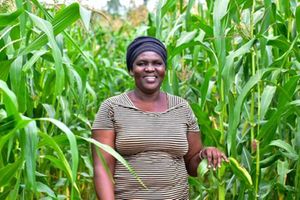
Simon Wagura at a farm in Ruiru, Kiambu County.
Photo credit: File | Nation Media Group
Farmers who have adopted certified seeds have doubled their yields, particularly for crops such as soya beans and maize.
This growth is attributed to continuous awareness-raising by seed-producing companies and positive feedback from farmers, including increased yields, improved dietary diversity, and better household health.
Studies conducted in Ghana and Tanzania show that farmers perceive plots planted with certified seeds as higher quality and are willing to pay a premium for them, indicating strong demand.
Farmers have also reported improved health outcomes, including a decline in cases of malnutrition, from consuming vegetables grown from improved seed varieties.
Quality seeds make farming more profitable by producing high-quality yields that fetch better market prices.
This translates into higher returns on investment, enabling farmers to acquire modern technologies to add value and extend shelf life.
For example, dairy farmers can produce high-quality fodder and adopt technologies such as silage making.
As a result, they can compete in the export market.
Misinformation remains a significant obstacle, with some activists employing inaccurate terminology that misleads farmers.
Claims that certified seeds cause health complications are unfounded, yet farmers are pushed towards relying on indigenous seeds that produce lower yields.
There are also gaps in the dissemination of knowledge about agribusiness. Many farmers remain unaware of the availability and importance of clean planting materials.
Going forward, educating farmers on good agricultural practices, especially with regard to planting materials, is essential.
Simon Wagura at a farm in Ruiru, Kiambu County.
Photo credit: File | Nation Media Group
Government agencies such as the Kenya Agricultural and Livestock Research Organisation (KALRO) conduct extensive research on seed development and improvement strategies.
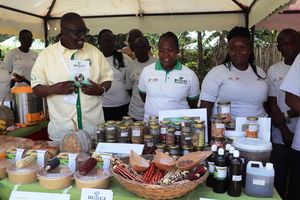
They also help farmers access certified seeds through field studies and agricultural exhibitions. Extension officers educate farmers on sustainable farming practices, particularly in subsistence agriculture.
The government also occasionally distributes free planting materials to vulnerable farmers to encourage wider adoption and facilitate seed multiplication.
The Kenya Plant Health Inspectorate Service (KEPHIS) plays a key regulatory role in ensuring that the seeds on the market meet quality standards.
Seed bulking is a process used in conservation and agriculture to increase the quantity of seeds from target plant populations.
This involves collecting seeds from wild or existing populations and cultivating them in controlled environments, such as nurseries, greenhouses, or farms.
The process adheres to rigorous scientific guidelines, encompassing criteria such as location, soil type, and the use of agricultural chemicals. Seed bulking is strictly regulated to ensure that the desired results and certification standards are met.
In Kenya, certified seed producers and distributors are licensed by the government to operate under controlled conditions.
However, fake seeds, especially maize, remain a growing global issue affecting small-scale farmers.
Counterfeit seeds are often sold under misleading names and with images generated by artificial intelligence.
Farmers should therefore scrutinise seed packaging, check expiry dates and verify authenticity using security codes provided by the government that can be scanned or sent via text message.
Fake seed packages often lack valid codes or use counterfeit ones. Farmers are advised to take early precautions to avoid losses.