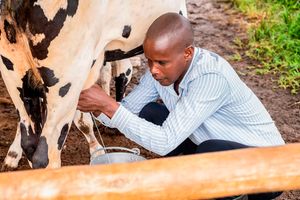
Before dawn breaks in Mogotio, Baringo County, motorcycles set off along rough village roads to collect milk from hundreds of farmers.
This has been the routine at Mogotio Farmers Cooperative Society Ltd for years, where 440 members pool between 6,500 and 8,000 litres of milk daily, despite poor roads and rising fuel costs.
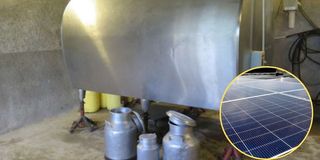
The cooperative sells fresh milk and processes yoghurt and sour milk. However, high electricity tariffs and frequent power outages have made running chillers and cold rooms increasingly expensive and unpredictable, which threatens product quality and profitability.
“We are looking to adopt solar energy to reduce our operational costs and ensure reliable cooling,” says George Korir, the cooperative’s chairman.
Milk can spoil within hours if cooling systems fail.
Photo credit: File | Nation Media Group
Farmers at the Kabaa Irrigation Scheme in Machakos also experience similar challenges. Joshua Wambua, one of the 330 members cultivating 340 hectares, says that the scheme uses water supplied through a 7.5-kilometre furrow canal.
“As a semi-arid, drought-prone area, we rely heavily on diesel and petrol-powered pumps for irrigation, which drives up production costs and reduces farmers' margins. Harnessing solar power would greatly improve cost-effectiveness,” he said.
For both dairy and horticulture farmers, the challenge extends beyond production to encompass the energy required to preserve and transport their produce.
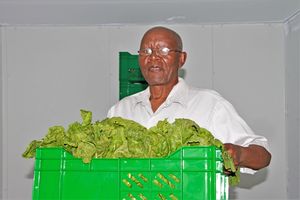
Milk can spoil within hours if cooling systems fail, while vegetables harvested in the morning can lose much of their market value before reaching urban consumers if cold storage facilities lack reliable electricity.
For thousands of farmers, access to reliable and affordable power can mean the difference between making a profit and making a loss.
As climate-smart agriculture gains momentum, renewable energy technologies are emerging as practical tools for reducing post-harvest losses and operating costs, and for strengthening the resilience of farmer cooperatives.
However, high fuel costs and unreliable electricity supply continue to hinder adoption, highlighting the need to prioritise energy in agricultural development.
To address this issue, the Kenya Climate Innovation Centre (KCIC) is supporting cooperatives in adopting clean energy solutions through the Distributed Renewable Energy Ecosystem Model (DREEM) programme.
Guests visit an exhibition tent during the 2025 DREEM Partners Conference that brings together key stakeholders to accelerate the adoption of solar energy in the agricultural sector on July 9, 2025 in Limuru, Kiambu County.
Photo credit: Wilfred Nyangaresi | Nation Media Group
Funded by the Charles Stewart Mott Foundation, the hub operates under a hub-and-spoke model, with the KCIC serving as the coordinating institution. Specialised partners lead on financing, training, enterprise development, and research and technology deployment.
The programme is now entering its second cohort and aims to expand access to solar technologies that improve efficiency, reduce costs, and strengthen climate resilience.
“The DREEM Hub focuses on integrating solar power into agricultural value chains, particularly in the dairy and horticulture sectors, to reduce energy costs and improve operational efficiency,” says James Mbatia, the programme manager.
In addition to deploying technology, the initiative supports farmers by providing capacity building, accelerator support, business development and growth assistance, network access and improved access to financing.
This is achieved in collaboration with organisations such as KENAFF, ACTS, Agile Consultancy, DTI and JKUAT, as well as financial institutions, training organisations, researchers, and enterprise development agencies.
Solar panels. Renewable energy technologies are emerging as practical tools for reducing post-harvest losses and operating costs.
Photo credit: File | Nation Media Group
Last week in Naivasha, 26 dairy and horticulture cooperatives from 11 counties were onboarded into the programme, marking another step towards more sustainable and climate-resilient farming systems.
Following the launch of a pilot project at Solio Ranch Dairy Cooperative in Laikipia County in March, the onboarding process has begun. The adoption of solar energy has already cut electricity costs by 97 per cent, significantly reducing post-harvest losses and improving productivity.
“Our goal is to reduce greenhouse gas emissions that drive climate change by encouraging the use of solar energy across key agricultural value chains,” he says.
He adds that the initiative also seeks to improve livelihoods by supporting agrisolar entrepreneurship led by young people and women, developing skills, providing innovative financing and improving market access.
The idea is not new. Over the past decade, solar-powered irrigation systems, milk chillers and cold storage units have been introduced in pilot projects across Kenya.
However, scaling up has remained challenging, as it is difficult to move from demonstration projects to sustained adoption within cooperatives that often operate on thin margins, have limited access to credit and have uneven technical capacity.
“Energy is no longer just an input, but a key driver of productivity,” he says, noting a gradual shift in agricultural policy thinking. He added that cooperatives will also be supported by being given access to financing to facilitate the uptake of these systems.
“We are not dealing with a single problem of energy access. We are dealing with interconnected constraints: finance, technical capacity, and market access. If any one of these is missing, the system does not work,” he said.
Mr Mbatia further explained that cooperatives and farmer groups can access a revolving loan facility to finance solar-powered equipment, repayable over 36 months at an annual interest rate of 6 per cent on a reducing balance.
This facility aims to overcome a major obstacle to the adoption of renewable energy technologies in agriculture.
Participating cooperatives are expected to manage and maintain the systems, integrating energy costs into their operations to strengthen long-term sustainability.
He said that climate change and weather variability have had an adverse effect on smallholder farmers by increasing production costs and undermining agricultural productivity and processing capacity.
Limited agro-processing infrastructure in rural areas also leads to significant wastage of agricultural produce.
"The adoption of more readily available renewable energy sources in rural areas is essential, and solar energy remains one of the most underutilised resources," said Mr Mbatia.
“As we solarise agricultural value chains, our approach is intended to reduce post-harvest losses, improve access to energy, and support added value at the cooperative level. Value addition is the real driver of revenue generation,” he added.
Agriculture remains one of the country's most energy-dependent sectors, particularly in dairy and horticulture, where refrigeration, irrigation and processing directly influence product quality, productivity and market access.
Participants at the meeting noted that reliable energy is crucial for dairy cooperatives looking to increase their milk-cooling capacity, as well as for horticultural producers aiming to minimise produce losses and maintain quality.