The Kenya Meat Commission (KMC) is set to begin exporting meat and meat products to Gulf countries.
As part of its export expansion strategy, the state-owned meat processor is targeting Kuwait, Saudi Arabia and the United Arab Emirates (UAE).
Malaysia, an Asian country, is also among the new markets that KMC is targeting.
According to the institution’s Managing Commissioner, Maj Gen Jattani Gula, tapping into these markets will enable the KMC to increase its contribution to Kenya’s gross domestic product (GDP).
“Before the end of the year, KMC will start exporting meat and meat products to the Gulf countries. Plans are already underway,” he said in an exclusive interview.
Currently, Kenya’s main export destinations for meat and livestock are in the Middle East, particularly the UAE, Saudi Arabia, Kuwait and Bahrain.
Private slaughterhouses operating under the oversight of the Directorate of Veterinary Services (DVS) must meet local and international standards to be approved and licensed.
While the UAE has traditionally been a dominant market, Kenya is actively seeking to diversify its export destinations.
KMC is also targeting African nations to boost trade, including East African neighbours such as Tanzania and Uganda, as well as the Democratic Republic of the Congo (DRC). Notably, KMC already exports meat to the DRC and Seychelles.
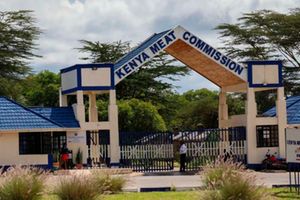
Workers at the Kenya Meat Commission on June 9, 2022.
Photo credit: Sila Kiplagat | Nation Media Group
Mr Gula revealed that, with the commission’s new expansion strategy, the Athi River-based facility in Machakos County is projected to export approximately 40 tonnes of meat and meat products to the new Gulf markets each year.
He added that some countries have already expressed interest in trading with KMC, as the facility now complies with the standards and regulations of Arab countries, which require exporters to operate Halal-certified slaughterhouses.
“Everything we are currently doing is Halal-compliant. With certification from Saudi Arabia and the UAE, exports can be sent to all Islamic countries,” the Major General explained.
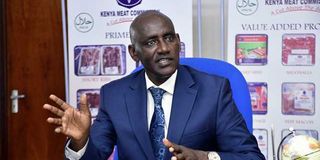
Kenya Meat Commission (KMC) Managing Commissioner Major General Jattani Gula during an interview at the KMC headquarters in Athi River, Machakos County on July 3, 2025.
Photo credit: Francis Nderitu | Nation Media Group
KMC operates a modernised facility featuring enhanced refrigeration, chilling and cold rooms, in line with the Food and Feed Safety Control Coordination Bill 2023, which is in its final stages of approval.
To meet the regulations of Arab countries, KMC employs Halal-certified personnel alongside qualified meat inspectors and veterinary officers.
The export market is expected to be operational by December 2025 and is projected to increase the institution’s annual turnover to between Sh4 billion and Sh6 billion.
"Currently, we are generating between Sh1.9 billion and Sh2.8 billion, depending on the season," Gula disclosed.
Since 2021, when KMC’s operations were transferred to the Ministry of Defence by former President Uhuru Kenyatta, the Kenya Defence Forces (KDF) have been praised for revitalising the previously struggling facility.
The military has significantly improved the commission’s performance by addressing issues of poor management and mismanagement of resources, which previously hindered growth.
During the interview, Mr Gula revealed that, prior to the military takeover, KMC had generated a mere Sh256 million in annual turnover, largely due to unpaid farmers and an over-reliance on government funding.
“If you don’t pay farmers, they won’t supply you with animals,” he remarked.
Today, the facility slaughters an average of 300 animals daily, a significant improvement on the previous figure of 50 per day.
Mr Gula expressed optimism that, at full capacity, the facility could process up to 1,000 head of cattle, as well as 1,500 sheep and goats, per day. This would significantly boost income, especially given the new export markets.
When the Defence Ministry took over, KMC owed farmers almost Sh900 million. However, the military leadership has since streamlined operations, restoring confidence among farmers and ensuring a steady supply of animals.
In 2022, during one of the worst droughts in 40 years, KMC played a pivotal role in purchasing livestock from farmers in the Arid and Semi-Arid Land (ASAL) regions, which were hit particularly hard.
The off-take programme is an initiative of the State Department for Livestock Development aimed at supporting farmers during times of crisis.
Pastoralists, who predominantly occupy ASAL areas, contribute significantly to the meat industry, yet many have not recovered from the enormous losses they suffered during the drought, according to Mr Gula.
KMC has primarily sold its meat and meat products through franchises and distributors. The institution is also establishing one-stop shops to boost sales further.
Its factory produces prime cuts and value-added products such as sausages, smokies and mutura, an African sausage. Farmers supplying animals to KMC are paid based on the weight of the carcass, which is graded.
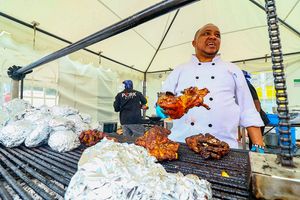
Themed 'Driving Sustainable Growth Across the Meat Value Chain', the fourth edition of the event brought together key players from the meat and livestock sectors in both the public and private sectors. Farmers also had the opportunity to network, explore new markets and engage with industry experts.
The expo is organised by Nation Media Group (NMG) PLC in collaboration with the Ministry of Agriculture and the State Department for Livestock Development, among other key partners.
According to a 2024 report by the State Department for Livestock, Kenya’s beef cattle population is estimated at 16.3 million.
While most beef originates from rangelands, culled dairy cattle also make a significant contribution to the national beef supply.
In 2023, Kenya produced 237,907 tonnes of beef, worth Sh129.5 billion.
It also has an estimated 34.9 million goats and 23.2 million sheep, producing 77,521 tonnes of mutton worth Sh53.9 billion and 51,691 tonnes of goat meat worth Sh34.2 billion.