Kenya’s livestock sector is on the move—ready to turn its herds into highways of opportunity linking rural pastures to global markets.
With renewed coordination, private investment, and strong market partnerships, the country is setting its sights on becoming a continental leader in meat exports.
At the heart of this transformation is the African Pastoral Markets Development (APMD) Platform, which is mobilising hundreds of stakeholders under the theme “Strengthening Kenya’s Meat Value Chain”.
From feedlot operators to financiers, the conversations focused on one thing—how to make Kenya’s livestock industry more competitive, sustainable, and profitable.
According to experts, the sector’s promise is immense.
Kenya boasts 22 million cattle and 58 million sheep and goats—assets that, if fully harnessed, could power national growth and lift millions from poverty, particularly those in the arid and semi-arid regions.
Meat exports have already shown strong potential, climbing from Sh11.5 billion in 2022 to Sh19 billion in 2023, driven largely by the Middle East market.
But challenges persist—from poor coordination and inconsistent quality standards to inadequate investment in modern slaughterhouses. Only seven out of the country’s 1,000 facilities currently meet export requirements.
“We must link producers to processors and financiers. That’s how we create a thriving livestock economy,” said John Oppong, APMD Platform Coordinator. “A connected, transparent market means more value for everyone along the chain.”
Dr Richard Kyuma, the acting chief executive officer of the National Livestock Development and Promotion Services, concurred.
“Our livestock wealth remains underutilised. If effectively managed, it can rival our leading export sectors,” he said.
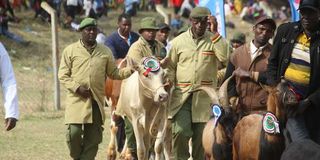
The Sh1 million bull purchased by President William Ruto during the Livestock Auction at the Mombasa International Show in Mkomani in this photo taken on September 5, 2025.
Photo credit: Kevin Odit | Nation
For private investors like Maria Mbeneka of Ranch Experts Ltd, the future lies in understanding the rhythms of the livestock business.
“If financiers tailor funding to the cycles of farmers and processors, we can unlock real value,” she noted.
Meanwhile, Aden Nur Dahir, the chairperson of the Kenya Meat and Livestock Exporters Council, called for a shift from live animal exports to processed meat.
“Value addition is where the jobs and profits are,” he said, adding that Kenya must also embrace traceability systems to meet global standards.
The initiative is backed by the Gates Foundation through the African Union – InterAfrican Bureau for Animal Resources (AU-IBAR).
The initiative has rolled out mechanism to form partnerships between investors and livestock farmers in a bid to shape policies and chart Kenya’s livestock future.
Experts, investors and livestock farmers unanimously agree that, with better coordination, smart investment, and stronger standards, Kenya’s livestock sector could soon be feeding not just the region, but the world.