We asked young Kenyans one question, and their answers gave a telling snapshot of the political direction the country could take ahead of the 2027 General Election.
The question was: “Where were you on Thursday as the second anniversary of the June 25, 2024, protests was held?”
While this was a day for the Gen Z to remember those who lost their lives and relive the show of might in June 2024 by taking to the streets and getting their voices heard, many young Kenyans—especially those who were at the forefront two years ago—were scant on the streets on Thursday.
In Nairobi, only a handful dared venture into the city centre, leaving the stars of the day to be the parents of some protest victims and opposition figures like Kalonzo Musyoka, Martha Karua , Eugene Wamalwa and David Maraga.
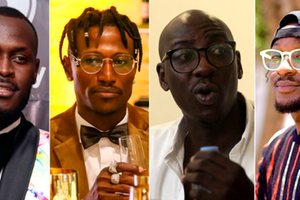
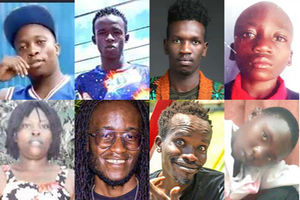
Most of the youthful faces that gained currency during and around the 2024 protests and last year’s anniversary were nowhere in sight. Ademba Allans, Hanifa Adan, Shakira Wafula, Kasmuel McOure and Morara Kebaso were a few of the names that defined the 2024 protests and their aftermath.
Activity on the X social media platform shows that some were largely involved in amplifying the anniversary, while others were attending various events.
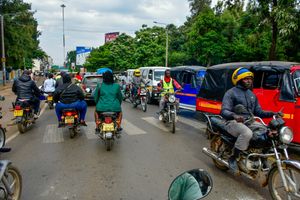
Despite the police roadblocks on Thursday that saw major entries to the city blocked, some young people still found a way to reach Nairobi city centre and other towns, as evidenced by the more than 100 people who were arrested by the police.
Kasmuel McOure speaks at Bukiri Primary School, Funyula, Busia County, on February 28, 2025, as the Orange Democratic Movement celebrated 20 years in Kenya's political landscape.
Photo credit: Alex Odhiambo | Nation Media Group
In interviews with Saturday Nation, some revealed that they were either blocked, taking caution, politically repositioning themselves, exhausted, or protesting in ways that were less visible to television cameras.
Overlapping forces, Saturday Nation learnt, led to the absence of known faces. They include the fear of police and gangs, political co-option, the entry of some activists into formal politics or employment, the trauma of earlier confrontations, and a generational movement that has increasingly moved from street confrontation.
Some had long vowed to keep off, and they include Kasmuel McOure, who joined the Orange Democratic Movement (ODM) after he gained fame in the 2024 protests. Speaking on NTV’s The Last Word on Tuesday, Kasmuel said he saw no reason to be there.
“About 600 days ago, personally, I left the streets, and I joined a political party, a decision that was frowned upon by many of my peers. But I left with clarity of mind, saying that I will focus on two areas of accountability, police brutality and the compensation of victims of gross violations of human rights.”
He cited the recent compensation process for victims of human rights violations as proof that some goals were being realised.
Activist Hanifa Adan.
Photo credit: Pool
“I do not know about any other person, but the goals which took me to the streets are slowly being realised,” said Kasmuel, who was largely silent on X on Thursday.
Rose Alionya, another ODM-aligned young Kenyan who has been vocal against protests, said at a public forum on Wednesday: “Going to the streets is one of the ways of asking for accountability from the government. But we have seen other ways of asking for accountability that have worked.”
She added: “I checked the reasons that took us to the streets in 2024 and 2025. They were tangible reasons. In 2026, we cannot see any tangible reasons.”
Kasmuel and Rose epitomise some of the young leaders who were outright against the June 25 commemorations. They also speak to the ideological cracks that have plagued the youth movement since its historic unity of purpose two years ago.
Kasmuel on Tuesday claimed that older generations of politicians had hijacked the initiative and were “now getting to set the agenda of how the 25th of June should be commemorated”.
While some recognisable faces opted to be away, others planned to show up but were locked out. They include Adrian Oluoch, a 22-year-old lawyer. In 2024, he was among those mobilising others to turn up for protests.
Adrian lives around Kiambu Road. On Thursday, he said, he and seven others had ordered two cabs by 8am to go to the heart of Nairobi. They did not get far as police stopped them at Ridgeways.
“They said we looked suspicious because we were young,” he said, adding that his online civic work made matters worse. “One of the officers also recognised me, and that became another reason they blocked us from proceeding. We were forced to abandon our plans to join the demonstrations.”
The same fate befell Billy Omaset, a 27-year-old who was involved in the 2024 protests and also shot videos to record the happenings.
“By 8.30am, I was ready and had begun my journey on a motorcycle to join fellow young people in commemorating those who lost their lives during the June 25, 2024, protests. However, the junction connecting my area in Ruiru to Thika Road had been blocked by police officers, preventing anyone from passing,” he said. “At the same time, reports were circulating that groups of goons had already gathered around Githurai. That created more fear, and I decided to return home instead of continuing to the protests.”
Ellen Kawila, a civic educator and innovator who has created an online system to help track Kenya’s national debt in real time, during an interview at Nation Centre .
Photo credit: Bonface Bogita | Nation Media Group
Ellen Kawila, a 25-year-old civic educator who recently created a debt tracking platform, was also kept away by the blockade. She was heading to the city centre on a motorcycle but was stopped on Waiyaki Way.
“Police stopped the motorcycle and told us that motorcycles were not allowed to proceed. We got off and continued on foot towards the CBD. But when we reached Westlands, where a second barricade had been erected along Waiyaki Way, police began chasing us. Unfortunately, my friend fell while trying to flee. She injured her hands and legs before she was arrested. This happened at around 1pm,” said Ellen, whose priorities changed to getting her friend released.
Lewis Ngunyi, one of the people thrust into the limelight by the 2024 protests, Saturday Nation that the police blockades were a major factor in reducing the number of young Kenyans in the city.
“The main reason key voices did not show up is also, I think, the main reason the critical mass didn’t show up: the government made it impossible to access the CBD,” said Lewis, who spent a number of hours on Thursday on an NTV live show.
“We are a leaderless and structureless movement until it is time to involve someone. Suddenly, we very quickly find someone. And I think it’s been exhausting a lot of these key voices in this movement,” he said.
He also pointed to life changes. Some of the 2024 leading lights were unemployed or informal workers when the first wave of protests began. By 2026, some had found jobs or moved into formal politics.
“I would say these people are coming to prominence. Some of them have also been tasked with multiple responsibilities. Two years ago, some of them did not have jobs or serious positions somewhere. And now somebody has been engaged in employment somewhere, and so they decided to rest on Thursday,” reasoned Lewis.
The entry of politicians into the anniversary space, Lewis said, further complicated the decision to appear.
Lewis reasoned that President William Ruto’s government had also evolved its methods of controlling protests.
“The State has really evolved how they manage politics. Last year they sent out goons. And now they can hide behind [a narrative that] it’s two different factions fighting on the street,” he said. “That specific factor of goons, I think, put off a lot of people, including not only the front-liners but also the average protester,” he said.
Due to the goon factor, he noted that the Gen Zs who were already visible had more reason to be careful.
Mr Leonard Khafafa, a public policy analyst and governance expert, said the original Gen Z moment was never as autonomous as it appeared.
“The Gen Z were innocent, really innocent souls: pure, altruistic, and a bit naïve,” he said. “Their movement was hijacked by those who used them and those who capitalised on their bloodshed. And they have realised now. So, no one wants to shed blood. No one wants to be engaged in a sacrifice that only leads to more positions at the feeding trough for the political elite.”
Mr Khafafa also noted that the government changed tack after the 2024 crisis, incorporating consultations and communicating better.
Siasa Place Executive Director Nerima Wako speaks during a past event.
Photo credit: File| Nation Media Group
Ms Nerima Wako, the founder and executive director of Siasa Place, said the insistence on checking who was on the streets on Thursday misses a key point.
“I feel that we are focusing on the wrong thing, simply because there was a lot of organising that happened digitally before the 25th. This included people changing their profiles (on social media) to the videos posted [in memory of the victims],” she said.
She added: “Those videos themselves had hundreds of thousands of likes and over a million views. And this is similar to what happened in 2024 when there was a lot of X Spaces. I believe the platform for engagement changed to TikTok and Instagram. I do believe that the Gen Z were not marching this year. They chose a different way to protest,” said Ms Wako, adding that she is sure the Gen Z are busy organising.
She added that the politicians tried to ride on the agenda, and the Gen Zs showed them that they are not gullible.
Gen Z voters are poised to have a big say in the outcome of the 2027 polls. Data reveals that of the 6.3 million voters that the Independent Electoral and Boundaries Commission projects to register by 2027, some 5.1 million are Gen Z—those born between 2006 and 2009.
Lewis, discussing the 2027 impact of the Gen Z, said it is a fallacy to consider them as a single voting bloc.
“There’s a misconception that there is a thing like this one monolith called Gen Z. I think it’s a generation. I don’t think we share too much in terms of political ideology. What I think we share is a general consciousness,” said Lewis, who is involved in the presidential campaign for former Chief Justice David Maraga.
That consciousness, he said, is issue-based, opposition-aligned and anti-ethnic in instinct, but it will not necessarily produce one candidate, one party or one chain of command.