The High Court has declined to lift an order freezing the new standards levy imposed on manufacturers, which came into effect in August last year, dealing a blow to the government.
The Kenya Bureau of Standards (Kebs) had argued that the suspension of the imposition of the new fees leaves a vacuum since the contested gazette notice, which introduced the new payments, revoked the earlier one.
The agency said that without payments of the standards levy, its operations and discharge of its functions would be severely hampered.
“That by denying the 1st Respondent (Kebs) financial resources to execute its mandate, the conservatory orders sought violate the right of consumers to access quality goods and for protection of their health and safety as guaranteed under Article 46 of the Constitution,” Kebs had submitted.
The court sitting in Kerugoya, however, directed that the status quo, suspending the new levy, be maintained pending the hearing on January 27.
“That status quo is to be maintained to the effect that the levy payable remains under the scheme of payments before the issuance of the Standards Levy order, 2025, for 14 days,” said the court.
Kebs gazetted the Standards (Standards Levy) Order, 2025, in August 2025 and later informed manufacturers that they would be required to remit the levy to the agency.
Under the new rules, manufacturers must pay a levy of 0.2 per cent of their monthly turnover in respect of manufacturing activities. The levy is recoverable at source, with payments to be made through the KRA iTax system on or before the 20th day of the following month.
While the levy is still calculated at 0.2 percent of the monthly turnover, excluding VAT, excise duty, and discounts, the revised order adjusts the annual levy cap from Sh400,000 to Sh4 million for the first five years.
Green Thinking Action Party (GTAP) challenged the new levy, arguing that the new payments would cripple the operations of manufacturers.
The political party further argued that the increase in the levy was implemented in violation of the constitution and in a discriminatory, unreasonable, and unfair manner.
In response, Kebs said the failure to receive standards levy payments will not only collapse the quality infrastructure of the nation but also expose consumers to catastrophic effects of the risk of substandard products in the market.
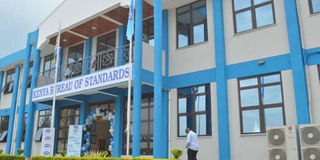
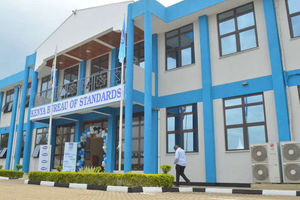
The Lake Region headquarters of the Kenya Bureau of Standards (Kebs).
Photo credit: File | Nation Media Group
The agency said the court must desist from any action that impedes the smooth running of its operations, as it is in the public interest that Kebs executes its mandate effectively to guarantee consumers' right to quality and safe goods.
The political party said that, unlike previous legal notices, the Ministry of Investments, Trade, and Industry focused solely on revenue generation, at the expense of manufacturers and Kenyans at large, with no clear benefit to the industries paying the levy.
GTAP further stated that the new levy is expected to double Kebs’ annual revenue from Sh700 million to about Sh1.4 billion.
The party’s deputy secretary-general, Mr Harrison Ochieng, said manufacturers would not benefit in any way from what he described as a punitive and illegal levy.
“This is unprecedented, illegal, unreasonable, and irrational, and goes against the legitimate expectation that adjustments of such rates would be progressive rather than drastic,” he said.
GTAP also accused the ministry of unlawfully expanding the definition of “manufacturers” to include sectors such as energy generation, software development, computer engineering installation, repair and maintenance, and dry cleaning. The party said this was a deliberate attempt to “net as many industries as possible” under the levy.