The government of Kenya has a development budget of Sh744.8 billion, out of which Sh258.4 billion will be sourced from lenders.
A shortfall of Sh130 billion in government’s counterpart-funding with external partners risks blocking Sh2.2 trillion projects, the Parliamentary Budget Office (PBO) has warned.
The office says that delays by the State to provide its share of funding to the projects could also trigger external creditors and donors to divert funds to off-budget programmes, which are hard to follow through.
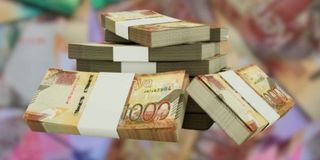
In a report on budget implementation for the 2025/26 fiscal year, the PBO notes that 234 new and ongoing projects in the country are currently being funded using Sh2.17 trillion external loans and grants, but which depend on the government releasing its agreed share.
“With regards to Official Development Assistance (ODA) resources channelled and managed through the annual budgeting process, recent estimates put Kenya’s overall ODA portfolio at Sh2.2 trillion, comprising of Sh1.9 trillion as loans and Sh251 billion as grants, if shortfalls in counterpart funding (GOK share) are fully provided,” the PBO said.
Under the counterpart funding framework, the government plays the lead role by allocating cash or resources that kick-start a project, such as buying land where a road is supposed to be constructed, before external partners provide cash and resources for construction.
The PBO, which offers technical advice to MPs on fiscal and economic issues, notes that during the current fiscal year, more than a third of government’s development budget is expected to come from bilateral and multilateral loans and grants.
The government has a development budget of Sh744.8 billion, out of which Sh258.4 billion (34.7 percent) will be sourced from lenders. This is a reduction from Sh278 billion allocated during the last fiscal year, the PBO notes.
“However, low absorption, weak coordination, and contractual challenges continue to limit effectiveness, causing delays, reduced drawdowns, and diluted impact, while increasing the risk of partners shifting resources,” the office said.
It warned that while reliance on ODA remains critical for the government to drive projects, bureaucratic and fiscal challenges have left billions of shillings coming from external donors and creditors lying idle, and risking diversion to activities that lack visibility.
Off-budget activities are programmes and projects that don’t have to be approved by Parliament, but are rather implemented by funder/provider entities (or other contracted parties).
They include programmes and projects funded by the Global Fund such as treatment of tuberculosis, malaria, HIV and Aids, and support toward health programmes by the Global Alliance Vaccine Initiative.