A State agency has revealed that the government spent Sh13.92 billion in taxpayers’ money on commitment fees for undrawn loans, penalties and related charges during the first nine months of the 2025/26 financial year, exposing weaknesses in public debt management.
The revelations come even as a capitation funding crisis hit public secondary schools, forcing some to close early for midterm amid fears of student unrest.
In her May 2026 report to Parliament, Controller of Budget (CoB) Dr Margaret Nyakang’o said the billions were spread across various lenders, with multilateral lenders accounting for Sh11.38 billion, bilateral lenders Sh2.52 billion and commercial banks and international sovereign bonds making up the rest.
The National Government Budget Implementation Review Report shows that Sh1.01 billion went to commitment fees, while Sh12.91 billion was paid in other related charges.
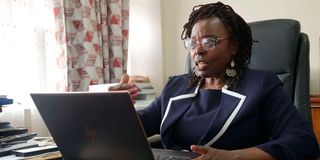
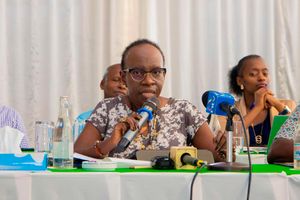
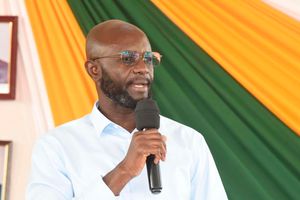
Controller of Budget Margaret Nyakang'o.
Photo credit: Jared Nyataya | Nation
Dr Nyakang’o urged the government to strengthen debt management practices to reduce unnecessary costs on undrawn loans.
“There is a need to minimise commitment fees, penalties and other incidental borrowing costs, as such charges do not contribute to the productive utilisation of borrowed funds,” she said.
The amount spent on commitment fees and related charges could have financed secondary education for 624,888 learners per term, at a cost of Sh22,244 per learner.
The report further shows that 52 per cent of external debt is denominated in US dollars, exposing the country to exchange rate risks, while 48 per cent is in other currencies.
“This exposes the country to significant exchange rate risks, as fluctuations in the Kenya shilling against major currencies such as the US dollar directly affect debt valuation and servicing costs,” the report states.
The rising debt burden has also constrained the government’s ability to implement liability management strategies, including bond buybacks aimed at reducing refinancing risks.
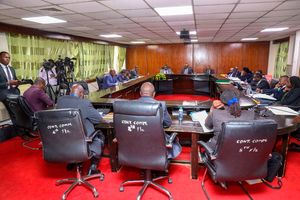
Dr Nyakang’o further told the National Assembly Committee on Public Debt and Privatisation that there is a disconnect between the National Treasury and implementing agencies, contributing to rising commitment fees.
She said some ministries and agencies are often unaware of loans taken on their behalf, leading to delayed or zero absorption of funds.
“To maximise the development impact of borrowing, the government should strengthen project planning, procurement and implementation frameworks, particularly for externally financed projects,” she said.
She cited instances where the government borrowed funds for projects such as Kenya Technopolis, without the implementing ministry being fully aware, and underground power cabling in Nairobi, where Kenya Power reportedly had not been adequately engaged.
“This is a debt trap we are being forced into. We are borrowing for loans that we are not ready to utilise,” she said, adding that continued payment of commitment fees and interest was making the country poorer while limiting development.
The report comes at a time when resource constraints have affected critical sectors, including delayed capitation for schools, healthcare financing, and infrastructure development.
Section 12(2) of the Public Finance Management Act requires the National Treasury to ensure transparency, accountability, and efficient use of public funds.
However, the Public Debt and Privatisation Committee has warned that continued accumulation of commitment fees reflects low project readiness, slow disbursement, and inefficiencies in loan execution.
The committee has recommended stricter performance benchmarks, improved project readiness before borrowing, and cancellation of idle loan tranches to prevent further costs.
Dr Nyakang’o also noted that high interest rates on government securities have significantly increased debt servicing costs.
She disclosed that in the first half of the 2025/26 financial year, Kenya spent USD657.9 million (about Sh86.2 billion) on a bond buyback operation targeting a 2018 Eurobond due in 2028.
The transaction involved buying back USD628.4 million (about Sh82.3 billion) at a premium, resulting in an additional cost of about Sh3.86 billion above the principal amount.