The Ministry of Environment estimates that about 38 million hectares of land in Kenya are degraded to varying degrees.
Gitonga Mugambi, the Principal Secretary for Forestry, said that 10.6 million hectares of the degraded land have been classified as severely degraded.
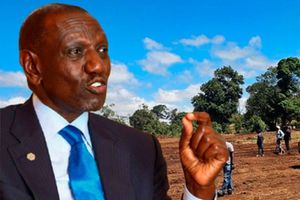
“The country has planted approximately 2.1 billion trees under the 15-billion-tree growing initiative, which aims to restore the severely degraded land by 2032,” he said.
Principal Secretary for Forestry Gitonga Mugambi speaks during the Donors' Roundtable Breakfast Meeting on advancing sustainable forest management and climate resilience at Fairmont The Norfolk Hotel in Nairobi on July 22, 2026.
Photo credit: Bonface Bogita | Nation Media Group
Based on the proportion of trees planted against the 15 billion target and the 10.6 million hectares earmarked for restoration, the Ministry of Environment stated that approximately 1.4 million hectares have been restored.
The restoration efforts cover six landscape categories: drylands, mangrove ecosystems, bamboo ecosystems, agroforestry, natural regeneration and rainforests.
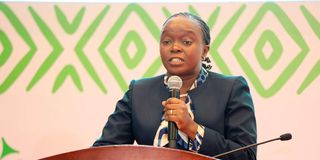
Dr Deborah Barasa, Cabinet Secretary for Environment, Climate Change and Forestry, said land degradation, unsustainable land-use practices and climate change were increasingly affecting the productivity of watersheds, contributing to soil erosion, reduced water availability and greater vulnerability to droughts and floods.
“Environmental degradation is an economic and development challenge,” she noted.
According to David Kaczan, a senior economist at the World Bank, about 44 per cent of Kenya's Gross Domestic Product comes from sectors that are highly dependent on ecosystem services, making the condition of forests, water towers, rivers and agricultural landscapes critical to the country's economy.
“Kenya is famous for its water towers. These assets are economic infrastructure supporting agriculture, businesses and jobs,” he said.
The World Bank states that conservation and wildlife tourism investments in Kenya can generate between Sh390 ($3) and Sh2,600 ($20) in economic benefits for every dollar invested.
Principal Secretary for Wildlife Silvia Museiya said forests and watersheds were essential to wildlife conservation and the tourism sector.
“Without adequate forests and healthy watersheds, the country cannot sustain its wildlife,” Ms Museiya said.
Principal Secretary, State Department for Wildlife, Silvia Museiya Kihoro.
Photo credit: File | Nation Media Group
The scale of land degradation has prompted the government to turn to the Kenya Watershed Services Improvement Project (KEWASIP), a five-year, Sh26 billion ($200 million) World Bank-funded project targeting the rehabilitation of degraded landscapes across the country.
The project targets the restoration of 200,000 hectares across five priority landscapes: Marsabit, Marmanet, Nyambene, Chyulu and Shimba Hills.
George Tarus, the Secretary in the State Department for Forestry, said the sites cover 12 counties.
“The counties are Marsabit, Isiolo, Meru, Tharaka Nithi, Laikipia, Samburu, Baringo, Makueni, Kitui, Garissa, Tana River and Kwale,” he said.
Mr Kaczan said the project was expected to benefit more than 750,000 people through improved economic and climate resilience, while creating more than 25,000 jobs through agroforestry and forest-product value chains.
“The project will focus on improving land and watershed management while creating economic alternatives for communities whose livelihoods depend on natural resources,” he said.
The project is structured around three components, including strengthening national and county policies and planning, financing landscape restoration activities, and supporting project management and implementation.
The largest allocation is directed towards actual restoration work, with interventions expected to cover more than 200,000 hectares under sustainable land management.
The project is also expected to support 10 value chains, with Mr Tarus saying the government intends to grow more than 240 million trees over the five-year implementation period on community, private and public land.
“We are not just planting trees. We are expanding green economic opportunities and securing ancestral lands,” Mr Tarus said.
The State Department for Irrigation will support the construction of water-harvesting infrastructure, including check dams and water pans.
CPA Ephantus Kimotho, Principal Secretary for Irrigation, explained that the facilities were expected to improve water availability for households, livestock and farming activities.
Kenya's Principal Secretary for Irrigation, CPA Ephantus Kimotho.
Photo credit: State Department for Irrigation
“The structures would help communities in drought-prone areas maintain livestock production and support irrigation,” he said.
The project's success is expected to depend on whether communities receive the technical support needed to establish and maintain trees rather than simply being mobilised to plant seedlings.
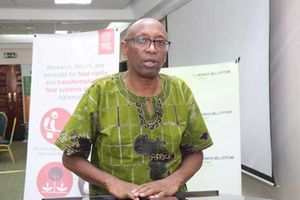
Dr Jane Njuguna, Chief Executive Officer of the Kenya Forestry Research Institute (KEFRI), said the country had to pay attention to the quality of seedlings and the knowledge communities need to ensure trees survive.
“It is very easy to expect communities to plant trees, but again, we don't show them how,” Dr Njuguna said.
KEFRI is present in seven of the 12 participating counties and plans to use its research and technology to support restoration, including through tissue culture laboratories to propagate indigenous tree species.
“It is a science of planting a tree and establishing it, managing it to the product that you expect,” she emphasised.
KEFRI will train communities on nature-based solutions and activities within the project's 10 value chains.
The concerns are significant given that the country's restoration ambitions extend beyond counting seedlings to measuring whether degraded ecosystems are recovering.
CS Barasa said the government would need to focus on seedling survival, improved watershed functions, healthier ecosystems and stronger community resilience.
“Restoration must address the underlying causes of degradation, improve land management, protect biodiversity and create sustainable economic opportunities,” she said.
She further added that more than 91 million mangroves had been planted along the Coast, while 95 per cent of the trees under the national growing initiative were indigenous species and five per cent were commercial plantation trees intended for harvesting.
Ms Barasa explained that only 0.15 per cent harvesting had taken place within the commercial plantation component, arguing that indigenous forests remained protected for conservation.
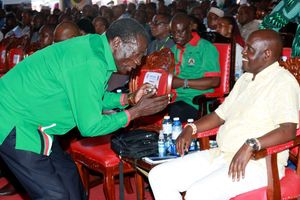
According to Mary Mwiti, CEO of the Council of Governors (CoG), the council would coordinate the 12 counties but warned that poor coordination at the county level had previously impeded the implementation of development projects.
“County governments should ensure that funds transferred from the County Revenue Fund to special-purpose accounts are released without delay to allow project activities to proceed,” she urged.
PS Mugambi, however, said the implementation structures were in place and that resources would be released once the annual work plans were activated.
National and county project coordination units had been established, intergovernmental agreements signed with all 12 counties, and a community grants manual completed.
“The problem is how to use the money in a transparent and accountable manner,” he said.
The concerns come as the five-year project enters its implementation phase, with Laikipia Governor Joshua Irungu Kang'ata warning against allowing political transitions to derail its objectives.
“The launch should translate into action, with funds released to county accounts to support implementation,” he said.
Murang'a County Governor Irungu Kang'ata.
Photo credit: Dennis Onsongo | Nation Media Group
Governor Irungu, who also chairs the Council of Governors' Water and Natural Resources Committee, said the programme needed to move beyond official launches and begin delivering resources and interventions to communities.
“Watershed management should extend beyond tree planting to include household-level water harvesting,” he said.
He also called for consultations at the local level, noting that counties had different environmental conditions and restoration needs.
“Communities should be involved in determining the interventions most suitable for their areas,” he said.
The government says the project will deliberately involve vulnerable and marginalised groups, with community organisations expected to participate in identifying priorities and implementing restoration activities.