Kenya is undeniably experiencing a construction boom; from housing developments to mega infrastructure projects. Just recently, the president announced plans to set up an infrastructure fund to finance an ambitious list of projects.
If successful, the fund will fuel massive development across the country, including an aspirational 10,000 km road network, dams, up to 10,000 megawatts of power and irrigation plants.
As expected, such developments would open up the country’s economy, further triggering demand for housing and commercial buildings. Clearly, exciting days lie ahead.
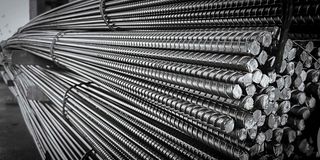
At the heart of this construction boom, we have steel, a construction material that should carry the entire weight of the country’s development. Steel as both a reinforcement and housing material plays a big role in defining a country’s development journey. Can Kenya’s steel industry carry this weight or will it buckle?
This week, industry players give a glimpse of where the industry is headed while a civil engineer shares tips on how to verify the quality of your steel during projects to ensure sustainability and durability of what you put up.
Decarbonising the industry
One of the biggest developments is the industry’s efforts to decarbonise manufacturing. As the demand for steel increases, environmental experts increase the pressure to produce sustainably. And the industry is responding positively from green energy tapped from solar to circular economy practices. Sustainable manufacturing is no longer “a nice to have” practice, rather, a necessity.
Rittah Okello, the Relationship Marketing and Communications Manager at Mabati Rolling Mills (MRM) says MRM, the oldest company in the industry, for instance, has integrated sustainable practices at every stage of production. The practices range from recycling and reducing material use, to reusing resources wherever possible, to minimise environmental impact while maximising efficiency.
At the heart of this construction boom, we have steel, a construction material that should carry the entire weight of the country’s development.
Photo credit: Shutterstock
“The raw material, iron ore, used in steel production is mined from the earth and the supplies are imported into the country. The first by-product in the production process is red oxide and we embrace a circular economy by passing on this by-product to others so it can be used to make flooring products. During the processing of steel, we try to roll into thinner gauges or thickness to ensure the material can be used in the Juakali industry to make products such as jikos or metallic boxes, and this feeds into the blue-collar economy. We also supply fabrication artisans who rely on steel,” she explains.
Supplying these blue-collar economies reduces waste while also feeding into the economy. And when it comes to green manufacturing, Rittah adds that the company has embraced a zero-emission production process by trapping the steam produced in their factories through a hydro-recycling plant instead of releasing emissions to the open air. The water harvested from this recycling process is used for irrigation and other purposes.
Distribution and supply are a critical function in the steel industry. Two factors come into play when it comes to supply; first project timelines rely on timely supplies. Second, to curb counterfeits and penetration of substandard steel products, manufacturers need reliable supply chains.
Traditionally, they have relied heavily on authorised dealers who are more accessible across the country. And while this arrangement has worked well in making steel more accessible across the country, manufacturers are increasing internal capacity.
Tuffsteel Limited, a major player in steel production and construction material supplies backs its supply logistics chain with a network of over 150 trucks and 35 bulk cement carriers, ensuring timely deliveries to sites. When it comes to steel, Tuffsteel curbs counterfeits through traceability. The company maintains certification transparency, and end-to-end material support, making it easy for contractors and developers to verify their products.
The business notes that quality verification begins at the source. All steel supplied is manufactured under internationally recognised production and testing standards and bears the KEBS certification mark.
Additionally, the company takes a single-source approach, where contractors source multiple construction materials from one company. This ensures standardisation of production quality while streamlining procurement processes for construction projects.
MRM’s Rittah notes that the company is taking a different approach when it comes to enhancing supply chains.
“Steel is a costly investment and people want to know exactly what they are buying. By touching, feeling and seeing the steel, they are able to make informed decisions. Devolution is also fueling development and demand for steel is growing. People want to access the material as conveniently as possible,”
In response to the changing consumer demands, the company has introduced a mobile showroom which brings the materials closer to people. This is a showroom on wheels, unlike hardware shops or other showrooms which are immobile.
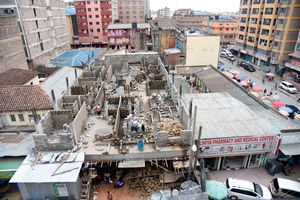
Construction workers lay down steel frames at a construction site Ngara, Nairobi on March 15, 2024.
Photo credit: Francis Nderitu | Nation Media Group
Beyond the innovative solution, the company is also growing its internal supply capacity to eliminate counterfeit steel products, a big headache for most manufacturers and developers.
“Sometimes consumers ask if they can buy directly from the company. Their main pain point is counterfeit products which have saturated the market so people are more comfortable buying directly from the manufacturer. The market also has a lot of suppliers and differentiating or verifying steel products requires an expert eye. The average Kenyan is more comfortable when buying directly from the manufacturer,” explains Rittah.
Modular housing technology
Beyond traditional steel products, technology is advancing and steel-framed insulated housing designs are now joining the alternative and modular housing movements. These modular houses are quick to produce and erect on site and they can be disassembled and moved to different sites.
“The construction speed is much lower with a modular steel house. In just 30 days the house can be produced and assembled on site. This saves on labour costs and other time-related costs. This tech, also solves land tenure issues in Kenya. There is growing adoption for moveable and alternative housing solutions which can be transferred easily to different sites when the need arises. Furthermore, the panels are incorporated with polyurethane, which has excellent insulation properties, ultimately increasing a homeowner’s comfort,” notes Rittah, in reference to MRM’s SAFHOME design.
Harmonising industry standards
Finally, the fragmented nature of the construction industry has always made it difficult to maintain uniform regulatory and quality control standards. Regulation roles fall under both the county and national governments. However, stakeholders such as regulators, policy makers and construction professionals are now coming together to streamline best practices which cut across different construction materials, including steel.
Just recently, the National Construction Authority in collaboration with the Institution of Engineers of Kenya and the Council of Governors published a Site Inspection Handbook. The handbook is meant to standardise site inspection protocols and bring crucial information on construction best practices closer to the public and construction professionals. Under material compliance, the handbook provides a great reference point for construction professionals to ensure that essential materials like steel and others meet minimum standard requirements.