Importers in Kenya are bracing for higher business costs following a decision by Danish shipping giant Maersk to increase freight charges on cargo moving from China and Hong Kong to East African ports.
The new charges, which take effect on June 15, are expected to affect millions of Kenyans who depend on goods imported from China, one of Kenya's largest trading partners and a major source of consumer products, industrial equipment, electronics, and construction materials.
Maersk, which handles more than 60 percent of Kenya's cargo, announced a revision of its Peak Season Surcharge (PSS) applicable to cargo shipped from China and Hong Kong to the ports of Mombasa and Dar es Salaam. The new rates will remain in force until further notice.
The adjustment comes at a time when East African economies remain heavily dependent on imports from China, with businesses relying on the Asian giant for machinery, vehicles, electronics, raw materials and a wide range of manufactured goods.
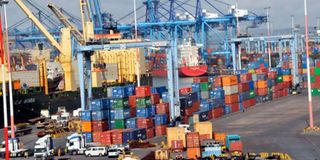
Containers with various imported goods at the port of Mombasa.
Photo credit: File | Nation Media Group
Industry players warn that the higher freight costs are likely to increase the final prices of imported products and place additional pressure on businesses already struggling with rising operational expenses.
Under the new surcharge structure, importers bringing goods into Kenya through the Port of Mombasa will pay an additional Sh130,000 for every 20-foot container, up from Sh118,000 previously.
The surcharge for a 40-foot container has increased sharply to Sh260,000 from Sh142,000, representing one of the most significant freight increases in recent years.
The latest adjustments come as container freight rates continue to rise across major global shipping routes due to ongoing geopolitical tensions in the Middle East and disruptions at key Asian transshipment hubs.
According to shipping industry players, freight rates on some major trade routes are now more than 100 percent higher than levels recorded before the latest regional conflicts erupted earlier this year.
Kenya Ships Agents Association Chief Executive Officer Elijah Mbaru said the increase reflects growing pressure within global shipping networks.
"The wave of freight rate increases is gathering momentum across global ocean container shipping trades, fueled by ongoing conflict in the Middle East and knock-on disruption in South-East Asia ports, plus growing fears of an energy crisis in the second half of 2026," said Mr Mbaru.
He noted that shipping lines continue to face operational challenges as they reroute vessels and adjust schedules in response to disruptions affecting key maritime corridors.
Industry experts say delays at major transshipment hubs such as Singapore and Port Klang have compounded the situation, slowing cargo movement and increasing costs across supply chains.
Shipping analysts also note that cargo destined for Tanzania remains more expensive in some categories compared to Kenya.
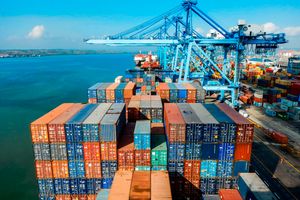
The Mombasa Port. The number of containers at different berths at the port continue to increase as several liners in the past few days opted to implement ‘cut and sail’ where they leave the berth upon stipulated time without loading all stipulated boxes.
Photo credit: POOL|NMG
According to Mombasa-based clearing and forwarding agent John Mwasingo, congestion at the Port of Dar es Salaam is likely to push shipping costs even higher in the coming months.
"We expect more shipping lines to follow suit. Charges for Tanzania may continue rising faster than those for Kenya due to congestion challenges being experienced at Dar es Salaam Port," he said.
In a notice to customers, Maersk said the revised charges would apply to non-spot bookings and would be calculated according to freight payment terms agreed upon during booking.
"The surcharge applies strictly to non-spot bookings and is charged according to freight paid terms, affecting pre-arranged shipping contracts. For non-FMC bookings, pricing is now tied to the scheduled departure date of the first water leg at the time of booking confirmation," the company stated.
The company added that the rates are based on the applicable Price Calculation Date and remain subject to additional charges, including local port fees, contingency charges and other applicable surcharges.
The announcement is expected to have far-reaching implications across East Africa's supply chains because China remains the region's largest source of imports.
Data from international trade statistics show China accounts for about a quarter of East Africa's imports. The country supplies products that are critical to manufacturing, construction, transport, retail trade and infrastructure development.
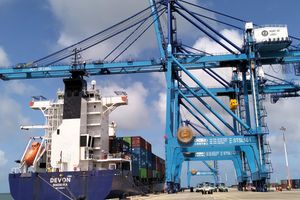
Cargo containers at the Port of Mombasa in September last year.
Photo credit: File | Nation Media Group
Economic analysts say higher freight charges inevitably translate into higher landed costs, meaning businesses will spend more to bring goods into the country. In many cases, these additional expenses are eventually passed on to consumers.
"Shipping costs are a critical component of the total cost of imports. Any increase in freight charges has a direct impact on product prices across multiple sectors," said economist James Mwangi.
He noted that businesses importing machinery, electronics, steel products and industrial inputs from China are likely to experience increased operational costs over the coming months.
The latest surcharge increase also comes at a time when many businesses are still recovering from supply chain disruptions experienced in recent years, as well as currency fluctuations that have made imports more expensive.
Kenya imported goods worth approximately $4.3 billion from China in 2025. Key imports included machinery, industrial equipment, electronics, telecommunications devices, vehicles, construction materials and steel products.
By comparison, Kenya's exports to China remain relatively low, estimated at between $200 million and $310 million annually, consisting mainly of tea, coffee, titanium ore and other agricultural products.
The trade imbalance means Kenya is particularly vulnerable to increases in shipping and logistics costs.
As the June 15 implementation date approaches, businesses across East Africa are closely monitoring the developments and assessing the impact on their operations. Many importers are expected to review procurement strategies, renegotiate supply contracts and explore ways of reducing logistics expenses.
While the effects may not be immediate, economists warn that sustained increases in shipping costs often find their way into the prices of everyday goods.
With East Africa increasingly integrated into global trade networks, developments in international shipping continue to play a critical role in determining the cost of goods, business competitiveness and economic growth.