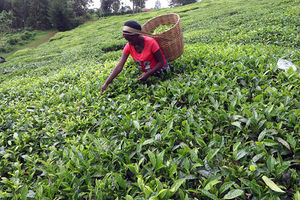
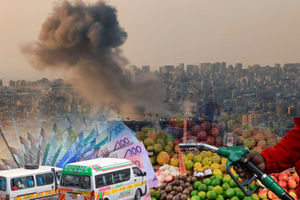
Kenya’s tea industry is facing mounting pressure from the Middle East conflict, with rising fuel costs and shipping disruptions leaving tea worth billions of shillings stranded and threatening earnings for more than 700,000 small-scale farmers.
The Kenya Tea Development Agency (KTDA) says at least 10 million kilogrammes of tea valued at about Sh3 billion is stuck in warehouses in Mombasa due to logistical disruptions linked to the US-Israel war against Iran. The crisis, coupled with higher fuel prices, is pushing up production and transport costs across KTDA’s 77 factories, raising fears of lower farmer bonuses this year.
KTDA Group Acting Chief Executive Francis Miano said the conflict has disrupted key export routes, slowing shipments to international markets and creating a growing stockpile.
“The war has affected tea business logistics, with Kenyan produce greatly hit. We have almost one million kilogrammes of tea waiting to be exported,” Mr Miano said, adding that increased fuel costs are eroding farmers’ returns.
Industry players say the situation has worsened as shipping lines reroute vessels to avoid high-risk zones such as the Strait of Hormuz and the Bab el-Mandeb Strait, leading to longer transit times and higher freight and insurance charges.
KTDA Holdings chairman Enos Njeru warned that the rise in fuel prices will significantly affect farmers’ earnings in the current financial year, and called for government intervention to cushion the sector.
“The increase in fuel prices will affect farmers’ earnings. We urge the government to reduce taxes on tea to lower operational costs and ensure farmers are paid,” Mr Njeru said.
KTDA vice-chairman Samson Mosonik Menjoh noted that labour remains the largest cost component in tea production, compounding pressure on factories already grappling with higher energy and logistics expenses.
Fuel prices have remained volatile in recent months. The Energy and Petroleum Regulatory Authority (Epra) recently raised pump prices by an average of Sh28 per litre before a slight adjustment that saw petrol retail at Sh199.00 and diesel at Sh198.40 per litre.
The East African Tea Traders Association (EATTA) said the disruptions have led to a worrying build-up of unsold tea as buyers struggle to move consignments.
Managing director George Omuga said the Middle East accounts for between 20 and 25 per cent of Kenya’s tea exports, making the region critical to the industry.
“Ships have been rerouted for safety, and this has sharply increased freight, insurance and security costs,” Mr Omuga said.
He added that while exports to key markets such as Egypt and Pakistan are still ongoing, longer routes via the Cape of Good Hope have driven up costs and slowed deliveries.
Kenya exports at least 100 million kilogrammes of made tea to the Middle East annually, and any prolonged disruption could significantly affect revenues.
At the farm level, growers are already feeling the strain. Mr Simion Mutai, a director at Motigo Tea Factory in Bomet County, warned that the growing stockpile could translate into lower prices or losses if the conflict persists.
Motigo Tea Factory in Bomet County managed by the Kenya Tea Development Agency (KTDA).
Photo credit: Vitalis Kimutai | Nation
“The pile-up of stock is worrying, especially as farmers have been pushing for higher prices per kilo of green leaf. If the conflict does not end soon, returns will drop,” he said.
Ms Beatrice Koech, a small-scale farmer supplying Olenguruone factory in Nakuru County, said rising fertiliser costs linked to global tensions are further squeezing growers.
“There is a need for government intervention to cushion farmers from losses arising from global trade disruptions,” she said.
The crisis comes at a time when the tea sector had begun recovering, posting a market value of Sh218.79 billion in the 2025 financial year, up from Sh215.21 billion the previous year, according to the Tea Board of Kenya.
Export earnings rose to Sh186.91 billion from Sh181.69 billion, while volumes increased by 9.81 per cent to 652.80 million kilogrammes. Kenya also expanded its export destinations from 96 to 100 markets.
A worker at Empire Kenya tea packaging set for auction and export on August 5, 2020.
Photo credit: File | Nation Media Group
Agriculture Cabinet Secretary Mutahi Kagwe said traditional markets such as Pakistan and Egypt recorded steady demand, while re-export hubs including the United Arab Emirates and Oman registered significant growth.
Egypt remained the largest buyer, importing 90.70 million kilogrammes, followed by the United Kingdom at 56.38 million kilogrammes and the UAE at 32.54 million kilogrammes.
Despite the gains, industry players warn that continued global instability could reverse the sector’s recovery, disrupt supply chains and expose farmers to lower earnings.