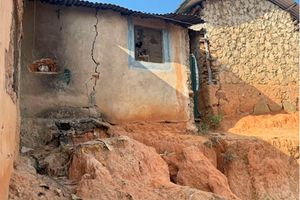
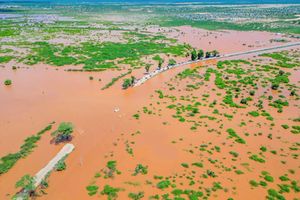
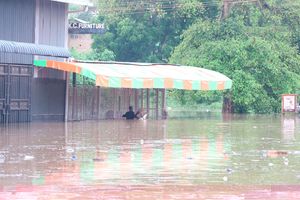
Kenya’s tourism industry is shifting into contingency mode as El Niño rains begin pounding the Coast, with flooding already reported in parts of Mombasa and Kwale, even as tourists hold on to their October–December bookings.
Tour operators have mapped out flood-prone hotels and lodges, restricting night travel, monitoring roads, airstrips and airports, and preparing to reroute visitors if worsening weather makes destinations or travel routes unsafe.
So far, however, there are no signs of a major retreat by tourists, with operators reporting no cancellations or requests to change arrival dates because of the weather forecast.
Tourism expert Mr Mohammed Hersi.
Photo credit: File | Nation Media Group
Tourism expert Mr Mohammed Hersi said the industry was preparing for disruption while seeking to ensure that tourists already in the country remain safe and those planning to visit are not unnecessarily inconvenienced.
“What is predicted is not the usual rain. This is El Niño. We have experienced it before, and it is never a good experience. It is very rough and sudden, and it can continue for many hours,” said Mr Hersi, the director of Pollman’s Tours and Safaris.
“For tour operators, that is a big challenge because we have many vehicles on the road. The most important thing is to ensure that our drivers remain safe with our guests and do not take unnecessary risks,” he said.
The October–December period is traditionally an important period for the tourism industry, with operators expecting increased visitor numbers to the Coast and the country’s wildlife destinations.
But this year, the industry faces the prospect of heavy rains disrupting road transport, flooding hotels and camps, cutting off tourist routes and affecting access to airstrips and airports.
Mr Hersi said his company had established a crisis team and mapped facilities and areas considered vulnerable to flooding.
In the Maasai Mara, for example, the company has identified hotels and lodges along rivers, particularly the Mara and Talek, while camps along the Ewaso Nyiro River are also being closely monitored.
“We have mapped the hotels and lodges that we consider high-risk, especially those in the Maasai Mara along rivers such as the Mara and Talek. Any camp along the Ewaso Nyiro is also an area we are watching closely,” said Mr Hersi, who is also the former Kenya Tourism Federation chairman.
The company has also equipped its vehicles with radio communication systems to maintain contact with the Kenya Tourism Federation’s 24-hour safety centre.
“Normally, our driver-guides will not drive beyond 6pm. By that time, they are either at the lodge or already at their hotel. This means there is no night travel, which helps to reduce the risk,” Mr Hersi said.
The operators are also monitoring the facilities where their clients are staying and are prepared to move them if conditions deteriorate.
“If we notice that a hotel or lodge has been affected, we liaise with the facility to ensure that our clients are moved to safer areas,” he said.
Where a facility becomes unsafe before a tourist arrives, the operator plans to reroute the visitor to another hotel or destination.
“We communicate in real time with all our clients and agents. So far, we have not recorded any cancellations or changes in bookings because of the weather forecast. No one has cancelled or asked to change their arrival dates,” he said.
This means that, for now, the industry’s immediate challenge is not falling bookings but ensuring that tourists can move safely if the rains intensify.
The operators are drawing on lessons from previous El Niño episodes and other emergencies to identify destinations where tourists could face difficulties.
“We always go back to our notes and work closely with our teams in Tsavo and Amboseli. We have learnt from previous crises, and that experience helps us prepare,” Mr Hersi said.
Mr Hersi said improvements on the Taveta–Loitoktok road had reduced some flooding risks along the route, but the Sala Gate area on the Malindi side of Tsavo East remained vulnerable.
Tourists van outside the Tsavo East National Park at Sala Gate.
Photo credit: Kevin Odit | Nation Media Group.
“We are lucky that the road between Taveta and Loitoktok is being worked on, which has reduced some of the flooding risk. But we have a challenge around Sala Gate, the entry point from the Malindi side into Tsavo East, where flooding can occur. We are keeping a close eye on that area,” he said.
“Amboseli is a big area for us. It is low-lying and tends to flood very easily. Maasai Mara is another area we are watching closely,” he said.
Nairobi has also been included in the risk assessment because flooding can affect roads and built-up areas.
“Nairobi cannot be ruled out either. With all the concrete buildings and highways, some areas tend to flood. But I am encouraged that the county and national governments are working to clear drainage systems and prevent blockages,” Mr Hersi said.
At the Coast, operators are closely watching Mombasa and the South Coast, where the onset of heavy rains has already raised concerns over flooding.
Improved road infrastructure has, however, eased one of the longstanding challenges of accessing the South Coast.
“Going to the South Coast, the bypass is now clear, so we no longer have to rely on the ferries. That has reduced one of the risks for tourists travelling to the area,” Mr Hersi said.
Air travel is also being monitored because heavy rainfall could affect airstrips serving wildlife destinations.
“We are also keeping an eye on the airstrips, especially those in national parks such as Maasai Mara, Amboseli, Samburu and Laikipia. We are reviewing the situation at the airports and monitoring the SGR as well,” he said.
The Kenya Association of Hotelkeepers and Caterers (KAHC) Coast executive, Dr Sam Ikwaye, said the industry was watching the weather closely because October–December is a critical period for tourism.
“We expect some disruption to beach and marine activities, excursions and access in flood-prone areas, but rain does not necessarily mean a poor season. It could also rejuvenate attractions affected by the prolonged drought,” Dr Ikwaye said.
Wildebeests arrive at Kenya's Maasai Mara Game Reserve from Tanzania's Serengeti National Park during the start of the annual migration.
Photo credit: File I Nation Media Group
He said hotels and tour operators had not recorded significant cancellations directly linked to the forecast and that bookings remained encouraging.
But the industry, he said, was reviewing contingency plans covering alternative activities, transport arrangements and communication with guests.
“Our bigger concern is preparedness. There is a limit to what the tourism industry can do on its own. Government action at both county and national level is critical,” he said.
“We need urgent attention to drainage clearance, flood-prone areas, critical tourism roads and emergency response capacity.”
Dr Ikwaye said the Mombasa County disaster team had activated preparedness measures, with KAHC engaging the team and the Red Cross on issues including drainage.
He called for the response to be expanded into a Coast-wide operation involving counties, the Kenya National Highways Authority (KeNHA), Kenya Rural Roads Authority (KeRRA), Kenya Wildlife Service (KWS), disaster-management agencies, security services, utilities and the tourism industry.
“Early weather warnings must translate into early action, with emergency resources positioned in known hotspots. The private sector can prepare its properties and manage guests, but a hotel cannot clear a public drain or repair a flooded public road. That responsibility rests with government,” he said.
“Our message is therefore preparedness, not panic. We remain optimistic about the peak season, but the window for preventive action is now.”
For the Coast, where tourism depends heavily on reliable roads, beaches, marine excursions and access to hotels and attractions, the coming weeks will test whether preparations can keep the industry operating as the rains intensify.
For now, tourists are still coming, and bookings remain intact.
But with floodwaters already affecting parts of the Coast, the industry is no longer preparing for a problem that might happen. It is preparing for what happens if the rains get worse.