Chief Executive Officers (CEOs) in the trade and tourism sectors have the lowest expectations of economic growth in 2025, reflecting the widespread concerns about US President Donald Trump’s protectionist policies and non-renewal of preferential terms under the African Growth and Opportunity Act (Agoa), a new Central Bank of Kenya (CBK) survey has revealed.
The survey, which sampled CEOs and other senior officers of 353 private sector firms, shows that 37 per cent of executives in the trade sector expect the economy to grow at less than three per cent in 2025—marking the highest level of pessimism among all the sectors targeted in the survey.
An estimated 24 per cent of CEOs in the tourism sector expected the economy to grow at below three per cent this year. Players in the real estate sector are the most upbeat about growth this year, with 25 per cent of them projecting the economy will expand by above six per cent.
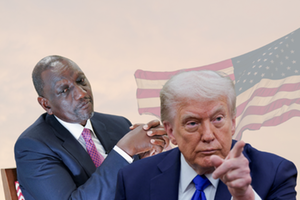
US President Donald Trump.
Photo credit: Reuters
“Respondents expect better agricultural performance to continue driving economic performance in 2025 largely on account of favourable weather and benefits from reforms by the government in the sector,” said the CBK in its survey.
“In addition, respondents expect economic growth to be supported by improved services sector performance, boosted by increased private sector activity stimulated by increased private sector credit growth due to lower lending rates and accessibility to finances.”
The CEOs pointed out that private sector activity is also expected to benefit from the stable macroeconomic environment, especially the low inflation rates and stable exchange rate.
A separate CBK survey, which sampled the views from over 1,000 private sector CEOs, had shown that overall, about two-thirds (64 per cent) of the respondents expect to be negatively impacted by the recently raised US trade tariff on Kenyan goods and the expiry of the Agoa.
“Most respondents anticipate being affected by the recent US trade tariffs and policy changes through higher import costs for inputs and finished goods and reduced exports to the US after the expiry of Agoa,” said the CBK.
“They also expect lower consumer demand due to reduced disposable incomes from declining profits and job losses, as well as secondary effects on local businesses reliant on affected clients. For instance, the hotel industry reported reduced business, with fewer conference bookings from NGOs and other donor-funded programmes.”
President Trump, on April 2, 2025, imposed a 10 per cent tariff on imports from some African nations, including Kenya, in a bid to address what he termed as ‘absence of reciprocity in our bilateral trade relationships’.
Kenya is also among African countries set to be hardest hit by non-renewal of the Agoa deal with projections by the UN Conference on Trade and Development indicating that the country’s average weighted trade tariff with the US will nearly triple to 28 percent on expiry of the preferential trade deal, signaling a major blow to jobs and investments in the country’s textile and apparel sector.
The CBK survey highlighted that a third of CEOs in the tourism sector are worried that the Donald Trump administration’s tariffs imposed on Kenya and other countries, and the end of the Agoa trade agreement, will result in fewer bookings and earnings.
The sector is one of the many that have benefited from the presence of donor programmes such as the US Agency for International Development through bookings for meetings, incentives, conferences, and exhibitions, among others.
“The tourism sector prospects improved, supported by expectations of intensified activity during the upcoming festive season, increased marketing initiatives, and political stability, though activity has been dampened by reduced NGO funding - mainly through lower conferencing demand - and transitional challenges related to the Government E-procurement policy,” said CBK.