A new report has revealed a significant shortage of key food products in Kenya, including eggs, milk, fish and honey, with the gaps filled through imports from neighbouring countries and China.
The Food Systems Analysis report, commissioned by the Financial Sector Deepening Kenya (FSD Kenya) under the Green Finance for Youth Employment (GFYE) project, found that Kenya faces an annual deficit of about five billion eggs, 6.5 to 7.5 billion litres of milk, 340,000 tonnes of fish and 5,500 tonnes of honey.
Eggs and milk are largely imported from Uganda, while fish is primarily imported from China.
“Kenya’s food deficits are not only a food security challenge; they are a youth-employment opportunity, and green finance is the bridge between the two,” said FSD Kenya Chief Executive Rashmi Pillai during the launch of the report in Nairobi.
The study covered Bungoma, Busia, Embu, Kakamega, Kirinyaga, Kisii, Machakos, Meru, Nakuru, Nandi, Nyeri, Siaya, Tharaka Nithi and Trans Nzoia counties, which are primarily the country’s farming zones. It was conducted in partnership with the Finnish Ministry for Foreign Affairs, the National Treasury and the International Fund for Agricultural Development (IFAD).
According to the report, Kenya’s food system is constrained less by production potential and more by structural barriers in finance, skills and market access that limit youth participation across high-value farming.
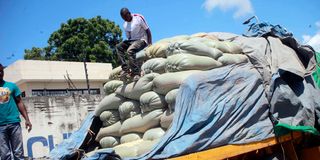
Kenya largely imports eggs and milk from Uganda.
Photo credit: Pool
Drawing from data collected from 1,210 agribusinesses, 88 key informant interviews and 28 focus group discussions, the study shows that agriculture in Kenya is profitable, but access to capital prevents scale.
More than half of the enterprises surveyed – 53 per cent – cited lack of collateral as the main barrier to accessing credit, while 43 per cent pointed to irregular income patterns and 16 per cent highlighted weak financial record-keeping.
Most financial institutions remain hesitant to extend credit to farmers due to perceived risks, as agriculture is still largely considered informal and, therefore, harder to assess and secure. These constraints are compounded by loan products that are poorly aligned with agricultural cycles, often requiring monthly repayments despite production cycles lasting many months.
“The structure of most agricultural lending is not compatible with how food systems work. You cannot expect farmers to begin repayment before they have even harvested,” Ms Pillai said.
She added that financial institutions remain comfortable lending to export-oriented value chains such as tea, coffee and avocado, because they are formalised, predictable and easier to assess.
“Domestic food systems such as poultry, fish, milk and eggs despite their high demand – are considered riskier and, therefore, underfinanced,” she said.
“Kenya has many good policies supporting youth in agriculture. The real challenge is implementation and building confidence in financial institutions to lend to farming,” she said at the launch of the report.
She also challenged the perception of agriculture as an occupation of last resort, saying the average farmer in Kenya is 64 years old.
“Agriculture should not be something people turn to at retirement. It must be a viable, attractive and profitable enterprise for young people,” she said.
The consequences of this financing mismatch are visible across the five value chains studied. In poultry, dairy and aquaculture, feed costs alone account for 50 to 70 per cent of production costs, significantly limiting profits for small and medium enterprises.
The report found that persons with disabilities were absent from the sampled enterprises, with 70 per cent citing workplaces that could not accommodate their needs, an exclusion the study identifies as a barrier the financial sector must deliberately design against. Of the 1,210 agripreneurs engaged, some 484 were aged 18 to 35. Seasonal repayments employers report that workers aged 18 to 25 often lack practical skills and experience, while those aged 26 to 35 tend to demand high wages or prefer self-employment. Women face additional barriers related to unpaid care work and limited land ownership, which further restrict their access to collateral-based lending. Despite the scale of the problem, the report says the tools to address it exist.
“The Food Systems Analysis report shows the five value chains – dairy, poultry, horticulture, fisheries and aquaculture and apiculture – already demonstrate strong commercial viability, but remain underdeveloped due to systemic financing gaps and mismatched financial products,” Ms Pillai said.
The study identifies practical green technology available in Kenya that could improve farm profits while closing the supply gaps.
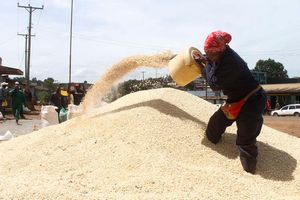
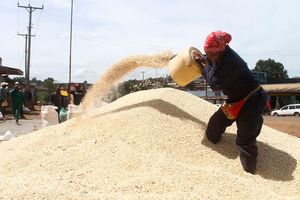
Imported maize. Kenya is facing a significant shortage of key food products, leading to increased imports.
Photo credit: File | Nation Media Group
In poultry farming, for instance, substituting conventional feed with black soldier fly protein and replacing grid power with solar heating cuts monthly production costs by 42 per cent and more than doubles returns on investment from 108 per cent to 260 per cent over a 16-month production cycle. Similar gains are documented in aquaculture, where black soldier fly feed substitution raises returns from 127 to 194 per cent. These are not pilot projects.
The technologies are already being deployed by enterprises in counties like Busia, where a women-led black soldier fly enterprise is supplying nearby fish and poultry farmers at below commercial feed prices.
The report highlights growing demand for green technologies across the five value chains, including solar-powered incubators for poultry farmers, solar irrigation systems for horticulture, modern hives and solar-powered milk chillers for dairy farmers. Electric mobility solutions for transporting agricultural produce are emerging as viable innovations. However, uptake remains low due to limited access to affordable, long-term asset financing.
“You cannot give a loan to a poultry farmer and expect repayment before the birds are ready for the market. Financial products must reflect agricultural realities,” Ms Kamara said.
To address the financing gap, the study recommends products tailored to agricultural cash flows, including seasonal repayment structures and grace periods. It also recommends expanding the use of alternative credit scoring models that rely on mobile money transactions, cooperative records and digital platform data rather than traditional collateral requirements.
“Green job opportunities are critical in sealing the gap, and agricultural stakeholders need to come together and mobilise funds to support this cause,” Ms Pillai said.
Finland Ambassador to Kenya, Riina-Riika Heikka, described the report as a timely contribution to efforts to build inclusive, climate-resilient food systems. “Kenya is a young and dynamic country. Its long-term growth depends on how well it harnesses the potential of its youth,” the ambassador said, highlighting innovation in finance, skills development and inclusion as central themes.
The diplomat called for existing financial products to be redesigned and supported with digital tools such as AI and alternative data systems.