Kenya’s food import bill went up by Sh4.8 billion during the year to last December, reversing a decline witnessed in 2024, as renewed drought pressure towards the end of last year began to offset previous local production gains.
Data from the Kenya National Bureau of Statistics (KNBS) shows that the country spent Sh288.1 billion on food imports last year, up from Sh283.3 billion the previous year.
The rise follows a 2024 contraction that had been driven by improved harvests, which rode on favourable weather conditions and expanded access to subsidised farm inputs.
That decline at the time marked the first fall in four years and reflected a recovery from drought conditions that had peaked in 2022 and severely constrained local food production.
While the current increase is at a modest 1.7 per cent, it signals renewed pressure on food supply chains after a weak October–December short rains season disrupted crop production across key agricultural regions.
KNBS data shows that the impact of the poor short rains is already filtering through to markets, piling pressure on the country’s overall inflation.
The country’s inflation dipped marginally to 4.4 per cent year-on-year in January 2026 from 4.5per cent the previous, mainly curtailed by significant rises in the prices of cabbages, fortified maize flour, Sukuma wiki and Irish potatoes, which increased by 9.3 per cent,6.7 per cent, 4 per cent, and 3.4 per cent, respectively.
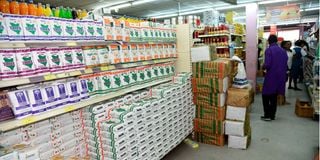
Cabbages with price tags on display at Muthurwa Market in Nairobi on December 29, 2025.
Photo credit: Wilfred Nyangaresi | Nation Media Group
The Kenya Meteorological Department had earlier warned that large parts of the northeastern, southeastern lowlands, and coastal regions would receive below-average rainfall during the 2025 short rains season.
The forecasts largely materialised, with government agencies reporting reduced crop output, diminished pasture availability, and rising stress on food systems entering early 2026.
According to the National Drought Management Authority, several counties shifted into drought alert or alarm phases following the poor rains, including areas previously classified as food secure.
The impact of the pressures began to filter into the food markets late last year and has extended through to this year, with prices of key commodities such as maize flour and vegetables emerging as the main drivers of inflation in both December and January this year.
Kenya’s food import bill has remained elevated in recent years, consistently ranking among the country’s largest import categories and oftentimes surpassing capital goods such as machinery.
The imports are largely denominated in foreign currency, meaning higher volumes translate to higher pressure on foreign exchange reserves and the international trade balance.
President William Ruto’s government has sought to enhance local production through fertiliser subsidy programme, improved seed distribution and increased acreage under cultivation in high-potential regions.