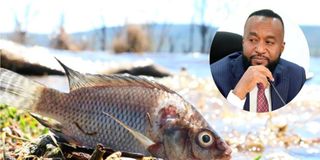
The issuance of fishing licences to residents seeking to exploit Lake Nakuru’s fish resources must comply with the Fisheries Act, which requires anyone engaging in fishing activities to obtain valid authorisation, except where the law provides an exemption.
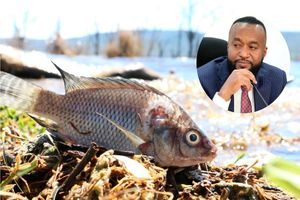
Freshly caught fish from the rising waters of Lake Nakuru at Barut area.
Photo credit: Boniface Mwangi | Nation Media Group
So what does the Fisheries Act say? Under Chapter 378 of the law, no person may catch fish in Kenyan waters without a valid licence issued under the law, unless fishing is for personal consumption in accordance with applicable regulations. The law further provides that licences must specify the species of fish that may be caught, the type of fishing gear to be used, the fishing methods permitted and the areas where fishing is authorised.
This means that the issuance of licences does not automatically grant fishermen unrestricted access to any water body, as the activity must comply with the conditions of the licence and other applicable legal requirements.
The Act also requires licence holders to comply with regulations governing the submission of catch statistics and the collection of information to facilitate the monitoring and management of fisheries resources.
Under the provisions cited, anyone who fishes without a required licence or contravenes its conditions commits an offence punishable by a fine not exceeding Sh20,000, imprisonment for up to two years, or both.
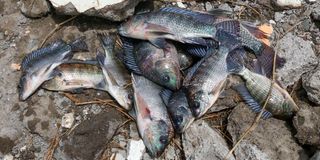
Fishermen conduct their fishing inside Lake Nakuru at Barut area.
Photo credit: Boniface Mwangi | Nation Media Group
The Fisheries Regulations further stipulate that a person may fish in Kenyan waters if they hold a valid fishing licence, are employed by a licence holder and comply with the applicable licence conditions, or are fishing for their own consumption.
Regulation 9 provides that a general fisherman's licence may be issued upon application to and approval by the Director, subject to payment of the prescribed fees.
The Fisheries Management and Development (Marine Fisheries) Regulations, 2024, outline the procedures for registering subsistence fishers and licensing other fishing activities, assigning different responsibilities to county officials and the Director-General.
Under Regulation 5 of Legal Notice No. 59 of 2024, anyone intending to engage in subsistence fishing in Kenya’s marine waters must apply for registration to the County Executive Committee Member (CECM) responsible for fisheries using the prescribed Form 1.
Regulation 6, however, requires those intending to engage in artisanal, ornamental, semi-industrial, industrial or foreign industrial fishing in marine waters to apply for a licence to the Director-General using Form 2.
The application must specify all crew members expected to be aboard the fishing vessel, allowing authorities to identify those involved in the fishing activity.
The regulations further require the Director-General and the county executive committee member to maintain registers of fishers, which must be available for public inspection during official working hours.
County executive committee members, working with the respective beach management units, are also required to maintain records of registered subsistence fishers and their daily fish landings.
Nakuru-based advocate Caroline Kimoriot questioned the legal and scientific basis for allowing fishing in Lake Nakuru, saying the water body must first be gazetted as a designated fishing site and undergo rigorous environmental assessments before licences can be issued.
Opening up Lake Nakuru for fishing
A fisherman carries freshly caught fish from Lake Nakuru.
Photo credit: Boniface Mwangi | Nation Media Group
Ms Kimoriot said the process of opening a water body for fishing involves legal, administrative and scientific procedures aimed at protecting public health and preventing environmental degradation.
She explained that the relevant authorities must assess water quality, establish fish stocks and conduct fisheries impact assessments to determine whether fishing can be undertaken sustainably.
“Before a licence is issued, a water body must be gazetted as fit for fishing. There is rigorous work that must be done, both legal, environmental and administrative, before that can happen,” she said.
Ms Kimoriot said assessing fish quality in the lake was particularly important to determine whether it was safe for human consumption.
She cited reports indicating the presence of heavy metals, including lead and mercury, in fish from Lake Nakuru, warning that the concerns must be addressed before fishing activities are authorised.
“The primary purpose of fishing is human consumption. The first and most important thing is to ensure that the fish harvested from the water body are fit for human consumption,” she said.
The advocate said authorities must establish whether the lake contains sufficient fish stocks to sustain harvesting without causing overfishing.
She added that fisheries impact assessments were necessary to determine how fishing and other human activities could affect the lake’s ecosystem.
Ms Kimoriot said the Cabinet Secretary responsible for fisheries has the mandate to gazette water bodies for fishing but must consult the Kenya Fisheries Service and ensure the applicable legal and regulatory requirements are met.
She questioned the basis for allowing fishing in Lake Nakuru without publicly addressing previous scientific concerns over fish contamination.
The lawyer also cited what she described as a Senate committee directive issued about six months ago prohibiting fishing at the lake, saying the relevant authorities should clarify the status of the directive and address the concerns it raised.
She called for fresh scientific assessments to establish the safety of the fish and determine whether the lake meets the requirements for designation as a fishing site.
Ms Kimoriot maintained that any decision to allow fishing should be based on verified scientific findings and compliance with the law rather than political declarations.
She said the relevant agencies must first establish the lake’s suitability for fishing before licences are issued to residents seeking to exploit its fishery resources.
"There has to be certain preliminary steps that have to be followed before it is gazetted. For Nakuru there are several scientific and datable reports which indicate the fish is toxic. In my legal opinion, the remarks by the CS are politically driven," she said.
On Friday last week, mining and Blue Economy Cabinet Secretary Hassan ordered the police and Kenya Wildlife Service (KWS) officers to allow fishermen to harvest fish from Lake Nakuru despite warning that the catch is contaminated and unfit for human consumption.
The directive, which would also allow the issuance of fishing licenses was however not accompanied by new scientific evidence confirming that the fish is now safe to eat, contradicting the government’s earlier position that the fish from the lake was unsafe for human consumption.
Mr Joho said he had issued the directive after receiving complaints from local leaders including Governor Susan Kihika and Nakuru Town East MP David Gikaria, about challenges facing the fishermen.
He spoke during an empowerment programme hosted by Governor Kihika at the Nakuru ASK Showground where the CS defended his decision as part of the government’s commitment to equality to economic opportunities.
The CS said the directive was in line with president William Ruto’s administration’s pledges to promote equality and ensure that communities across the country benefit from available economic opportunities.
However, the latest directive on Lake Nakuru has raised questions about how the government intends to balance the livelihood of local fishermen with the need to protect a sensitive ecosystem and safeguard consumers from potentially contaminated fish.
In 2021, the Kenya Marine and Fisheries Research Institute (KMFRI) warned that the Lake Nakuru fish was not fit for human consumption.
This is after the institute conducted research following complaints of faster-than-usual rotting of the fish, even when put under refrigeration.
The KMFRI study also found that fish in the lake contained higher concentrations of nitrates than the level suitable for their growth and reproduction.
In January 2024, the government officially declared fish in Lake Nakuru unfit for human consumption.
The then Mining and Blue Economy Cabinet Secretary, Salim Mvurya, said that fish in the Lake contain high levels of arsenic metal that are highly toxic and dangerous to humans.
However, despite the two reports, the fish are still flooding several markets within the country, risking the lives of consumers.
Efforts to stop the uncontrolled fishing in Barut and Mwariki areas five years later have been fruitless, as it has become a livelihood for hundreds of people.
A separate study conducted by the Kenya Wildlife Service (KWS) in 2022 also raised contamination concerns, detecting elevated levels of endosulfan in sampled Nile tilapia and identifying potential health risks associated with exposure to heptachlor epoxide.
The findings have informed repeated warnings by government agencies since 2021, including those issued during the tenure of Joho's predecessor, Salim Mvurya.
On March 24, KWS warned Kenyans against consuming the fish from the Lake, saying contaminated catches were entering markets across the country and posing a public health risk.
KWS Director General Prof Erastus Kanga told senators on a fact-finding mission that fish declared unsafe were being transported from Nakuru to markets in Nairobi and other cities. Officials had seen tilapia from the lake being sold, he said.
Prof Kanga described the situation as a potential national health crisis, citing pollution that had contaminated the Lake's ecosystem and rendered aquatic organisms unsafe for human consumption.
Sewage seepage into the Lake was among the sources of pollution, he said. Solid and liquid waste from neighbouring residential estates, commercial areas and industries had also been washed downstream into the lake.
Despite warnings, fish illegally harvested from Lake Nakuru continue to find their way into markets across the country, exposing consumers to potential health risks.
Following the remarks, Nakuru County Civil Society Organisations Forum (NACCSOF) condemned CS Joho over the declaration and demanded scientific evidence and legal clarity before issuing a licence to the fishers.
In a statement dated October 17, NACCSOF noted that the remarks raise fundamental questions about the legality of the purported authorisation and, more urgently, the safety of fish harvested from Lake Nakuru.
NACCSOF questioned whether the fish had suddenly become safe for human consumption and if the relevant government agencies conducted fresh scientific tests before formally declaring that they were safe.
According to NACCSOF, there are several reports raising questions about the safety of fish from the Lake, including potential contamination by heavy metals, noting that in the absence of new, credible scientific evidence demonstrating that the fish are safe for human consumption, any declaration encouraging fishing risks exposing residents and consumers to potentially serious public-health hazards.
They noted that the CS declaration raised legal questions, urging the government to clarify the legal instrument, licensing procedures and institutional approvals underpinning the announcement, particularly as it relates to Lake Nakuru.
NACCSOF called upon the CS and relevant government agencies to clarify the legal basis of the announced licences and confirm whether they expressly authorise fishing in the Lake and publish the latest scientific findings on fish safety.
The findings, they said, should include laboratory results, sampling methods and the institutions responsible for testing and maintaining appropriate precautionary measures until competent authorities establish, through credible scientific evidence, that the fish are safe for human consumption.
The organisation urged the government to undertake transparent, independent and multi-agency assessments involving fisheries authorities, public-health agencies, environmental regulators, relevant research institutions, fishermen and residents of Nakuru.
Following CS Joho's announcement, KWS has intensified security at the Lake following a surge in the number of people seeking to fish.
A spot check at the Lake by Nation established that at least six boats had been deployed for water patrols, while other officers had been placed in strategic points for land patrols to secure the protected area.
Also damaged electric fences, which locals had tampered with to gain access to the Lake, had been restored with officers manning it.
Fishers in Barut, Nakuru Town West Constituency, have rejected the government's offer to issue licences allowing them to fish in Lake Nakuru, insisting that compensation for land and property submerged by rising water levels should be prioritised.
The fishers said the recent announcement allowing locals to engage in fishing was a political pronouncement that failed to address their longstanding grievances over the loss of their homes and livelihoods.
They said they had been fighting for compensation for the past five years following the rising water levels that submerged their land and property.
Ms Rose, one of the affected residents, said she had been forced to turn to fishing to support her family after losing her land and a permanent two-bedroom house to the rising waters.
She said the decision to allow fishing did little to address the losses suffered by families whose homes and properties were submerged.
Ms Rose said fishing was a dangerous undertaking, exposing those who ventured into the lake to attacks by hippos and encounters with snakes.
She maintained that the affected families needed compensation to help them rebuild their lives rather than being encouraged to depend on fishing for survival.
"The announcement was just a political pronouncement. We have been fighting for compensation for the past five years, but our concerns have not been addressed. We plead with the government to start by compensating us because we lost our land, property and houses that were submerged,” she said.
Another fisherman said the trade had attracted more people following the announcement, raising concerns about increased competition for the available fish and the safety of those venturing into the lake.
The fishers urged the government to address their demands and establish a clear compensation framework for families whose land and property were lost to the rising lake waters.
In an interview, Lake Nakuru National Park Assistant Director Martin Omondi admitted that there has been an influx of fishers since the CS’s pronouncement.
Mr Omondi, however, maintained that they have deployed enough officers to secure the park, protect wildlife and ensure the safety of tourists.
He cautioned residents against consuming or selling fish harvested from the lake, saying studies had indicated that the fish was toxic and unsafe for human consumption.
Omondi urged fishermen to seek alternative livelihoods instead of venturing into the protected area, warning that consuming fish from the lake could pose public health risks.
“The park is well protected since it is a protected area. One thing that I want to tell members of the public is that the fish in this lake is toxic from the studies which have been done and therefore we are discouraging members of the public from taking fish from Lake Nakuru because already science has told us that the fish here is not safe,” said Mr Omondi.
He said that those trespassing endanger their lives since the park hosts dangerous wildlife, including lions, buffalo, hippos and rhinos, adding that officers on patrol also face similar risk.
He also cited unpredictable waves and water conditions as additional hazards, noting that the lake had recorded numerous drowning incidents involving fishermen.
According to Mr Omondi, this year alone they have recorded at least more than 15 drowning cases.
He, however, emphasized the need for cooperation between security agencies and surrounding communities, saying authorities were keen to avoid confrontations with residents.
“We don't want a situation whereby we confront each other because this park belongs to the community. Let us work, collaborate and partner just to protect this national park. Mine is to just encourage people to support conservation because this park has a lot of value for the locals,” he said.
On the issue of the introduction of crocodiles in the lake, Mr Omondi said that a team of researchers has since been dispatched to investigate the allegations.
On his part, Nakuru County Police Commander Samuel Boit maintained that the law governing access to the protected area remained unchanged, dismissing Joho's remarks as a political pronouncement.
“The law has not been amended. That was just a political pronouncement. As police, we maintain that the lake is a protected area, and we will enforce its protection,” Boit said.