Kenya's soils are running out of road. More than 40 per cent of soils across East Africa are degraded, and in Kenya the picture is worse, with only about a fifth of croplands considered arable, according to the Soil Atlas Kenya Edition, a report launched in Nairobi in 2025.
Croplands lose an average of 26 tons of soil per hectare annually to water-induced erosion, with some areas losing more than 90 tons, the report found.
For farmers, this is not an abstract statistic. It shows up as smaller harvests, thinner topsoil and rising input bills.
Qureish Noordin, Technical Lead for Regenerative Agriculture at AGRA, says the shift in thinking has moved away from treating agriculture in isolation and toward looking at the whole system, from production through to markets and consumers.
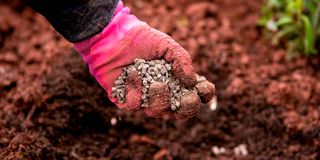
For decades, he says, farming systems leaned heavily on chemical fertilisers. But declining soil fertility is showing that approach has reached its limits.
"There needs to be a balance between external inputs, such as chemical fertilisers, and organic resources," Noordin said, arguing this is where regenerative agriculture, or RA, comes in. He points to Elgeyo Marakwet as an example, a county that historically records strong harvests in June and July but is now seeing declining production as rainfall patterns shift.
The Kenya Agricultural and Livestock Research Organisation (KALRO) has been tracking the scale of the problem for years. KALRO analysis has found that nearly 63 per cent of Kenya's arable land is acidic, a condition that undermines the ability of crops to absorb even the fertiliser applied.
Separately, KALRO's director general has previously attributed low land productivity to a combination of land degradation, climate change impacts, drought and desertification.
To respond to the scale of the problem, KALRO in early 2025 launched a digitised soil testing and sampling programme spanning 45 counties, working with county governments and the Ministry of Agriculture to collect and analyse more than 77,000 soil samples from farms nationwide.
The programme is meant to replace manual soil sampling with mobile data collection, feeding results back to farmers as tailored fertiliser and nutrient recommendations.
What farmers are actually doing
A baseline study conducted by SNV early this year, covering Busia, Bungoma, Kakamega, Uasin Gishu, Nakuru, Nandi and Kericho counties, found regenerative practices are already taking hold, but unevenly. Seventy-nine per cent of farmers surveyed use compost manure, 74 per cent practise intercropping, 73 per cent rotate crops and 54 per cent apply mulching.
But adoption drops off sharply for other practices. Agroforestry sits at 34 per cent, conservation tillage at 26 per cent, and bio-slurry systems at just 7 per cent.
Cost is the biggest barrier, accounting for 35 per cent of the adoption challenges farmers cite, according to the study, released in March 2026. Labour demands account for 22 per cent, limited knowledge 20 per cent, limited access to inputs 8 per cent, land constraints 7 per cent and water shortages 6 per cent.
"Despite these constraints, uptake of several regenerative agriculture practices is already encouraging," said Judith Libaisi, Kenya Country Lead for the Powering Renewable Energy Opportunities (Powerful Food Partnership) at SNV.
Libaisi describes regenerative agriculture as starting with rebuilding soil health, through composting, organic fertilisers, bio-pesticides, crop rotation, agroforestry, biodiversity conservation, cover crops and integrating livestock into farming systems. The report recommends expanding affordable financing for these practices, scaling up field demonstrations, and improving coordination between input suppliers and agricultural extension services.
Esther Wariara, a horticultural farmer in Githunguri, Kiambu County, has taken up some of these practices herself. She grows traditional vegetables, fruits, maize, and other horticultural crops organically, and has switched her irrigation to solar power after rising electricity and chemical costs cut into her margins.
She estimates her daily irrigation cost dropped from around Sh500 to about half that, though this is her own estimate rather than a measured figure.