How does irrigation strengthen food security, boost farm productivity, and reduce hunger during droughts and climate shocks?
Irrigation plays a vital role in this context, particularly in the face of recurring droughts and climate shocks. By ensuring a reliable and controlled water supply, it minimises the risk of crop failure when rainfall is erratic or insufficient. This enables farmers to sustain crop production even during prolonged dry spells, ensuring more consistent food supplies despite changing climate conditions.
Adopting modern irrigation technologies, such as drip systems, overhead sprinklers and rain hoses, further enhances productivity by delivering water efficiently and directly to crops. This results in higher yields and better-quality produce.
With adequate water, crops grow faster and healthier, enabling farmers to maximise their output from the same area of land. Irrigation also supports crop rotation and year-round production, reducing dependence on a single rainy season and increasing overall farm output and stabilising household incomes.
It also enables farmers to grow a wider variety of crops, including vegetables, fruits, and legumes, thereby improving food diversity, reducing malnutrition, and promoting balanced diets.
As a stakeholder in agriculture, what major achievements have you made in transforming the sector?
Plum Agri Irrigation has made significant strides in revitalising the agricultural sector by promoting efficient and climate-smart irrigation solutions.
A key achievement has been to empower farmers by providing regular training programmes in partnership with successful farmers and other stakeholders. These training sessions provide farmers with practical knowledge of modern irrigation technologies, water management and climate resilience. The company also carries out detailed field surveys to assess farm conditions and design customised irrigation systems that respond to the specific needs of crops and the risks posed by the climate.
In addition to this design approach, we provide comprehensive services, including sourcing and supplying high-quality materials, professional installation, testing, commissioning and the ongoing maintenance of irrigation systems.
Farmers are also provided with hands-on guidance to help them maximise the value and efficiency of their systems. Through this holistic approach, the company has successfully supported over 1,000 small- and large-scale farmers across the country. Despite the challenges facing agriculture, many of these farmers have recorded improved yields, reduced water wastage and more reliable production throughout the year. This has contributed to increased incomes, enhanced food security and greater resilience to climate shocks.
Which irrigation systems are best suited to smallholder farmers, and what factors should they consider when choosing the right system in the context of climate stress?
Drip irrigation is one of the most suitable systems for smallholder farmers, particularly in areas experiencing climate stress, as it delivers water directly to the crop root zone, using it efficiently. This minimises water loss through evaporation and runoff, making it ideal for areas that experience frequent droughts. When choosing an irrigation system, farmers should consider the availability and reliability of their water source, the size of their plot, the type of soil and the topography of the land. The type of crop is also important, as some crops benefit more from precise watering. In addition, water quality should be assessed to prevent clogging and ensure the system performs well in the long term.
What are the most common mistakes that cause irrigation projects to fail, and how can farmers avoid making them?
Many irrigation projects fail due to avoidable mistakes made at the planning stage. One major issue is poor system design that fails to consider water availability, crop requirements, soil type or land topography, resulting in inefficiency and poor performance. Using low-quality irrigation materials is another common issue, often resulting in frequent breakdowns, leaks, and high maintenance costs. A lack of skilled labour during installation and operation can also compromise system performance, as improper installation affects water distribution and efficiency. Failure to carry out regular maintenance further reduces the effectiveness and lifespan of irrigation systems. This is another major challenge that most farmers are reluctant to address.
However, they can avoid these issues by engaging skilled professionals from the outset, including for system design, product selection and installation.
Investing in quality materials, training farm workers, and following proper maintenance schedules ensures efficient operation, improved yields, and the long-term sustainability of irrigation projects.
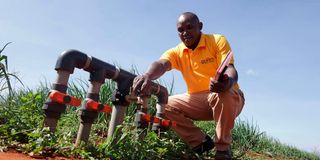
A mechanised irrigation system at Tana River Sugar farm in this photo taken on October 6, 2025.
Photo credit: Stephen Oduor | Nation
How can farmers manage irrigation efficiently to prevent over-irrigation, water wastage and increasing production costs?
The first step is to prepare the land properly to match the chosen system, for example by creating well-prepared beds and installing quality drip lines with regulated discharge for drip irrigation.
Correct system design is also essential, including selecting the right pipe sizes to ensure uniform water distribution and prevent runoff. Farmers should also follow the recommended water requirements for their crops to avoid excess watering and regularly check their systems for leaks, carrying out routine maintenance as necessary. These practices reduce water wastage, lower production costs and improve overall irrigation efficiency.
What are the key dos and don’ts that farmers should observe when installing and managing an irrigation system?
There are several key dos and don’ts that farmers must observe to ensure efficiency, durability, and a good return on investment. One of the most important things to do is to seek professional advice at the design stage. Proper system design, taking into account the water source, land size, soil type, crop requirements and topography, helps to prevent inefficiencies and costly mistakes. Farmers should also invest in high-quality irrigation materials that can withstand several farming seasons to reduce frequent breakdowns and long-term maintenance costs.
Additionally, attending training programmes and visiting successful farms is highly recommended. These platforms allow farmers to gain practical knowledge, learn best practices and exchange ideas on system management, water use efficiency and climate-smart farming. At Plum Agri Irrigation, our capacity-building programmes take our client farmers to visit successful irrigation farmers for training.
When it comes to what not to do, farmers should avoid taking shortcuts, particularly when selecting irrigation equipment and accessories. Using cheap or substandard materials can lead to system failure, water wastage and higher repair costs. Another critical mistake is attempting to install or modify irrigation systems without the necessary technical knowledge. 'Do-it-yourself' installations by untrained individuals can result in poor water distribution, leaks, and reduced system performance, eventually causing farmers to incur losses. Instead, farmers should focus on proper operation and routine maintenance, while skilled professionals handle installation, testing, and commissioning.
How can farmers keep irrigation affordable, sustainable and profitable in the long term, especially given rising input costs?
One way to achieve this is to source systems directly from trusted suppliers instead of brokers, thereby reducing unnecessary expenses. Investing in high-quality irrigation materials that last for several seasons also reduces repair and replacement costs, improves efficiency and ensures better long-term returns, despite rising input costs.