Washington breaks with UNEA-7, says assembly has strayed from core mandate
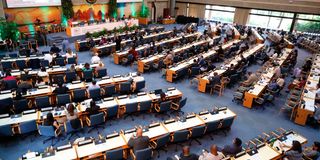
UNEA-7 high-level segment national statements in session in Nairobi on December 11, 2025.

What you need to know:
- The US also rejected efforts to expand the scope of the Unep unless backed by adequate funding allocations from member states.
- US delegation reiterates President Trump’s stance that Washington will only remain in organisations that add value to Americans.
The United States has taken the unprecedented step of disassociating itself from all outcomes of the seventh UN Environment Assembly (UNEA-7), rejecting resolutions, decisions and the ministerial declaration on the grounds that the body has strayed into ideological and non-environmental issues.
The US also rejected efforts to expand the scope of the United Nations Environment Programme (Unep) unless backed by adequate funding allocations from member states. It criticised what it called “bloated, ideological multilateralism,” saying the UN system must shift towards practical reforms that deliver real results and remain accountable to the nations that fund it.
Speaking in Nairobi on Friday, the US delegation did not threaten to quit the Assembly but reiterated President Donald Trump’s stance that Washington will only remain in organisations that add tangible value to Americans.


Delivering the country’s position under Agenda Item 12, the delegation said it had “made the considered decision to step back from negotiations on all UNEA resolutions, decisions and the ministerial declaration.”
Washington said its decision was driven by repeated attempts by some member states to introduce divisive or unrelated language into UNEA texts.
“We consistently see drafts weighed down by outdated references, restatements of documents not endorsed by all Member States, and language disconnected from realities on the ground. The United States cannot support work that strays from UNEA’s core mandate. Year after year, we have urged that the number of resolutions be limited,” the statement read.
The United Nations Environment Assembly (UNEA), the world’s highest-level decision-making body on environmental matters, has universal membership of all 193 UN Member States. It traditionally meets in Nairobi, UNEP’s headquarters, to set the global environmental agenda and respond to emerging challenges.
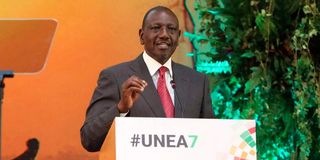
President Willliam Ruto at the high-level segment opening of UNEA-7 in Nairobi on December 11, 2025.
The seventh session concluded on Friday with Member States adopting 11 resolutions, three decisions and a Ministerial Declaration aimed at advancing solutions for a more resilient planet. More than 6,000 participants – representing 186 countries – registered for the week-long Assembly at UNEP’s Gigiri headquarters in Nairobi, which focused on tackling the “triple planetary crisis” of climate change, biodiversity loss, land degradation, pollution and waste.
This agenda may have been at odds with the US, which has been critical of climate change campaigners as well as positions on diversity and equality.
The UNEA-7 Ministerial Declaration pledged commitment to sustainable solutions and to advancing equitable and inclusive participation in all efforts.
Resolutions included safeguarding coral reefs, managing minerals and metals essential to the energy transition, improving the management of chemicals and waste, promoting the sustainable use of Artificial Intelligence, and finding solutions through sport. Others focused on international cooperation to combat wildfires, strengthening work on antimicrobial resistance, and protecting glaciers.
“The measure of our success will not be limited to what we’ve adopted on paper, no matter how important and strategic, but by what we will see on the ground in terms of cleaner air, cleaner water, restored ecosystems, sustainable livelihoods, green job opportunities and more resilient societies capable of facing the challenges of the future,” said Abdullah bin Ali Al-Amri, President of Oman’s Environment Authority and UNEA-7 President.
The US delegation said it had endured years of frustration over the Assembly’s direction.
“We continue to see the same contentious and irrelevant issues raised session after session, despite our repeated calls to keep UNEA focused on its core environmental mandate.”
Washington criticised the structure and content of the texts negotiated at UNEA-7, saying:
“UNEA texts should be short, actionable and forward-looking. Instead, we consistently see drafts weighed down by outdated references, restatements of documents not endorsed by all Member States, and language disconnected from realities on the ground.”
Complexity of resolutions
Washington also raised alarm over the growing number and complexity of resolutions.
“Year after year, we have urged that the number of resolutions be limited and tightly focused on matters clearly within UNEA’s competence. Yet once again, we see a proliferation of texts that seek to create new unfunded mandates for UNEP.”
The US objected to several thematic areas covered in the negotiations, saying many resolutions contained problematic language – recognising ‘rights’ not established under international law, advancing divisive gender ideology, social justice or climate change theatre initiatives, pushing soft global governance via the Sustainable Development Goals, promoting vague redistributions of wealth, or purporting to direct international financial institutions in ways that undermine both their independence and US sovereignty.
One clause in the declaration rejected by Washington stated:
“We will promote gender equality and enhance the engagement of women and girls, young people, older persons, persons with disabilities, Indigenous Peoples, local communities and people of African descent in the conservation and protection of the environment, and ensure their inclusive and meaningful participation in decision-making processes to advance sustainable solutions for a resilient planet.”
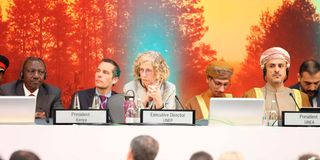
President Willliam Ruto (left) with the United Nations Environment Programme (Unep) Executive Director Inger Andersen and His Excellency Abdullah Bin Ali Al-Amri, President of UNEA at the high-level segment opening of UNEA-7 in Nairobi on December 11, 2025.
The declaration cited General Assembly resolution 76/300 of 28 July 2022 on the human right to a clean, healthy and sustainable environment. The decision of the General Assembly, however, is non-binding.
The US said it would not endorse language conflicting with principles of free markets, transparency and accountability. Despite withdrawing from all UNEA-7 outcomes, Washington insisted it was not abandoning multilateral environmental cooperation.
“The United States remains committed to pragmatic, science-based cooperation that genuinely advances environmental protections while respecting national sovereignty, economic growth and energy security.”
At odds with various international decisions, the US had previously withdrawn from the World Health Organization and quit the Paris Agreement on climate change.