Some 40 counties depend on hospital fees to run critical operations, painting a grim picture of devolved units whose lifeline relies heavily on individuals falling sick, a new report has shown.
The report by the Controller of Budget (CoB) for the financial year ended June 30, 2025, has revealed a worrying overreliance by county governments on revenue from hospital fees, which account for over 50 percent of own-source revenue (OSR).
According to the report by Dr Margaret Nyakang’o, only Isiolo, Nairobi, Mombasa, Uasin Gishu, Tana River, Samburu and Narok counties do not have revenue from hospital fees – either through out-of-pocket payments or claims reimbursement after treatment – as their top revenue earners.
Sounding an alarm, Dr Nyakang’o said that during the period under review, counties generated Sh67.3 billion as OSR, missing the annual revenue target by a staggering Sh20.37 billion.
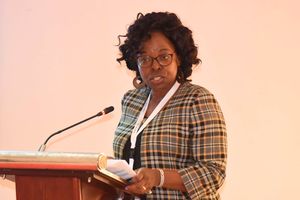
Controller of Budget Margaret Nyakang’o speaks during the 5th Legislative Forum held at the Edge Convention Center on March 18, 2025.
Photo credit: Francis Nderitu | Nation Media Group
The underperformance would have been even worse were it not for Sh25.29 billion from the facility improvement fund (FIF), which is the fund where revenue from hospital or health fees falls.
The report indicated that collection from health or hospital fees accounted for 37 percent of total OSR by counties.
According to the report, in counties like Bomet, Nyamira, and Homa Bay, FIF revenue accounted for over 70 percent of OSR.
The situation, the CoB said, exposes the counties to fiscal risks since FIF collections are meant for service utilisation within the respective facilities, but not for general spending.
“Overreliance on the facility improvement fund, which accounted for over 50 percent of OSR for many counties, poses a risk to financial sustainability. County governments should develop realistic strategies to expand their revenue and reduce reliance on the FIF,” said Dr Nyakang’o.
Nyamira County had more than 81 percent of its total revenue coming from hospital fees with Sh606.6 million collected and only Sh134.53 million from other OSR sources.
Governor Nathif Jama’s Garissa County had over 80 percent of its total revenue of 478.87 million coming from hospital fees, which was Sh384.15 million.
Garissa Governor Nathif Jama before the Senate County Public Investments and Special Funds Committee on July 11, 2023.
Photo credit: Dennis Onsongo | Nation Media Group
Interestingly, only Sh140.53 million was from SHIF approved claims with the rest from out-of-pocket payments by patients.
Homa Bay County managed Sh390.67 million from other OSR sources while Sh1.1 billion was from hospital fees, representing 74 percent of the total revenue of Sh1.49 billion.
The county government had targeted to collect Sh981.07 million from the revenue stream but received Sh1.02 billion as disbursement from SHIF with the rest being out-of-pocket payments.
Over 70 percent of Kitui County’s revenue of Sh895.42 million was from hospital fees with only Sh264.1 million from other revenue streams.
Out of Kakamega County’s Sh1.44 billion, revenue from hospital fees accounted for over 62 percent with the amount being Sh894.80 million. Out of this, only Sh448.90 million was disbursed by SHIF.
In Kericho County, over half of its revenue was also from hospital fees, with Sh682 million and only Sh396 million from other OSR sources. Only Sh170.9 million was disbursed by SHIF, meaning the rest was out-of-pocket payments.
More than half of Kirinyaga County’s revenue is from hospital fees, raking in Sh431.5 million out of the total OSR of Sh852.34 million. Interestingly, approved claims by SHIF hit Sh180.67 million but only disbursed Sh131.47 million.
A similar situation was witnessed in Kisumu County, where Sh2.46 billion total revenue included Sh1.66 billion from hospital fees, with only Sh803.36 million from other OSR sources.
Laikipia also collected Sh1.27 billion in local revenue, but more than half of that was from hospital fees, Sh695.97 million, with a paltry Sh70.94 million being payment of approved claims by SHIF.
Lamu County also had a similar problem with its Sh233.7 million overall revenues being boosted by Sh139.1 million from hospital fees, with other revenue streams only able to record a measly Sh94.6 million.
Governor Simba Arati’s Kisii County reported total revenue of Sh1.59 billion but over 61 percent was from hospital fees at Sh982.09 million. Interestingly, the county had planned to collect up to Sh1.56 billion from the sick during the period under review.
Of concern is that only Sh381.71 million was from approved claims paid through SHIF with the rest from out-of-pocket payments.
West Pokot’s collection of Sh228.08 million included Sh142.41million from hospital fees, accounting for 62 percent of the total receipts, while for Wajir it was Sh218.35 million from the total revenue collection of Sh331.72 million.
For Nyandarua County, the total revenue of Sh653.24 million included Sh282.53million from hospital fees while close to half of Nyeri’s Sh1.45 billion collections was made up of hospital fees revenue. Siaya’s Sh436 million included Sh199 million from hospital fees.
Tharaka Nithi’s Sh402.08 million total revenue included Sh243.5 million from hospital fees Taita Taveta’s Sh547.99 billion was boosted by Sh229.35 million from the revenue stream.
Turkana County had Sh229.69 million, 57 percent of total revenue, as hospital fees while Trans Nzoia’s Sh539.9 million comprised Sh251.4 million as revenue from hospital fees.
Vihiga realised Sh397.86 million during the year under review but Sh211.39 million was from hospital fees, accounting for 53 percent of the total OSR receipts.
Marsabit County had more than 56 percent of its revenue from hospital fees with Sh104.43 million from FIF against overall revenue of Sh185.42 million.
Meru County collected Sh1.16 billion but 65 percent of it, Sh758.50 million, came from hospital fees, while Migori also had more than half of its revenue from the same revenue stream with Sh691.56 million realised but Sh354.19 million from hospital fees.
Murang’a County also had more than 40 percent of its revenue from hospital fees with Sh534.64 million out of Sh1.32 billion from the revenue stream.
Almost half of Kwale County’s revenue is from hospital fees, which amounted to Sh242 millio,n while other revenue streams realised Sh293 million. Of the amount, only Sh119.27 million was paid by SHIF from approved claims.
Machakos County also collected Sh755.68 million from hospital fees to boost its overall revenue of Sh2.18 billion. Of the hospital fees, only Sh235.12 million was disbursement from SHIF.
Neighbouring Makueni County did not fare better too with its Sh1.29 billion total internal revenue comprising Sh773.59 million from FIF with Sh383.38 million received from SHIF.
In Mandera County, hospital fees brought in Sh244.59 million out of the total revenue of Sh431.17 million.
Despite boasting a Sh3.65 billion in local revenue, Nakuru County relied on Sh1.85 billion from hospital fees to boost the numbers with only Sh639.69 million coming from SHIF payments.
Nandi County also had the same problem with more than half of its total revenue at Sh391 million coming from hospital fees.
In Kilifi County, hospital fees hit Sh622.1 million, representing 41 percent of the total revenue of Sh1.51 billion. However, less than half of the amount was payment by SHIF of Sh313.49 million.
For Busia County, total local revenue of Sh505.98 million included FIF of Sh239.05 million and Sh266.93 million from other OSR sources.
The CoB report said the Paul Otuoma-led administration recorded a 37 percent increase in revenue, from Sh369.23 million in the fiscal year ended June 30, 2024, attributed to an improvement in FIF.
Elgeyo Marakwet realised Sh370.93 million in revenues, but only Sh82.91 million was from other sources of revenue other than hospital fees which was Sh288 million.
The situation was no different in Embu County where hospital fees exceeded expectations with the devolved unit collecting Sh517.7 million from the sick. Overall revenue was Sh917.98 million during the year under review.
Baringo County realised Sh461.1 million in local revenue boasted by Sh210.8 million from hospital fees, accounting for 46 percent of total revenue. The next revenue stream was hiring of county machines which had a paltry Sh50.76 million.
In Bomet, hospital fees accounted for 58 percent of its total revenue with Sh211.6 million out of total receipts of Sh367.8 million.
Other sources of revenue for the county government managed Sh156.2 million with the next top revenue earner being property rent at Sh77.8 million.
It got even worse for Bungoma County where hospital fees raked in Sh793.17 million while other sources of revenue managed only Sh485.53 million out of the total Sh1.28 billion total revenues.
Although hospital fees was the highest revenue stream in Kajiado County raking in Sh316.4 million, it only accounted for 35 percent of the total revenue of Sh918.61 million during the period under review.
The Governor Joseph Ole Lenku-led administration received Sh176.48 million as disbursement from SHIF.
At least 35 percent of Kiambu County’s revenue was from hospital fees at Sh1.82 billion with Sh3.24 billion being from other sources of revenue.
During the period under review, the county government only received Sh528.74 million from SHIF as approved claims.
CoB Nyakang’o has challenged counties to broaden and strengthen other local revenue streams such as property rates, business permits, and user fees to reduce over-reliance on FIF.
Further, they should also invest in automated revenue collection systems, enhance enforcement measures, and explore innovative financing options to diversify their revenue base and ensure more predictable and sustainable funding.
On the flipside, Mombasa County had total revenue of Sh5.13 billion but only Sh916.99 million came from hospital fees with Sh4.21 billion from other OSR sources.
Nairobi County had Sh13.53 billion in total revenue with the highest earning revenue stream being land rates at Sh3.24 billion, followed by unified business permit Sh2.57 billion, parking fees Sh1.89 billion and hospital fees Sh1.73 billion.
For Governor Abdi Guyo’s Isiolo County, from a total collection of Sh216.15 million, only Sh64.89 million from hospital fees revenue stream with game park entrance and royalties being the devolved unit’s top revenue earner at Sh107.68 million.
Uasin Gishu’s collection of Sh233.04 billion from hospital fees accounted for only 19 percent of total revenue. The highest revenue earner for the county was business permits Sh254 million or 20 percent.
Narok’s Sh5.67 billion included a paltry Sh152.53 million as hospital fees with park fees raking in Sh5.16 billion or 91 percent, being the highest revenue earner for the county government.
For Tana River, the top revenue earner was county’s natural resources exploitation Sh108 million or 53 percent hospital fees is Sh3.96 million just two percent, the lowest stream in the county government.
Samburu County had a total revenue of Sh309.83 million with only Sh9.41 million coming from hospital fees.