What began as a late-night accusation over a missing chicken, a meal of ugali and a blanket ended in a fatal beating that has laid bare the deadly consequences of mob justice in rural Kenya.
In Bwaliro village in Bungoma County, a family dispute spiralled into a killing so brutal that the High Court in Bungoma has now sentenced four brothers to 20 years in prison each for murder.
John Kweyu Malala, Peter Mukhwana Malala, Michael Ancheri Malala and Ayub Odhiambo Malala were found guilty of killing their neighbour, 40-year-old sugarcane cutter Fredrick Sifuna Juma, in the early hours of May 3, 2022.
According to testimony, John Malala went to the deceased’s home around 3am and called him outside, claiming he had work for him.
“They are killing me! They are killing me!” the victim screamed, as terrified neighbours rushed toward the scene.
One of them, Moses Khisa Wakesa, told the court he was woken up by cries of “thief! thief!” and hurried out with a torch.
He told the court that he saw the four brothers striking the victim repeatedly with wooden sticks, as he lay defenceless on the ground, blood flowing from his head. When he asked what was happening, he was told the man had stolen from them.
John Malala allegedly insisted the deceased had eaten his ugali, stolen a chicken and taken a blanket.
Wakesa urged them to report the matter to police but the beating continued until neighbours finally intervened. By then, the damage had been done.
A post-mortem later confirmed catastrophic head injuries, including a fractured skull and severe brain haemorrhage.
The trial took an unexpected turn when John Malala, under oath, admitted that he and the deceased had actually been involved in criminal activity together.
He claimed they were partners in livestock theft and that he had called the deceased that night to steal a sheep.
According to his version, villagers caught them in the act and he later found the deceased being beaten by unknown people. “I did not shout ‘thief’. I was the thief,” he told the court.
The other three brothers denied involvement, saying they were asleep at the time with their wives backing their alibis.
The High Court, however, dismissed the defence, finding that prosecution witnesses had positively identified the accused using torchlight and solar lighting in the village.
The judge noted that the witnesses were neighbours who knew the accused well, making mistaken identity unlikely.
DNA analysis linked bloodstains found on wooden sticks recovered from John Malala’s home as well as clothing belonging to the deceased, to the victim.
Although none of the accused persons’ DNA was found on the exhibits, the court ruled that the forensic findings corroborated eyewitness accounts placing them at the scene.
A local administrator, Chief Ben Emusase Esibai, testified that his inquiries found no evidence that anything had been stolen from the accused, undermining the theft claim.
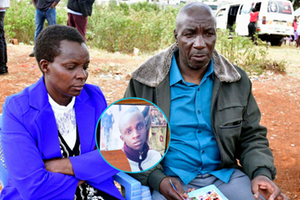
The deceased’s widow, Agnes Naliaka, also told the court that there had been a prior boundary dispute between the families, which the defence suggested might have influenced testimony. However, the court found her account consistent with other witnesses.
In sentencing, the court acknowledged that the four brothers were first-time offenders and described by pre-sentencing reports as hardworking members of the community.
Their lawyer pleaded for leniency, arguing that the attack was impulsive and that the men were remorseful. However, the court held that the brutality of the attack left no room for a light sentence.
“A life was lost and a family has been left without a father,” the judge said, underscoring the gravity of murder under Kenyan law.
Each of the four brothers was sentenced to 20 years in prison with time already spent in custody to be deducted in line with the Criminal Procedure Code.