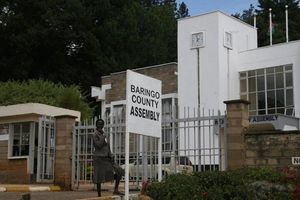
Bias claims have rocked the hearing of a constitutional petition challenging Sh410 million in Bungoma County legal payments to “proxy law firms” and a judgment that petitioners say could expose the county to a Sh3 billion payout to ghost workers.
The petitioners have asked the Nairobi High Court judge handling the case to step aside, arguing that remarks made during earlier proceedings questioning the court’s jurisdiction created a reasonable apprehension of bias.
The Constitutional case, filed at the High Court in Nairobi, centres on allegations of conflicted legal representation, fictitious court cases and misuse of public funds involving seven advocates and five law firms.
It claims that the firms are operated by lawyers owning multiple law firms “contrary to the law on registration and operation of law firms”.
The allegations remain contested, have not been determined by the court and the judge is yet to rule on the recusal application.
The fresh application seeking the judge’s recusal adds another layer to an already expansive constitutional petition that seeks to scrutinise how county governments procure external legal services, award legal briefs and spend public money on litigation.
Four petitioners, including officials of the Kenya County Government Workers Union, Bungoma branch, accuse the respondents of operating what they describe as a network of associated law firms used to secure public legal work while creating conflicts of interest and exposing county governments to unlawful financial obligations.
In the recusal application dated July 9, the petitioners argue that directions issued during an earlier mention created the impression that the court had formed views on key issues before hearing the parties.
They argue that although none of the respondents had filed responses, the judge questioned the court's jurisdiction, observed that the dispute appeared to arise from Employment and Labour Relations Court proceedings and indicated that the matter belonged before the specialised labour court.
The petitioners contend those remarks showed the court had "made prior strong opinions on the matter" before hearing the parties on the merits.
"The court having strongly made up its mind before hearing the parties on merit has led to an understandable presumption of bias," says their advocate, Benard Odero Okello. “This created lack of confidence on the court to remain impartial," he adds.
They therefore ask the judge to recuse herself and stay further proceedings until the application is determined.
The constitutional petition targets the Secretary-General of the Kenya County Government Workers Union, Bungoma and Nairobi county governments, the Controller of Budget, Auditor-General, Ethics and Anti-Corruption Commission, Asset Recovery Agency and other public institutions.
The case is based on allegations that seven advocates used five law firms to obtain legal work from Bungoma and Nairobi county governments, the Kenya County Government Workers Union and the Local Authorities Provident Fund (LAPFUND).
“The aforementioned state entities and public offices have become primary sites and breeding grounds for fictitious litigation, where a network of proxy law firms initiates shadow suits to claim exorbitant legal fees,” the petition says.
The petition describes the arrangement as a "proxy law firm syndicate" that enabled the advocates to act through different firms in related cases. It alleges some of the firms appeared on opposing sides of connected disputes while receiving legal fees from public entities. The petition says the arrangement created conflicts of interest and facilitated irregular expenditure of public funds.
“Operating multiple firms allows the syndicate to present different 'faces' to various county governments and union organs, facilitating the siphoning of funds through diverse 'legal fees' and fictitious briefs,” claims the petitioner, alleging breach of the Advocates Act and LSK Act.
The petitioners seek orders compelling the Law Society of Kenya to suspend the operations of the law firms pending determination of the case and restraining public entities from issuing fresh legal instructions or processing payments to them.
The petitioners claim the alleged arrangements extend beyond legal representation and are linked to the long-running dispute over the recruitment of 463 Bungoma County workers.
According to the pleadings, a disputed court judgment of May 13, 2020, requiring Bungoma County to absorb 463 workers, exposes the county to an estimated Sh3 billion expenditure in salary obligations and related costs.
The petitioners allege the litigation formed part of a broader scheme involving conflicted legal representation, fictitious proceedings and the introduction of ghost workers into the county payroll. Those allegations remain contested and have not been determined by any court.
They also allege that more than Sh410 million was paid to lawyers through legal engagements they contend were irregular, while claiming fictitious litigation was used to facilitate public expenditure.
Among the conservatory orders sought are investigations into the advocates' professional conduct, the registration and operation of law firms, alleged conflicts of interest and the expenditure of public funds.
The petitioners also seek investigations by the EACC, Asset Recovery Agency, Registrar of Companies and other oversight bodies.
The respondents have yet to respond to the fresh recusal application, while the constitutional petition itself remains pending before the High Court.