At dawn, Lake Victoria at Ndhuru Beach in Mbita, Homa Bay County, looks like the very picture of peace.
The water lies glassy and still, mirroring the rugged Sikri Hills and the distant outline of Homa Bay Town, while women gather along the shoreline with baskets, laughing and chatting as they collect the fish brought ashore after a long night.
Their voices drop to sombre whispers as they recount encounters in the dead of night, when the calm waters become a battleground.
On the night of October 7, 2026, that conflict turned deadly. Brian Mingo and Joseph Ojwang drowned after being pelted with stones while on patrol to protect juvenile fish, giving them time to mature and fetch better prices.
Their bodies were recovered two days later, following a search that began the previous day.
They died during a confrontation between two groups of fishermen, sparked by allegations that one had violated local fishing regulations.
The tragedy has deepened fears in a community already struggling to balance the protection of its natural resources with the dangers of enforcing the rules.
In recent months, local fishermen have found themselves on the frontline of a dangerous struggle, risking their lives to protect designated breeding grounds from heavily armed poachers.
According to them, illegal fishers routinely invade protected sanctuaries under the cover of darkness, operating in groups with crude weapons and using prohibited gear that sweeps up immature fish.
When fisherfolk try to stop them, the invaders slash their expensive nets, sabotage their boats and launch vicious physical attacks.
The National Government Constituency Development Fund (NG-CDF) had provided Ndhuru Beach members with a patrol vessel. Fishers said they set up a secluded, calm-water breeding zone after noticing that fish populations were declining at an alarming rate.
Yet the sanctuary has become a flashpoint, with some fisherfolk accused of casting their nets in the restricted area. Jackton Nyamnwada, the coxswain of the patrol boat, said his team had expected to complete its mission and return to shore unharmed.
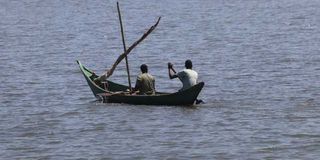
Fishermen operate a boat at Koginga Beach in Homa Bay Town on September 1, 2025. A surge in lake violence linked to illegal fishing and disputes over protected breeding grounds has left several fishers dead.
Photo credit: George Odiwuor | Nation Media Group
“We were just safeguarding our breeding zone when we were surrounded by six vessels. Sensing danger, we decided to move out,” he said. Their escape was hampered when the vessel developed mechanical problems and the engine failed to start.
“We had no choice but to jump into the water. It was the best way to escape danger at that moment. It was every man for himself,” he said. Mr Nyamnwada swam to safety after another group of fishermen came to his rescue. As he struggled away, he said, they unscrewed the boat’s engine, which fell into the lake.
The confrontation showed how well the rival groups knew one another; fishermen from both sides reportedly called each other by name. Mr Nyamnwada said it was not the first clash on the lake.
What troubled him most was the apparent failure of agencies to act decisively against those responsible, even when confrontations ended in deaths.
Under Kenya’s Constitution, fisheries management is a devolved function, though some aspects, including research, remain with the national government.
Fisherfolk at Ndhuru want the national government to take greater control of the lake, arguing that county authorities have failed to rein in illegal fishing. Wachington Omondi said illegal fishing had become so entrenched that the county government could not be relied upon to eradicate it.
“It is the county officials who own the illegal nets. There is no way they can take action when they are the ones at the centre of illegal fishing,” he alleged.
Colins Onyango accused fisherfolk from Lela, Koginga, Achich and Ngegu of illegal fishing, alleging that they used trawling and other sophisticated methods capable of wiping out entire fish populations within a short period.
“Their nets damage breeding sites. Our attempts to get help from the county government have failed to bear fruit. Some people have brought goonism to the lake,” he said.
The conflict is not confined to the water. On land, residents say the violence has robbed them of their peace. Peter Obala, who lives along the lakeshore near Ndhuru Beach, said voices carry across the water at night and the sounds of fighting frequently jolt him awake.
“There are no activities in the village at night, so you would expect everything to be silent. Suddenly, you hear people shouting from the lake. It is really annoying, as the lake has been turned into a battlefield,” he said.
Fish traders are also feeling the effects of insecurity and declining catches. Benter Akoko said she no longer receives the quantities of fish she once relied on to sustain her business, blaming the continuing conflict.
“We have lost many fishermen to conflict in the lake. It is time the government looked into this problem and addressed it once and for all,” she said.
Ndhuru is not the only beach bearing the cost. Last month, Evance Okoth, 31, died under mysterious circumstances after his fishing boat reportedly came under attack. He was aboard with four other fishermen when they were allegedly confronted over accusations of violating fishing regulations.
His father, Julius Ager, said his son had stab wounds, including one on the neck, and suspects he was killed before his body was dumped in the lake.
“Differences over fishing should not make someone die. These are things found in nature, and different people have their luck. There are days when some fishermen get more fish than others,” Mr Ager said.
Homa Bay County Commissioner Ronald Mwiwawi decried rising insecurity on the lake, saying waters meant to be a blessing had become a curse. The county has 147 beaches, but Litare, Koginga and Ndhuru have become a major concern for security agencies.
He said fisherfolk at the affected beaches were increasingly venturing onto the lake armed with crude weapons.
The problem extends beyond Homa Bay waters. Mr Mwiwawi said a serious clash in deep waters on Saturday between Kenyan and Ugandan fishermen left two dead.
“Our fisherfolk came back badly injured, and others even lost their lives. We have continued to record so many drowning cases. If we were to account for the number of deaths we have lost in this lake, they are uncountable,” he said.
He said President William Ruto’s government was investing heavily in the blue economy through landing sites and cold storage facilities to improve fish handling and strengthen value chains, and urged fishers to resolve disputes through established institutions, including the Ministry of Interior, Kenya Fisheries Service, Kenya Maritime Authority and Kenya Shipyard Limited, saying all were there to ensure safety on the lake.
He challenged officials of Beach Management Units (BMUs) to confront cartels allegedly operating on the lake and called for close cooperation with his office. Part of the violence, he said, had been attributed to extortionists.
“We need to protect breeding sites to sustain fish stocks. Some of these fights have been as a result of fisherfolk encroaching on breeding sites and harvesting small fish that should be left to mature. We need to work together as a team,” Mr Mwiwawi said.