Public schools face a Sh44.2 billion funding shortfall in the 2027/28 financial year, as proposed government allocations fall far short of the cost of free primary, junior and senior school education.
The State Department for Basic Education submitted that it requires Sh138.84 billion to meet capitation obligations across the three levels of learning but has been allocated Sh94.62 billion, leaving a deficit of Sh44.23 billion.
Junior schools face the largest funding gap of Sh23.51 billion, followed by senior schools at Sh17.75 billion, while primary schools have a shortfall of Sh2.96 billion.
“For junior school, the resultant regular capitation per learner is Sh8,466 which is Sh6,577 less than the policy amount of Sh15,043,” Basic Education principal secretary John Olotuaa told the to the National Assembly Committee on Education.
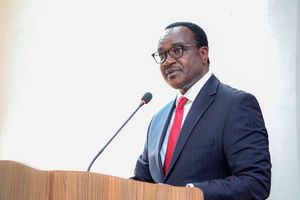
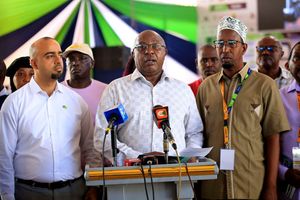
Principal Secretary for Education John Ololtuaa (centre) during the official opening ceremony of the 98th Kenya National Music Festival at Kibabii University in Bungoma County on August 3, 2026.
Photo credit: Anthony Njagi | Nation Media Group
Senior schools will receive a proposed Sh56.89 billion against a requirement of Sh74.64 billion, leaving a deficit of Sh17.75 billion.
At the allocation of Sh56.89 billion, it means that the 3.3 million learners in secondary school will receive capitation at the rate of Sh16,873 per learner which is Sh5,371 less than the policy amount of Sh22,244.
The capitation shortfall could further strain school operations as institutions implement competency based education (CBE), which requires additional funding for learning materials, practical activities and infrastructure.
CS Ogamba pledges timely school capitation ahead of every academic term
Mr Ololtuaa told MPs that the proposed funding would fall short of the resources required to sustain free and compulsory basic education.
For primary schools, the State Department requires Sh9.97 billion to support 6.39 million learners at the policy rate of Sh1,420 per child. However, the proposed allocation remains unchanged at Sh7.01 billion, the same amount approved for the current financial year.
Junior schools are in an even tighter position, with the government proposing Sh30.72 billion against a requirement of Sh54.23 billion to support 3.58 million learners.
The allocation is unchanged from the Sh30.72 billion approved for the current financial year, despite the department's projected funding requirements.
The proposed allocation for senior school represents an increase of Sh2.27 billion from the Sh54.62 billion approved in the current financial year, but remains substantially below the department's requirements.
Beyond capitation, the department has identified other critical funding gaps that could affect the delivery of basic education.
The school feeding programme requires Sh8.59 billion but has been allocated Sh3 billion, leaving a deficit of Sh5.59 billion.
The department says the allocation can sustain meals for approximately 63 of the 180 required school days, leaving 117 days without adequate funding for the programme targeting 2.7 million vulnerable learners.
Funding for national examinations and assessments also falls short, with Sh10.5 billion proposed against a requirement of Sh13.75 billion, leaving a deficit of Sh3.25 billion.
PS Bitok, education officials appear before Parliamentary Committee over school capitation saga
The department is seeking an additional Sh7.25 billion to bridge the funding gap for the 2026 examinations and assessments, warning that the current shortfall could compound the financing challenges in the next financial year.
Overall, the State Department for Basic Education has identified a Sh55.34 billion funding gap across its key policy areas for the financial year 2027/2028.