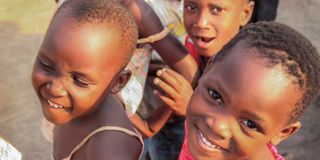
More than half (55.3 per cent) of Kenya’s children are living in multidimensional poverty, as rising public debt, shrinking donor support and delayed government funding threaten to deepen deprivation and reverse years of progress in healthcare, education, nutrition and child protection.
The number of children living in multidimensional poverty increased by 2.7 million from 9.5 million in 2014 to 12.2 million in 2022, even as the country recorded economic growth, exposing the widening gap between economic performance and household wellbeing.
A report, titled The Invisible Toll: Rising Debt, Shrinking Aid and Kenya’s Children , jointly published by the National Treasury, the State Department for Children Services and Unicef Kenya, warns that mounting debt repayment obligations, declining external financing and weak domestic revenue performance are squeezing resources available for essential services.
The findings come as Kenya’s annual debt servicing bill has more than doubled from Sh917.8 billion in the 2021/22 financial year to Sh1.87 trillion in 2025/26, according to the latest Annual Public Debt Management Report.
In the 2026/27 financial year, the government has allocated Sh1.254 trillion to interest payments alone, compared with approximately Sh881 billion in combined allocations to education, health and social protection.
This means that for every shilling allocated to the three sectors, the government has set aside Sh1.42 for interest payments alone.
The study warns that children are particularly vulnerable to fiscal pressures because the services they depend on require predictable and uninterrupted financing.
“Child-critical sectors are particularly exposed because they depend on predictable operational financing and, in some cases, external support that is declining,” the report says.
Between 2014 and 2022, Kenya’s gross domestic product (GDP) per capita increased from $1,451 to $1,748. However, the proportion of children experiencing multidimensional poverty rose from 45 per cent to 55.3 per cent over the same period.
Multidimensional poverty captures overlapping forms of deprivation beyond household income, including inadequate access to education, healthcare, nutrition, water and sanitation.
“These parallel trends do not establish causality, but they show that aggregate growth alone has been insufficient to reduce child deprivation,” the report says.
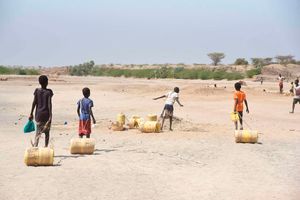
Children living in rural areas, those with disabilities, orphans and those from households exposed to climate-related shocks are among those particularly vulnerable to deprivation.
The situation has been compounded by declining household purchasing power, with real earnings in both the public and private sectors remaining below pre-pandemic levels in 2024.
Declining healthcare services
Among the most worrying findings is the deterioration of several maternal and child healthcare indicators between 2021 and 2025, threatening to reverse gains made in reducing child mortality and improving nutrition.
Coverage of the first dose of the DPT/Hexa-Hib vaccine declined from 93 per cent in 2021 to 81 per cent in 2025, while the proportion of births attended by skilled health personnel fell from 79 per cent to 68 per cent.
The proportion of pregnant women attending at least one antenatal care visit declined from 99 per cent to 81 per cent.
Similarly, the proportion of children aged between two and 59 months suffering from pneumonia who received treatment with amoxicillin dispersible tablets declined from 83 per cent to 55 per cent.
Deworming coverage among children aged between 12 and 59 months recorded an even sharper decline, falling from 47 per cent to 19 per cent.
“Routine data signal broad deterioration in maternal and child health services between 2021 and 2025,” the report says.
The study, however, cautions that changes in reporting completeness, population estimates and programme design may have affected the figures, which require further validation by the Ministry of Health.
The decline threatens gains recorded between 2014 and 2022, when under-five mortality fell from 52 to 41 deaths per 1,000 live births, while infant mortality declined from 39 to 32 deaths per 1,000 live births.
During the same period, stunting among children under five declined from 26 per cent to 18 per cent.
Vaccine financing requirements increased from Sh4 billion in 2016/17 to Sh7.6 billion in 2023/24, while government expenditure rose from Sh800 million to Sh2.4 billion.
The number of children living in multidimensional poverty increased even as the country recorded economic growth.
Photo credit: Shutterstock
The pressure on public resources has been compounded by declining development assistance, with net official development assistance to Kenya falling from nearly $4 billion in 2020 to approximately $2.6 billion in 2023.
External development assistance to the health sector declined from more than $1.1 billion in 2017 to approximately $724 million in 2024, with the reduction largely concentrated in grant financing.
The report notes that several programmes targeting vulnerable children were established or expanded with substantial external financial support, leaving them exposed to disruptions as development partners scale back their funding.
During their early stages, external financing accounted for approximately 77 per cent of funding for the Cash Transfer for Orphans and Vulnerable Children programme, 100 per cent of funding for the Hunger Safety Net Programme during its pilot phase between 2009 and 2012, and 71 per cent of funding for the Home-Grown School Meals Programme.
The government is also increasingly relying on loans rather than grants to finance social protection programmes, creating future repayment obligations.
Since approximately 2018, World Bank lending has provided most of the additional external resources for social protection, while grant financing from traditional development partners has remained largely stagnant or declined.
“Concessional loans can help maintain or expand systems in the short and medium term, but they also create future repayment obligations,” the report says.
Funding delays in schools and hospitals
Beyond inadequate budgetary allocations, the report identifies delayed disbursement of funds as a major obstacle to the delivery of essential services.
A 2025 public expenditure tracking survey covering nine counties found that 67.4 per cent of sampled frontline service delivery facilities and units experienced delays in receiving operational funds.
Health facilities were the worst affected, with 72.5 per cent reporting funding delays, followed by pre-primary education facilities at 68 per cent, water and sanitation facilities at 62.5 per cent and nutrition service units at 50 per cent.
In some instances, facilities reported waiting more than six months to receive operational funding.
The report warns that such delays undermine the ability of institutions to procure essential supplies, maintain operations and respond to emergencies, even where infrastructure and personnel are available.
“Extended delays undermine facilities’ ability to procure essential inputs, pay for operations, and respond to shocks,” the report says.
Erratic disbursement of funds to county governments has further complicated service delivery, particularly in healthcare, where counties are responsible for primary and community-level services, including immunisation, maternal healthcare and nutrition.
In the 2024/25 financial year, actual monthly disbursements to counties ranged from zero to Sh63.9 billion, despite an approved disbursement schedule.
More than half of Kenya’s children are living in multidimensional poverty.
Photo credit: Shutterstock
Child labour and early marriages
The report also raises concerns over the effectiveness of Kenya’s social protection programmes, revealing that only about 11 per cent of children receive a child or family cash benefit.
Delayed cash transfers and the declining purchasing power of existing benefits have weakened the ability of vulnerable households to cope with rising living costs and economic shocks.
The Sh2,000 monthly Inua Jamii cash transfer has lost real value since its introduction, reducing the amount of goods and services beneficiaries can afford.
County officials working in social protection and children’s services reported that planned child protection and child-related support activities had been postponed because operational funding was delayed.
In arid and semi-arid areas, where households are already exposed to drought and economic hardship, officials raised concerns about heightened risks of child labour, child marriage and children ending up on the streets.
“Where families are exposed to drought and household distress, respondents also associated weakened support with a higher risk of street-connectedness, child labour and child marriage,” the report says.
The study cautions that these risks arise from multiple pressures and should not be attributed to delayed funding alone.
It further warns that when social assistance is delayed or inadequate, families may be forced to reduce food consumption or postpone expenditure on healthcare and education.
The report also questions the balance between Kenya’s borrowing priorities and investments in human capital, revealing that external borrowing has predominantly been directed towards infrastructure-related sectors.
Between 2014 and 2022, energy, infrastructure and information and communication technology accounted for an average of 65.7 per cent of external debt allocation.
Health accounted for 3.8 per cent, education 1.9 per cent, while social protection, culture and recreation accounted for just 0.5 per cent.
The report notes that health, education and social protection collectively accounted for less than 10 per cent of external debt allocation under the classification used in the study.
While acknowledging the importance of infrastructure investment, the study calls for a balance between physical infrastructure development and investments in human capital.
“The funding raised through external borrowing has predominantly benefited infrastructure-related sectors while direct allocations to health, education and social protection remain comparatively limited,” the report says.
Tax revenue declined from between 16 and 18 per cent of GDP in the early 2000s to about 14 to 15 per cent in recent years, further constraining the government’s ability to finance essential services.