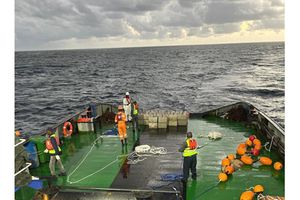
As we approach the shores of Lake Victoria, a vast, endless sheet of slate-blue water stretches towards the horizon.
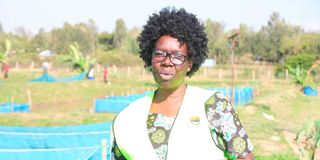
At Nyaudenge Beach in Bondo, Siaya County, Matilda Omollo is busy unloading a fresh consignment of fingerlings for a customer at the local market — a task she occasionally carries out with her dedicated team.
In her state-of-the-art fish-brooding facility, Omollo carefully attends to thousands of young fish in a controlled environment. She explains that the technology creates an environment similar to that provided by a mother fish, increasing the survival rate of the fingerlings to over 90 per cent.
Matilda, who is also the director and founder of Great Lakes, started the fish-breeding project in 2021 with the aim of producing quality fingerlings for farmers and contributing to efforts to replenish the dwindling fish stocks in Lake Victoria.
She attributes the decline in the fish population to overfishing and says that the situation has been exacerbated by the growing population around the lake and the increased pressure on fish resources.
“Indiscriminate fishing, including harvesting immature fish, further threatens the sustainability of the lake’s fisheries,” she says.
The breeding process begins with the gentle seining of tilapia, from which the eggs are carefully collected from the mouths of the females that are brooding them. This is carried out every 14 days.
The eggs are then transferred to MacDonald’s hatchery, where they hatch after about three days.
The young fingerlings are then moved into nursing ponds fitted with specialised equipment to ensure a continuous flow of clean water, and are supplied with appropriate feed.
At this stage, sex reversal is carried out to produce predominantly male fish, which grow faster and reach a marketable size within a shorter period.
According to Matilda, this approach benefits farmers by reducing the time it takes for fish to reach market size.
Matilda Omollo the Director and Founder of Great Lakes attending to fingerlings in a modern hatchery facility at Nyaudenge Beach in Siaya County on July 17, 2026.
Photo credit: Richard Maosi | Nation Media Group
The fingerlings are transferred from the nursing ponds to the production ponds, where fish are kept at different stages of growth.
Later, they can be moved into cages suspended in Lake Victoria, where they can grow in their natural aquatic environment.
Matilda says that the modern hatchery has improved hygiene and the quality of the fingerlings supplied to farmers.
The facility is also powered by solar energy, which helps to reduce electricity costs and protect the fish from losses that could occur during the frequent power interruptions usually experienced in the region.
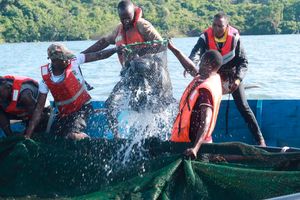
Beyond breeding, Omollo and other women are also venturing into cage fish farming — an aquaculture system in which fish are raised in mesh enclosures or floating cages in the deep waters of Nyaudenge in Lake Victoria.
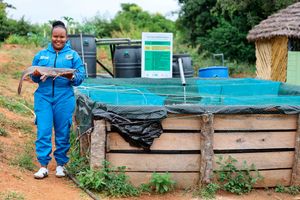
Bramwel Mukaburu a farm Manager of the Great Lakes at Nyaudenge Beach in Bondo Siaya County in one of the fish ponds on July 17 2026.
Photo credit: Richard Maosi | Nation Media Group
Matilda says that cages are preferable to steel structures because they are less prone to rust and help to maintain the cleanliness of the surrounding waters.
For the women, cage farming presents an opportunity to increase fish production while creating an alternative source of income.
They are also provided with balanced diets containing proteins, fats, carbohydrates, vitamins and minerals, which are essential for achieving maximum growth and health in order to fetch good market prices.
The groups work with 12 aquaculture and fisheries experts who provide technical advice on issues such as monitoring water quality and ensuring the fish receive the right nutrients.
Each cage can hold around 5,000 fish, and the enterprise is helping the women to improve their incomes and reduce their vulnerability to exploitation.
Matilda says that fish production has increased and that harvesting now takes place every Saturday to supply markets around Kisumu.
The initiative currently comprises 82 fish cages and has established partnerships with organisations, including Kenyan banks, to support the women involved in the enterprise.
Some of the women have also been empowered to set up fish-related businesses closer to home, enabling them to earn an income without travelling long distances.
Matilda continues to embrace modern technologies and production strategies to improve fish breeding, increase yields, and contribute to the recovery of fish stocks in Lake Victoria.
Clean water is a critical component of fish production at the farm. Bramwel Mukaburu, the farm manager at Great Lakes, says the facility has different sections dedicated to breeding and raising fish.
Matilda Omollo the Director and Founder of Great Lakes attending to fingerlings in a modern hatchery facility at Nyaudenge Beach in Siaya County on July 17, 2026.
Photo credit: Richard Maosi | Nation Media Group
One section contains broodstock — the male and female fish used for egg production — while another houses the fingerlings that were brought from the hatchery.
However, the enterprise is not without challenges.
Mukaburu says that breakdowns of water pumps can have devastating consequences, as fish can die if adequate water circulation is interrupted.
Water quality is another concern, particularly when water drawn from Lake Victoria is not clean enough. However, modern breeding technology, improved hatchery management and cage farming are providing women with new opportunities to produce more fish, earn a living and help to restore the lake’s dwindling fish stocks.