In the accounting world, “other expenses” is used to describe spending too small to deserve its own mention as an independent budget item.
But in Kenya’s counties, the same term has become a bucket collecting billions, and a fresh report shows it could have become a loophole for avoiding accountability in spending.
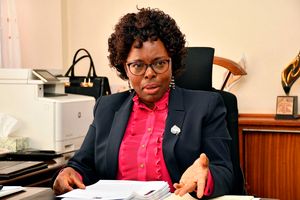
A report on counties for the year to June 30, 2026 by Controller of Budget Margaret Nyakang’o has flagged the "suspicious spending" in counties where several expenditure items are recorded with vague or generic descriptions, making it difficult to determine their nature.
In the report, Dr Nyakang’o noted that 28 counties spent more than Sh4.23 billion under the"other operating expenses" budget line, despite some of their expenditures looking like items that required their own budget line.
Controller of Budget Dr Margaret Nyakang’o during a past event in Nairobi.
Photo credit: Wilfred Nyangaresi | Nation Media Group
Giving such items their own budget lines would have forced counties to disclose what they intended to spend the money on, exposing the allocations to scrutiny and, where necessary, rejection during the budgeting process.
Nandi, Nairobi, Bungoma, Busia and Meru Counties are the biggest culprits. The devolved units are followed by Wajir, Embu, Trans Nzoia, Makueni, and Kitui.
Nandi County spent Sh1.23 billion under other operating expenses. Nairobi County spent Sh702 million on other expenses.
According to Dr Nyakang'o, a review of the listed expense items revealed inconsistencies, including some expenditures with clear, unique budget codes that were erroneously aggregated under the “other operating expenses” category.
For Bungoma County, the Governor Ken Lusaka administration budgeted some Sh370.7 million under the budget line in question and went ahead to spend Sh309.2 million.
The expenses included M-Pox sensitisation and Sh6.38 million spent on the preparation of medical reports and records.
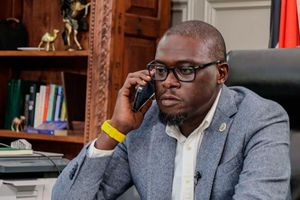
Busia Governor Paul Otuoma appears before a Senate committee in Nairobi, on September 15, 2025.
Photo credit: File | Nation
Governor Paul Otuoma's Busia County budgeted for Sh312.7 million but spent Sh253.5 million on vague budget lines.
Dr Nyakang'o noted that several expenditure items by the county government were recorded with vague or generic descriptions, making it difficult to determine their nature and map them to the correct budget codes.
Some of the expenditure lines included scanning or disposal of documents, cleanup exercises in towns, and verification and validation of staff documents.
Meru County spent Sh181 million, with the bulk (Sh105 million) going towards funding ward community activities for sports, youth and gender across all wards.
Wajir County spent Sh179.9 million under other operating expenses, with county assembly pending bills accounting for Sh106.8 million.
Embu spent Sh154.3 million from a budget of Sh251.8 million, with some of the curious expenses including public relations consultancy to the tune of Sh4 million, equipping of Nairobi liaison office Sh1.79 million, and an executive selection panel expenses of Sh3 million.
Embu Governor Cecily Mbarire.
Photo credit: File | Nation Media Group
The Governor Cecily Mbarire-led administration spent Sh869,500 on installation of the integrated human resource management information systems, partnerships mobilisation and documentation gobbled up Sh200,000, comrades empowerment programmes of Sh400,000, while operationalisation of the investment board at Sh1 million.
Trans Nzoia County spent Sh153.89 million while Kitui County spent Sh122.1 million out of a Sh140.6 million budget on scanning/disposal of documents, video conferencing, clean-up exercises in towns, verification and validation of staff documents, and the Governor’s cup.
Makueni County spent Sh144.6 million out of the Sh145 million, with several entries recorded with vague or generic descriptions obscuring the nature of the expenditures and hindering accurate mapping to the appropriate budget codes.
"The County explained that these specific items lack designated budget codes and are therefore classified under other operations and maintenance aintenance items," said Dr Nyakang'o.
Kiambu County had budgeted to spend Sh711.5 million but ended up spending Sh113.5 million. These include imprest, burial expenses, purchase of sanitary towels, standing imprest allowances, hiring of police officers, refunds for rent, medical fees, air tickets, meal allowances and training expenses, making it difficult to determine their nature and map them to the correct budget codes.
Kilifi budgeted Sh221.3 million but ended up spending Sh121.3 million on contracted guards and cleaning services, subscriptions to professional bodies, and legal fees, among others.
"These should have been mapped to the correct budget codes," said Dr Nyakang'o.
Marsabit County spent Sh110 million out of the Sh118.1 million mostly on county budgeting and planning services.
Kwale County spent Sh93.83 million out of a budget of Sh111.4 million; Machakos County spent Sh94.8 million out of a budget of Sh209.9 million.
According to the report, a review of the expense items listed revealed inconsistencies, including some expenditures with clear and unique budget codes that were erroneously aggregated under other operating expenses.
The expenses included domestic travel, public participation, communication, trade fairs, clean-up exercises in towns, verification and validation of staff documents, and video conferencing.
Kirinyaga County had other operating expenses of Sh43.68 million, which were not explained.
Mandera County spent the entire budget of Sh49.5 million on vaccination campaigns, sanitation programmes and cleaning services.
On the other hand, Samburu County spent Sh51.8 million, Vihiga County Sh32.96 million and Taita Taveta County Sh25.3 million.
Kericho County spent Sh27.5 million on debt resolution, which was not explained, while Baringo County spent Sh20.3 million under "other expenses", having budgeted Sh95.2 million, with Sh2.1 million going towards office furniture, Sh1.5 million on authority to incur expenditure, and membership fees of Sh3.19 million.
Bomet had budgeted Sh66.5 million but ended up spending Sh13.2 million, and one of them is rural water schemes, public participation and operationalisation, which had a budget of Sh1.2 million but only Sh1 million was spent.
Interestingly, there was another vote line for public participation with a budget of Sh300,000.
Kisumu County Assembly spent Sh10.67 million in this bundled category. However, a detailed breakdown of what was settled through this vote was not provided.