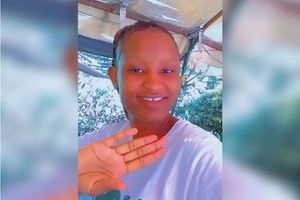
“It is my body, so I will give it to whoever I want.”
These were the words that cost 17-year-old Faridah Changawa her life on June 6, 2025, at her home in Mferejini village, Kijipwa sub-location, Kilifi County.
The teenager, who had recently returned to school after giving birth to her child that had turned 11-month-old, made this remark in response to sexual advances from 22-year-old Lewis Kazungu Charo, a palm wine tapper employed by her family.
Her rejection enraged Charo, who could not bear being turned down. He picked up a wine tapper’s knife, slit the victim’s throat, and stabbed her in the cheeks, with the blade cutting across from the right side to the left.
Changawa attempted to flee but collapsed just before reaching her parents’ home, only a short distance away.
Charo, who had worked for the family for just six months, was arrested and charged with murder. Initially pleading not guilty, he later changed his plea after the prosecution tendered evidence from only two witnesses. He entered into a plea bargain agreement and admitted to the lesser offence of manslaughter.
In mitigation, Charo claimed he and the victim had been in a relationship that soured due to mistrust and infidelity. He nonetheless accepted responsibility, attributing his actions to what he described as her “disrespectful” response during their argument.
His explanation revealed a disturbing sense of entitlement, suggesting he believed rejection was unacceptable.
Unwittingly, his own words exposed him as a dangerous man who could kill simply for being rejected, leaving the court with a clear picture of his mind-set.
On Friday, the High Court in Mombasa sentenced Charo to 20 years in prison for manslaughter, despite his early guilty plea. The court cited the alarming global rise in femicide, particularly in marginalised regions, stressing that stiff penalties are necessary to curb this menace and protect communities from offenders like Charo.
Lewis Kazungu Charo (right) and his lawyer Swanya Vincent at the Mombasa High Court on November 25, 2025.
Photo credit: Brian Ocharo | Nation Media Group
Although the maximum sentence for manslaughter is life imprisonment, the court noted that imposing such a penalty on a defendant who had pleaded guilty would be too severe.
“However, the court is alive to the global trend of femicide cases, which is rising at an alarming rate, especially in marginalised areas like Kilifi. This necessitates action from legal stakeholders, including the judiciary, to curb this social problem and protect the community from people like Charo,” the judge stated.
In delivering the sentence, the court considered his mitigation, the pre-sentence report, the victim impact statement, and the circumstances of the offence.
“Given the circumstances of this case and in the interest of justice for both parties, I hereby exercise my discretion and sentence Charo to serve 20 years’ imprisonment. The sentence shall commence from June 13, 2025, the date of his arrest,” the court ruled.
In mitigation, Charo urged the court to consider his age, saying he was only 22 years old and had accepted responsibility for his actions.
He said he had expressed willingness to enter into a plea bargain from the onset of the case as a sign of remorse and acceptance of wrongdoing.
Through his advocate, Charo proposed a 10-year jail term in support of a lenient sentence for accepting wrongdoing and owning up to his actions.
However, the prosecution urged the court to impose a stiff custodial sentence, relying on the pre-sentence report, the victim impact statement, and the Judiciary Sentencing Guidelines.
The prosecution emphasised that the deceased was only 17-years-old and already a mother to an 11-month-old child.
The prosecution further disclosed that Changawa had previously been defiled at the age of 15, leading to the conviction of the perpetrator at the Shanzu Law Courts.
According to the prosecution, Charo later entered her life and began a sexual relationship with her, which ultimately culminated in her death.
The prosecution also gave a chilling account of the injuries inflicted on the deceased, describing how the wine tapper’s knife slit her throat and pierced through her cheeks from the right side to the left.
“The nature of the injuries demonstrated the immense pain the victim must have endured while struggling to remove the knife,” the prosecution stated.
Lewis Kazungu Charo (right) at the High Court in Mombasa on November 25, 2025. Charo is charged with the murder of 17-year-old Faridah Changawa.
Photo credit: Brian Ocharo | Nation Media Group
The victim’s family, through their advocate, backed the prosecution’s submissions and urged the court to impose a custodial sentence, stressing that a young life had been lost.
The family argued that the absence of intent to kill did not diminish the victim’s constitutional right to life, which had been violated by the offender’s actions.
International Justice Mission Kenya, which had taken responsibility for supporting Changawa’s education after her first ordeal, welcomed the sentence, describing it as an important step towards accountability for violence against women and children.
IJM said the teenager’s killing exposed the dangers survivors continue to face even after seeking justice and protection.
“While this sentence is a step toward justice, it cannot restore the life lost or heal the pain caused to Farida’s family. IJM stood with Farida in her pursuit of protection and justice, and her case underscores the urgent need to strengthen survivor protection at every stage,” said Aggrey Juma, Manager for Violence Against Women and Children at IJM Kenya.
The organisation noted that the sentencing comes amid increasing cases of gender-based killings targeting young women and children, amounting to femicide, saying such incidents reflect the continued threat of violence against children and vulnerable members of society.
“The present sentencing sends a clear message that violence will be punished, but more must be done to ensure lasting safety for women and children through deterrence,” IJM said, while calling for sustained action by government agencies and stakeholders to combat femicide and protect vulnerable victims.
Court proceedings established that Changawa spent the day of June 6, 2025, helping her family with household chores and caring for her baby at their home.
In the evening, she prepared supper for the family before Charo arrived at the homestead.
Witnesses told the court that Changawa served Charo food, which they ate together, and the two spoke for nearly an hour away from the rest of the family.
Later, the teenager informed her family that she was going to collect her mobile phone from a nearby home where it was charging.
About 20 minutes later, family members heard screams and saw Changawa running back towards the homestead before collapsing.
She had sustained severe stab wounds, and a knife was lodged in her neck. She later succumbed to the injuries.