Shakahola massacre: Mackenzie jailed for 200 years

What you need to know:
- In determining the gravity of the offences, the court classified the 191 victims according to their ages and established causes of death, taking into account their vulnerability and the circumstances in which they died.
- Of the victims, 161 were infants, toddlers and children below nine and a half years. Another 22 were aged between 10 and 13, and five were aged between 14 and 16 and a half. The ages of two children could not be established. One victim was an adult.
- The judge singled out the youngest victim, a baby who had lived for only 12 days.
Cult leader Paul Nthenge Mackenzie has been sentenced to a total of 200 years in prison for the murder of 190 children and one adult at Shakahola Forest between January 2021 and September 2023.
The High Court in Mombasa imposed two separate 100-year prison terms on Mackenzie, distinguishing between victims who died of starvation and those who were killed directly through suffocation, strangulation or blunt force trauma.
In the first category, he was sentenced to 100 years' imprisonment for each of 183 counts of murder by starvation, involving 182 children and one adult. The sentences will run concurrently.


In the second category, he was sentenced to 100 years' imprisonment for each of eight counts of murder by direct homicide involving children. These sentences will also run concurrently.
The court directed that the two sets of sentences run consecutively, resulting in an aggregate sentence of 200 years.
'The darkness of their deeds'
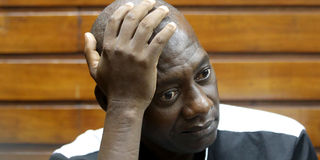
Pastor Paul Mackenzie before the Mombasa Law Courts.
Delivering the sentence, Justice Diana Kavedza said the Shakahola massacre was premeditated and sustained over a prolonged period, requiring a punishment that reflected the gravity of the crimes.
"The sentences of this court must match the darkness of their deeds and the maximum penalty of the law," she said.
The judge described the suffering of the young victims, many of whom were entirely dependent on their parents and guardians for survival, yet were deliberately denied food, water and protection.
She questioned whether the convicts deserved any mercy, particularly in light of their apparent lack of remorse and their continued belief that their children had gone to heaven.
"The perpetrators stand with unbent necks, devoid of guilt, unbothered by remorse, declaring in their blind and arrogant zeal that their children are in heaven and they are ready to follow. Do such as these deserve an iota of mercy? Does justice bend to offer mercy here, where mercy was systematically erased? No," the judge said.

Lady Justice Diana Kavedza Mochache reads the sentence for cult leader Paul Mackenzie and 28 other co-accused who were convicted over 191 deaths in Shakahola Forest, Kilifi County.
Justice Kavedza said the law demanded an unequivocal response to those who crippled children in the name of religion and left surviving orphans in children's homes, where they now call caregivers by the name of parents.
"They now plead for a truncated sentence. Can such repair the permanent damage? The sentence of this court is absolute, to isolate the darkness from the day," she said.
"The law imposes punishment not out of malice but out of grave necessity: to deter. A stark warning to all humanity that no fanatic or cruel authority may claim a right to kill and those who try shall feel the heavy hammer of the judicial pen," Justice Kavedza declared.
Mackenzie at the centre

The judge placed Mackenzie at the centre of the killings, describing him as the principal architect of the massacre in his capacity as leader of Good News International (GNI) Ministries and the Shakahola settlement.
In assessing individual culpability, she found that Mackenzie orchestrated his followers' exodus into the forest, presided over meetings where he told them to fast to death, and specifically directed that children should be the first victims.
He also presided over burials, which he referred to as weddings, issued instructions to village elders through his deputy, Smart Deri Mwakalama, and commanded the use of violence against children who resisted fasting, tried to abandon the practice or sought to escape from the forest.
The judge said the punishment had to reflect not only the number of lives lost but also the calculated manner in which the victims were subjected to suffering before their deaths.
The victims - Infants, toddlers
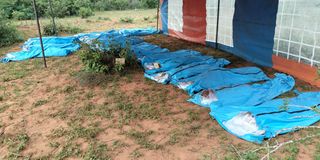
18 bodies found buried in the compound of Kilifi cult leader Paul Mackenzie.
In determining the gravity of the offences, the court classified the 191 victims according to their ages and established causes of death, taking into account their vulnerability and the circumstances in which they died.
Of the victims, 161 were infants, toddlers and children below nine and a half years. Another 22 were aged between 10 and 13, and five were aged between 14 and 16 and a half. The ages of two children could not be established. One victim was an adult.
The court established that 183 victims, comprising 182 children and one adult, died of starvation. Eight other children were killed through direct homicide, including suffocation, strangulation and blunt force trauma, after resisting or refusing to starve themselves.
The judge singled out the youngest victim, a baby who had lived for only 12 days.
"Consider the infant, a tiny life, just twelve brief days upon the earth, denied the mother's milk from the moment of its birth, with a raw and healed umbilical cord still clinging to its frame, left to shrivel in the heat under the enforcers' watch. Twelve days of weak, failing cries until the quiet final breath. A newborn child delivered in the scorched dry land, straight from labour into agonising death," she said.
The court also recalled the suffering of the 161 infants, toddlers and young children who slowly wasted away in the forest, their bodies weakened by hunger and thirst as they cried in vain for food and water. Their desperate search for comfort was met with brutality from those entrusted with their care. The judge cited an instruction attributed to Mackenzie: "Binguni mutaenda kwa mangumi na macheke," meaning that they would enter heaven through punches and kicks.
The 22 children aged between 10 and 13 were old enough to understand the betrayal by their parents and the terror of their deteriorating condition, yet remained too vulnerable to escape the deliberate starvation.
The five adolescents aged between 14 and 16 and a half who resisted the instructions to starve were subjected to even more brutal treatment. Those who fought to survive had their hands tied, were locked up, bludgeoned and strangled. Their resistance, the court observed, was answered with violence and not protection.
Why 200 years
In explaining the objectives of punishment, Justice Kavedza identified deterrence, retribution and the protection of society as central considerations. Retribution, she observed, required society to restore the moral balance by matching the scale of condemnation to the wickedness of the crimes, while incapacitation was necessary to prevent those who preyed on the helpless from harming others.
The court's sentencing approach took into account the vulnerability and age of each victim, the established cause of death, and the individual role, degree of participation and culpability of every convict.
The judge emphasised that although Mackenzie bore primary responsibility as the overall leader who directed the killings, the other accused were also assessed according to their respective roles and levels of participation.
Mr Mwakalama, Mackenzie's deputy, was handed a cumulative jail term of 160 years, with the other convicts receiving sentences ranging from 100 to 160 years for similar offences.
Read some of our other coverage of the Shakahola massacre below:
Follow our WhatsApp channel for breaking news updates and more stories like this.