Mary Wangechi stares blankly into the distance, her eyes unblinking until they well up with tears that slowly dry on her cheeks as she recounts her troubled life.
She has cried enough over the last decade. Today, she simply gazes into a bleak future.
The 65-year-old struggled to raise her four daughters and one son while working in tea farms in Kangaita village, Kirinyaga County. But fate would later force her to bury three of them.
About a decade ago, she lost two daughters Margaret Wambui and Milcah Wakuthii who fell ill and died within a year of each other.
Yet it is the loss of her only son, Dennis Juma, 39, that shattered her life.
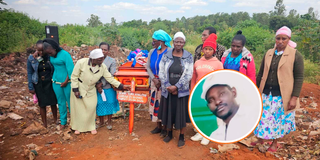
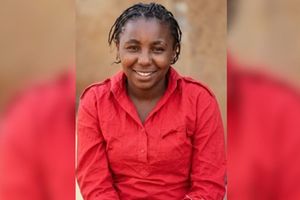
Mary Wangechi, 65, whose son Dennis Juma,39, was shot dead during the June 2024 Gen Z protests.
Photo credit: George Munene | Nation Media Group
Dennis died from gunshot wounds after he was shot during the June 2024 Gen Z protests. He was buried in Embu, about 50 kilometres from his mother's home in Kirinyaga
The brutal killing of her son—a hotel worker in Embu and her sole provider—is the wound that hurts the most, Wangechi says.
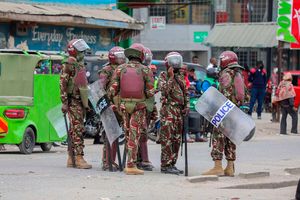
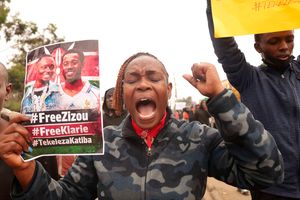
On June 25, 2024, Dennis was caught up in a confrontation between anti-riot police and Gen Z protesters when, according to his family, a police officer shot him.
"The bullet hit him on one side of the head and exited on the other. When we went to see him at the mortuary the following day, I could not believe it was my Dennis lying there, his head blown apart with a gaping hole where the bullet had exited. That image still torments me," Wangechi said during an interview at Kangaita shopping centre, where she lives in a rented single room.
"The bullet entered through the right side of the head and exited on the left, fracturing the skull," the postmortem report, seen by the Nation, states.
According to the family, Dennis had been sent by his employer to buy cooking oil and flour when he met his death. His mother says they spoke briefly on the phone that day.
"My son told me he was on his way to the shop. I could hear loud gunshots in the background, so I advised him to take cover. Suddenly, the call went dead and that was the last time I heard his voice," she said.
Ms Wangechi says he had pinned her hopes on her son believing he would one day rescue the family from poverty.
"Dennis had promised that he would work hard, buy a plot and build me a house so that I could stop living in a rental room with his siblings. He was a very hardworking young man and I had faith in him. Sadly, he died before fulfilling his promise," she said.
She paused before adding: "He used to send me money to buy food, clothes and pay rent. I was left without a helper."
His younger sister, Rose Wachuka, said the family is yet to recover from the loss.
Mary Wangechi, 65, whose son Dennis Juma,39, was shot dead during the June 2024 Gen Z protests.
Photo credit: George Munene | Nation Media Group
"Dennis was a good man who supported all of us. Two years later, we are still in shock. His death was a huge setback for the family," she said.
For Wangechi, another painful reality was having to bury her son far from home because she owns no land.
Dennis was laid to rest on July 5, 2024, at the Gatondo public cemetery in Embu County, a site that also serves as a dumpsite.
Fellow Gen Z protesters contributed money for the funeral, bought a casket and paid the county burial fees. The burial ceremony lasted barely 30 minutes.
"We were instructed that because of the tension surrounding the Gen Z protests, the ceremony had to be conducted as quickly as possible. It was painful, but we had no choice," said a worker at the cemetery.
The workers later showed the Nation the spot where Dennis was buried. The grave is now overgrown with bushes and is difficult to identify.
The family says that despite reporting the matter to the Directorate of Criminal Investigations and recording statements, they have received no communication from the authorities.
"Three members of the family recorded statements with detectives in Embu. What is even more shocking is that the officer responsible for my son's death has never been arrested," said Wangechi.
Several months after Dennis' death, officials from the Independent Policing Oversight Authority visited the family and promised that justice would be done.
"We were told justice would be served, but since then, IPOA has never spoken to us again," she lamented, adding that she does not know whether her son's name is among those earmarked for compensation under the government's Sh2 billion fund for victims of the Gen Z protests.
An officer at the oversight authority said the compensation process begins with the matter being reported to the agency, after which investigations and verification are carried out.
"If the incident is reported in the media, IPOA also takes the initiative to trace the family and establish the circumstances under which the victim died," the officer told the Nation.