Residents of Bar’goni and Mswakini villages in Hindi Division, Lamu West, have been left in disbelief after mysterious land surveyors arrived at their homesteads unannounced.
The surveyors, accompanied by the alleged owners of the land, began work without the locals’ consent, triggering a brief confrontation before the villagers drove the “visitors” away.
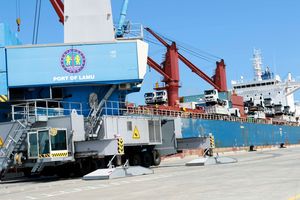
Bar’goni and Mswakini are home to the Boni minority community. The villages border Kwasasi, Kalavuu and Magogoni, where the government intends to establish the Sh2 trillion Dangote East Africa Petroleum and Petrochemicals Special Economic Zone (SEZ). They also border Kililana, where the Lamu Port is situated.
Shortly after chasing the surveyors away, the residents reported the matter to police in Hindi before proceeding to the Mokowe Lands Offices to seek clarification.
Ms Amina Abuli from Mswakini village questioned the legality of the survey, noting that no government official had notified them of any intended exercise on their land.
“These are our ancestral lands. We’ve lived here for decades. We were shocked to see questionable, unknown individuals invading our lands and homesteads this morning in the name of doing surveys in their plots. Which lands, and who authorised them? We had to stop them and report the matter to the police,” said Ms Abuli.
Mr Omar Salim, a resident of Bar’goni, said the surveyors and alleged landowners might be working in cahoots with tycoons to frustrate them. He said residents intervened because the survey lacked their consent and clear instructions.
“How can one invade somebody’s land and start demarcating it without even consulting us or showing us any form of authorisation? This is a fishy exercise, and we won’t allow it,” said Mr Salim.
He added: “The surveyors entered our homesteads with questionable land documents. Some even wanted to demolish our structures as they undertook the survey. We had to mobilise ourselves and stop them. We reported them to the police before heading to the Mokowe lands offices to seek clarity over the matter."
A section of Mswakini Village in Hindi Division, Lamu West.
Photo credit: Kalume Kazungu | Nation Media Group
Mr Ali Barissa, 56, said he had lived in Mswakini all his life and that the land had sustained his family for decades.
“We’ve lived on these ancestral lands for so long. We were surprised to see surveyors showing up and marking boundaries. We had to stop them because no villager had been informed,” said Mr Barissa.
Lamu County Government Lands Chief Officer Ahmed Loo confirmed the incident but said his office had already addressed it.
“It’s true that there was a misunderstanding between wananchi and some individuals who arrived in their areas to undertake surveys. The people of Bar’goni and Mswakini have indeed come to our office. We’ve discussed and put things right. There is nothing to worry about,” said Mr Loo.
Lamu County Police Commander Shadrack Ruto said he was also aware of the issues surrounding land in Lamu, including in Bar’goni, Mswakini and surrounding areas. He warned individuals against taking the law into their own hands whenever misunderstandings arise.
He advised alleged landowners and surveyors that having land documents does not give anyone the authority to carry out self-evictions on disputed land. Instead, landowners must follow legal channels, report property disputes to the police and obtain proper court orders before taking any action.
On the part of the villagers, Mr Ruto said legally occupying land does not grant an individual the authority to physically fight back against someone claiming the property. When disputes arise, he said, the correct procedure involves state authorities and the judicial system rather than personal retaliation.
“Taking the law into your own hands can lead to violence, property damage and criminal charges against the titleholder. Let people know that there are standard legal protocols and police guidelines for handling disputed lands. We prefer citizens to prioritise law enforcement and courts so as to maintain peace and order while ownership is being verified,” said Mr Ruto.
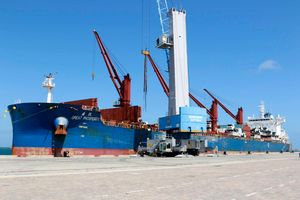
The second equipment batch for the Dangote East African oil refinery project arrives at the Lamu Port in this photo, taken on October 20, 2026. Over 154 assorted construction equipment items were offloaded from Mv Great Prosperity, a Hong Kong-flagged dry bulk carrier, at the Lamu Port.
Photo credit: Kevin Odit| Nation Media Group
He said that if someone approaches another person’s legally occupied land to claim it, the first step is to report to the police immediately, to prevent a breach of the peace, trespassing or illegal eviction.
“Both parties must present their official land ownership documents, such as title deeds, lease agreements or certificates of ownership, to the relevant authorities. If both parties possess conflicting documents, the dispute must be taken to a civil court or an Environment and Land Court for review and validation of the documents to legally determine the rightful owner,” said Mr Ruto.
Bar’goni and Mswakini are home to more than 2,000 people. The locals’ concerns mirror growing anxiety among Lamu residents over land speculation and potential land grabbing.
President and Chief Executive Officer of Dangote Group Aliko Dangote speaks during an interview, ahead of breaking ground on the construction of a 700,000-barrel-per-day refinery in Lamu along Kenya's southern coastline, in the Westlands district of Nairobi, Kenya, September 29, 2026.
Photo credit: Reuters
Such fears have intensified following the implementation of mega state projects in the county, including the Sh310 billion Lamu Port and the recently launched Sh2 trillion Lamu Refinery by Nigerian industrialist and Africa’s richest man, Aliko Dangote.
Such massive industrial footprints have historically attracted outside prospectors, speculators and powerful individuals seeking to acquire title deeds in the hope of cashing in on hefty government and investor compensation.