Mr Sammy Mbugua, a casual labourer working at the Lamu Port in Kililana, about 16 kilometres from Hindi Town, is a disgruntled individual.
Mr Mbugua first came to Lamu in 2022, when he successfully secured a casual job working at the port. His next step was to find suitable accommodation that was convenient for his daily commute.
Mr Mbugua found a room to rent in Hindi Town, which is closer to the port compared to other towns. At first, Hindi seemed calm. But as time passed, he began witnessing an unpleasant trend: noisy nightclubs, bars, and restaurants.
“Initially, I thought my choice was the best. Hindi was so calm, silent. As years have gone by, the town has developed. The population is also rising steadily,” said Mr Mbugua.
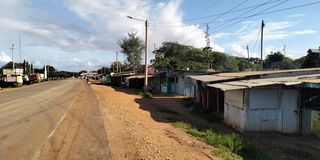
A cabro-paved street in Hindi Town, Lamu County.
Photo credit: Kalume Kazungu | Nation
As the town grew, so did the number of bars with investors seeking to make money from the increasing population.
“Noise pollution has become a nuisance. Some of the nightclubs are within residential places. It’s unfortunate that you come home tired, hoping to rest, but you wake up tired in the morning to go to work after spending the night annoyed at the noise, tossing and turning,” said Mr Mbugua.
Hindi is among the few towns in Lamu County that have recently shown great potential in terms of development, due to its proximity to the Lamu Port. Despite this positive growth, locals have remained unhappy due to constant noise pollution from the nightclubs.
Statistics from the local administration show that the town now has more bars and liquor joints than schools. Hindi Location Senior Chief Jamal Keah told the Nation on Wednesday that there are 17 bars and local liquor dens in the town.
However, only three schools have been established: Hindi Primary, a public institution, and two private schools – Angaza Academy and St John’s Academy.
Hindi Primary School, a public institution within Hindi Town. There are only three primary schools in the town which has 17 bars and liquor dens.
Photo credit: Kalume Kazungu | Nation
Mr Keah cautioned against the proliferation of bars and liquor joints. He said that allowing such businesses to operate within residential areas violates residents’ right to live in dignity and a healthy environment as enshrined in the Bill of Rights.
“The disturbances from the nightclubs and liquor joints is too much. We have scenarios where some pubs were issued with 24-hour operation licences. Others operate from 5pm to 11pm, but many of them play ear-shattering music,” said Mr Keah.
The administrator complained that locals can no longer sleep comfortably because of the noise. The loud music and general disturbance from the nightclubs in the evenings has also become a security threat, Mr Keah said, adding that Hindi is one of the areas in Lamu under tight surveillance by security agencies.
“The loud music every night makes it impossible for us to even differentiate between gunshots from enemies raiding places and the loud music from the night pubs. The situation is worrying. Even pupils can’t study at night. Worshippers in mosques and churches can’t go about their daily activities. We’re pleading that the licensing of bars and liquor joints in the town be controlled,” he added.
Ms Esther Wawira is worried that, if the trend continues, moral decadence will become entrenched among future generations in Hindi Town. She has noted an increasing number of skimpily dressed revellers in the evenings in the town.
“Our children are now used to seeing skimpily dressed ladies behaving badly while going to or coming from these so-called bars, nightclubs and liquor joints. This is a shame,” she said.
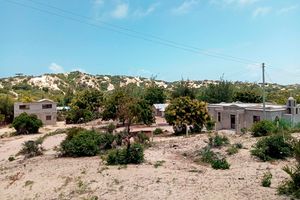
A section of Hindi Town in Lamu County.
Photo credit: Kalume Kazungu | Nation
Mr Julius Mwangi, a Nyumba Kumi official in Hindi, said villagers have on many occasions filed complaints with local authorities, including the Lamu County Alcohol Regulation and Control Board, but no action has been taken.
“We’ve written several times demanding investigations and closure of some notorious bars and liquor dens but it’s like our cries aren’t heard. We have joints that are openly flouting noise and proximity laws yet no action has been taken to address this,” he said.
“How we wish the many bars, nightclubs and liquor selling joints are closed. We shall be happy to see only two to three joints left to operate far from residential places just to bring sanity to this town.”
A county inspectorate officer who requested anonymity said it is difficult to attain 100 percent compliance with the Alcoholic Drinks Control Act in Lamu, particularly in Hindi. He said illegal operators continue with their activities as they regularly pay “protection fees” to law enforcers.
“We have bars and liquor joints openly flouting the laws, including being too close to neighbourhoods and notorious for causing noise pollution, yet we can’t do anything. There are owners of those joints who religiously pay protection fees to law enforcement just to continue operating illegally. These owners are untouchable. Even if you try shutting down their joints or forcing them to operate within the confines of the law, you won’t succeed,” said the officer.
New buildings in Hindi Town, Lamu County.
Photo credit: Kalume Kazungu | Nation
Mr Paul Kariuki, one of the investors in the business, said it is up to authorities in Lamu to stop allowing corrupt cartels to venture into the industry at the expense of genuine operators.
“I feel the system used by the county administration to issue licences has loopholes, enabling lots of corruption in this industry. We shall stop paying the licensing fees until they seal those loopholes,” he said.
Mr Khamis Kaviha, the director of the Lamu County Alcohol Regulation and Control Board, said his team has tried its best to regulate the bars, nightclubs, and liquor joints.
He said they have recently closed more than 10 bars and liquor joints in Hindi Town for failing to adhere to the law.
“We’ve also refused to issue licences to four bar and liquor joint owners within Hindi Town until they comply with the required regulations pertaining to alcoholic drinks. As a board, we shall continue to regulate the joints until we get to the tolerable limit,” said Mr Kaviha.
He admitted facing challenges, particularly inadequate manpower at the county level. “The county enforcement team’s manpower is still limited. We need to have enough inspectorate officers to enable them to carry out frequent patrols in our towns to ensure compliance,” said Mr Kaviha.
Mr Edward Menza, the Lamu County director of the National Environment Management Authority (Nema), said his office has not received any complaint from the county government about noise pollution in Hindi Town caused by bars, nightclubs, and liquor joints.
“The county government is directly in charge of all the noise and disturbances. Nema acts promptly and efficiently once we receive a formal complaint from the county government itself, or such complaints can be filed in person at our offices. So far, no notification has been issued to us,” he said.