Alfred Ondara knows he can be arrested by the police at any time like some of his neighbours have.
He also knows that getting interviewed by us can get him harmed. But he talks to us anyway, saying he is ready to die if that is what will save his neighbours.
Some of his neighbours’ houses in a contested tract of land have been demolished, and he fears his maisonette is unsafe. A big red “X” is emblazoned on his gate, and replicated in many more gates here.
Mr Ondara, who bought land here in 2015, is among the hundreds pegging their hopes on the High Court in Machakos regarding their continued stay in that property.
“We are not thieves. And we are not squatters,” Mr Ondara declares.
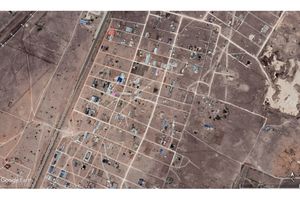
The land is located in Mavoko along Mombasa Road, about 950 metres from the Daystar-Mombasa Road junction.
Their plight can be summarised as this: Hundreds of dwellers bought land from people who said they were community groupings. The dwellers made infrastructural improvements there, and some built houses that are now the only homes they have.
A demolished house that had been built on Portland Cement land in Mavoko, Machakos County, on October 17, 2023.
Photo credit: File | Nation Media Group
They later learnt that the land belonged to East African Portland Cement (EAPC). EAPC later surrendered the land to Kenya Commercial Bank (KCB) because of an unpaid loan said to be Sh5.6 billion, though the figure keeps on changing depending on whom you talk to.
A resident told us that a quick calculation showed that if the land were to be split into 40-by-80 feet pieces and each piece sold for Sh2.2 million, the sales would amount to about Sh20 billion, meaning the amount raised would be four times the size of the loan.
In November 2024, KCB placed an advert in the dailies saying it had appointed an agent to represent it in the sale of the land to the occupants. Curiously, it did not name the agent.
The sale process would start with the occupants producing proof that they had bought the property by way of share certificates. After that, each occupant was required to pay Sh200,000 to KCB as regularisation fee.
Over 100 structures built on Portland Cement land in Mavoko destroyed
The bank also placed two containers on the land as offices where the agent – known only as Mugo to the locals – operates from. That November, KCB officials also visited the land and held a meeting with the dwellers on the regularisation procedure. That process has turned into a quagmire where prices have been shifting. The police have been sent to the site to arrest people and supervise the erection of beacons, various houses have been marked “X”, some structures have been torn down, and tension is high.
A question begs: Will this lead to another case of widespread demolitions on Portland property as was the case in another section of Mavoko in 2023?
The case at the High Court in Machakos points an accusing finger at KCB. In that lawsuit, the Mavoko Muundani Residents Association is the first applicant, with the second being the KCB Muundani Residents Association. More than 50 people occupy the rest of the applicants' list.
The sued parties are KCB, EAPC, and the Attorney-General in that order.
Due to an application the residents made earlier this year, Justice Noel Adagi of the Constitutional and Human Rights Division issued temporary orders on February 10 requiring KCB, EAPC and the Attorney-General to recognise the dwellers.
“The respondent be and is hereby directed to recognise and respect the investments and infrastructure established by the petitioners on suit land LR 8786 and 8484/654 situated in Mavoko Municipality in Machakos County pending the hearing and determination of this application,” the judge stated.
Demolished houses that were built on Portland Cement land in Mavoko, Machakos County, on October 17, 2023.
Photo credit: File| Nation Media Group
The Attorney-General was also ordered to “establish mechanisms and guidelines to ensure equitable access to land and prevent exploitation of vulnerable communities” until the case is determined.
KCB has since filed an application seeking the lifting of those orders. It says that they are final in nature and that they limit the bank’s “proprietary rights in the subject property with finality”.
The bank has told the court that the residents failed to disclose that there is a verdict issued by another court where “all occupants that were not registered proprietor[s] and claiming [ownership] through associations were determined to be trespassers”.
In submissions made on April 14, the lender says: “The petitioners duped this honourable court by deliberately failing to disclose material facts that would have substantially had a bearing on the issuance of the impugned orders.”
KCB then mentioned a past case whose findings are “in rem”, meaning they apply for the general area. In that case, a judgement was given that said: “I find that the defendants including interested parties have indeed trespassed on the plaintiff’s [EAPC’s] land by building houses, school and churches thereon knowing fully well the said suit properties did not belong to them.”
The court further said: “A declaration be and is hereby issued that the plaintiff is entitled to an exclusive and unhindered right of possession and occupation of parcels of land known as LR No. 12948/17, LR No. 10425, LR No. 8784, LR No. 7815/1 and LR No. 8786.”
Due to that, KCB argued: “The [dwellers] have no recognisable right in the suit property as the same was determined by a court of competent jurisdiction. The[ir] failure to disclose the judgment is material and warrants discharging of the ex-parte orders.”
The residents have fought back KCB’s application vehemently. In submissions filed on April 28, they have informed the court of a meeting that happened on November 13, 2024 where representatives of KCB and Portland attended.
“During the said meeting, which was attended by heavily armed Administration Police, KCB, being the beneficial owner of the property, informed the public of the general procedures expected in the regularisation process,” they say. “At the conclusion of the meeting, no consensus was reached on how the regularisation process would be undertaken, particularly due to outstanding issues emanating from a prior regularisation process undertaken by EAPC on a portion of the suit property and other neighbouring properties.”
Despite the lack of consensus, the residents told the court, KCB issued a notice informing them that the regularisation process would start on November 18, 2024.
Unlucky family loses four homes and land in Mavoko demolitions
“[This was] despite the petitioners having written to the respondents demanding clear and concise terms of engagement,” they stated.
As per the notice, the residents said, they were to pay Sh200,000 per plot within three weeks. The residents were also required “to halt all development on the suit property”.
They complain that they are not sure whether the directions they have been given, where one pays a deposit of Sh200,00 for every 40-by-80-feet plot, are truly geared towards finally owning the land.
“The petitioners were coerced to pay Sh200,000 per plot without clarity on the terms, with threats that failure to pay would result in the loss of their plots and any developments thereon,” the residents’ submissions say.
Having paid the Sh200,000 per plot, the residents claim, they were given further terms, which included clauses for paying for the plots after valuation and compliance with “all terms set by KCB”.
Also, some residents were shocked to hear that not all the properties would be available for the regularisation process, irrespective of what they had constructed there.
“[They] were informed that the plots they occupied fell within a ‘commercial zone’ and were thus barred from registering their plots, despite holding allotment letters and having developed the plots,” the submissions say.
But KCB denies blocking anyone from any side of the property, saying the regularisation terms “apply across the entire suit property”.
The residents accuse KCB and EAPC of arbitrarily dispossessing them of land and starting construction works “including the erection of site offices and perimeter walls under the protection of the police”.
“The actions of the respondents have caused widespread anxiety, outcry, and confusion among the petitioners, who have enjoyed peaceful and quiet possession of the land since 2009,” the residents add. “The petitioners have written several letters to the respondents requesting a meeting to discuss the regularisation process, including how the purchase price was determined and for the provision of valuation reports. These letters have gone unanswered, and the requested information has not been [provided] to date.”
They say that the prices currently quoted by KCB are “extortive and grossly overvalued” compared to what EAPC is charging for properties in adjacent land, which is “Sh750,000 per 50ft-by-100ft plot and Sh650,000 per 40ft-by-80ft plot”.
“The petitioners aver that the respondents are using the guise of regularisation to deny them meaningful ownership of the land through coercion, threats and intimidation, including the fear of demolitions by selling 50-by-100 plots at Sh5 million, which is unaffordable by the petitioners,” they add. “The petitioners are ready and willing to purchase the land at the prevailing market price. However, KCB has demanded an exorbitant purchase price far beyond the financial means of the petitioners.”
A security officer manning part of the demolition scares some of the residents in the ongoing demolition of houses on Portland Cement land in Mavoko, Machakos county on October 17, 2023.
Photo credit: File | Nation Media Group
We visited the property on Friday evening, and the residents we found were uneasy, not sure whether our vehicle was another police car.
Ahead of June 26 when the court will give its ruling, residents like Mr Ondara are living on tenterhooks.
KCB, however, argues that is has all the right to do what it pleases with the land. Noting that it engaged them on the particulars of the regularisation, the bank adds: “The petitioners have no legal and/or proprietary rights in the suit properties and therefore their consensus as to the terms of the regularisation process is not anchored in law.”
“The offer for sale by [EAPC] of its property has no bearing on the offer for sale by [KCB] of its property,” the bank adds. “The two properties are distinct.”
“The petitioners were in no way coerced to pay Sh200,000 without clarity of applicable terms to the regularisation. As confirmed by the petitioners…they were aware what the terms of regularisation were.”
The bank further argues: “The petitioners further seek this honourable court to act ultra vires (beyond the powers given) to determine the price at which a private registered proprietor duly protected by the Constitution and land laws ought to sell its property. This…cannot stand.”
Ahead of June 26 when the court will give its ruling, residents like Mr Ondara are living on tenterhooks.
This is because, as said in the court papers, KCB’s agents have “started construction on the suit property and keep bringing material”.
“They continually bring third parties to the suit land, trying to lease/sell it to the detriment of the applicants,” they allege. “KCB and/or its agents continue to dig holes, erect walls, demolishing some of the applicants’ property and do other activities that result in wastage and destruction of the suit property.”
They residents have told the court that its February 10 orders, which were later extended, have been defied and that KCB is instead “employing delaying tactics to enable their usage and wastage of the land”.
“It is imperative for this court to give effect to its orders,” the residents pray.
We visited the property on Friday evening, and the residents we found were uneasy, not sure whether our vehicle was another police car. They said they are used to seeing private cars being used to ferry police officers who arrest people at will as the dispute over the property simmers.
Said Mr Ondara: “This looks like an unjust programme in all ways, because they are using the police to carry out questionable activities.”