Seven months after losing both her son and husband to suicide, Florence Mutie is still struggling to come to terms with the double tragedy. Thoughts of the two men often overwhelm her, leaving the mother of three in tears as she struggles to understand how her family was devastated within days.
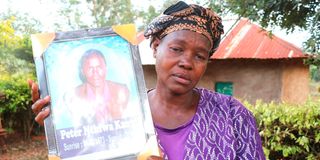
Florence Mutie displays a portrait of her son, Sammy Nyamai, who died by suicide at Utwa Village in Makueni County on October 8, 2026.
Photo credit: Pius Maundu | Nation Media Group
“It was tough,” she told the Nation during an interview punctuated by sobs.
The tragedy began when her son, Sammy Nyamai, 30, died in unclear circumstances in Meru Town. As relatives made burial arrangements at Utwa Village in Makueni County, the family was struck by another loss when his father, Peter Nthiwa, also died by suicide.
“They did not even say bye,” Ms Mutie said. The father and son were buried on the same day.
Her family’s ordeal reflects a wider crisis that has left communities in Makueni County grappling with a rising number of suicide deaths . Authorities estimate that dozens of residents have died by suicide over the past year, with Mbooni East Sub-county emerging as the worst-affected area.
“Mbooni East Sub-county has lost five people to suicide in September alone. This trend is worrying,” said the area’s Deputy County Commissioner, Monica Kang’ethe.
A spot check by the Nation found that men aged between 30 and 50 appear to be the most affected by the crisis.
Among the latest victims was Francis Kaleli, a 38-year-old junior school teacher who died by suicide a week ago. The science teacher had been battling alcoholism, while former colleagues at Kilungu Comprehensive School said he had also been struggling with frustrations at home.
His widow, Jennifer Musyoki, remembered him as a responsible man whose behaviour changed when he was drunk, sometimes becoming violent.
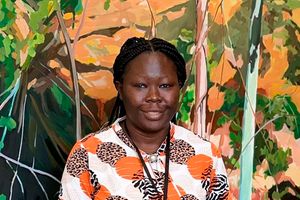
Jennifer Musyoki during an interview at Sakai Village in Makueni County on October 1, 2026. Her husband Francis Kaleli died by suicide.
Photo credit: Pius Maundu | Nation Media Group
“We had agreed that he would secure my early childhood development education certificate, which is being withheld by a college in Makueni over an outstanding fee balance, once he is employed. He was three weeks away from completing his two-year internship so that he could secure a teaching job,” said the mother of two.
For mental health professionals, the growing number of deaths points to a public health challenge whose causes are complex and cannot be reduced to a single explanation.
Joseph Masila, a psychiatrist who heads the Makueni County Government’s mental health department, said the crisis reflected a growing burden of mental health conditions that require greater attention and intervention.
“Suicide is a major public health problem. It is caused by an interplay of many biological, social and psychological factors. Depression is among the many mental health conditions that can lead to someone taking their own life. Many of these conditions are preventable and treatable,” Dr Masila told the Nation.
Interviews with people who have survived suicide attempts suggest that financial difficulties and troubled family relationships may be among the pressures underlying some cases. One 50-year-old woman said she had wanted to spite her husband, whom she accused of infidelity.
Waia Chief Patrick Ndiku, who has served since 2001, has begun holding separate meetings with men and women to understand the family tensions behind the crisis. He said suicide cases had risen steadily over the past three years.
“The suicide problem we are facing starts at the family level,” he told the Nation at Mr Kaleli’s funeral.
The initiative, launched a month ago, has exposed tensions over gender roles and power within households.
“Men have become strangers in their own homes,” Mr Ndiku said.
Similar concerns emerged during community forums organised last year by Governor Mutula Kilonzo Junior’s administration, where domestic violence featured prominently.
“Men complained bitterly of being harassed by women, to the extent of being denied food and conjugal rights. Women, on the other hand, lamented that men had become irresponsible. They placed alcoholism and khat chewing at the centre of the alleged irresponsibility problem,” said village elder Juliana Mutuku, who attended several forums.
Juliana Mutuku at her home in Kithyululu Village, Makueni County, on October 1, 2026. Her son Stanley Mutinda died by suicide.
Photo credit: Pius Maundu | Nation Media Group
A week after attending a suicide prevention forum at Namba Nyaanya Township, Ms Mutuku lost her 50-year-old son to suicide.
“When I went to a posho mill at the market, I noticed that some of my neighbours spoke in low tones behind my back. They already knew he had died by suicide,” she recalled. A chief’s confirmation of the death left her devastated.
Last year, Interior Cabinet Secretary Kipchumba Murkomen asked the National Crime Research Centre to investigate the crisis after convening a security forum in Wote. He urged affected communities to cooperate with researchers, but local accounts indicated that a year later, the team had yet to visit the region.
Other deaths have deepened concern. In Kalawa Township, a prominent businessman died by suicide after attacking his wife over alleged infidelity.
Grace Koki, a 31-year-old pregnant mother of three, died by suicide in Utuneni Village and was buried on Thursday.
In Nzeveni Village, former Telkom Kenya technician Peter Mutuku Kinyumu had become withdrawn after retrenchment and struggled with alcoholism. His elder brother, Charles Munywoki, said it was his second suicide attempt.
“He kept asking what had become of Raphael Ndungi, a teacher, neighbour and his close friend who had died by suicide,” Mr Munywoki told the Nation.
His account has raised questions about a possible contagion effect, which authorities and health professionals are examining.
Kisau Sub-county Referral Hospital medical superintendent Augustus Kyalo said some people rescued during suicide crises undergo detoxification at the facility.
Counsellor Damiana Kyenze, who has followed the crisis, urged families to watch for behavioural changes.
“We should look out for our friends and relatives who exhibit strange behaviours. They tend to become withdrawn and neglect their appearance. They may also start selling personal effects such as clothes,” said Ms Kyenze, who works for the Makueni County Government.
She also noted a possible link between suicide cases and agricultural seasons, when access to farm chemicals increases.
“We have noted a strange pattern. The Makueni suicides do not occur throughout the year. They come in a wave that starts around August and ends around March. This is the time of increased agricultural activity in the county. It is also a period when access to agrochemicals is easier,” she said.
She urged residents to secure potentially dangerous substances. “As part of being our brothers’ keepers, we should keep agrochemicals under lock and key,” she said at Mr Kaleli’s burial.
The county government has stepped up interventions, with Governor Kilonzo partly blaming the crisis on predatory lenders and land disputes. The county has deployed counsellors to public hospitals, revamped the Tetheka Fund to offer affordable loans and introduced subsidised land succession services to resolve disputes that fuel family conflicts.