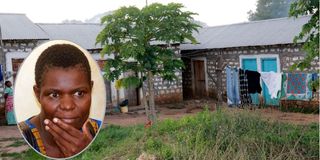
Residential houses at Kaoyeni Village in Malindi, Kilifi County, where the Kwa Bi Nzaro prime suspect Sharlyne Anindo Temba (inset) lived.
“I carry the spirits of those who died in Shakahola. You may run, but you will not hide from me.”
These were the chilling words a woman says she heard in a phone call from controversial preacher Paul Mackenzie, a call that changed her life forever.
Haunted and convinced, she gathered her six children and journeyed into the depths of Kwa Bi Nzaro forest to fast. None of them made it out alive.
The witness, identified as L.A., was a resident of Siaya. She recalled that in January last year, Mackenzie contacted her through her husband’s mobile phone.
Testifying before the Mombasa High Court, she recounted that Mackenzie told her the time had come for people to die and that she should do the same in order to go to heaven.
“Mackenzie told me that he possessed the spirits of all those who had died in Shakahola Forest, so he could see us no matter where we had gone,” she said.
According to the woman, the message prompted her and her husband, identified as J.O., to leave their home in Siaya and move to Kwa Bi Nzaro Forest. Between February 27 and March 1, a seminar was organised in Matayos, Busia County, where Mackenzie’s network, led by self-styled priestess Sharleen Temba Anindo, preached to more than 20 attendees.
During the three-day seminar, the court heard that Mackenzie contacted the congregation from his cell at Shimo La Tewa Maximum Prison and addressed them remotely. The message was stark: fasting to death was the only path to heaven and to meeting Jesus.
Read: Prosecution slaps Mackenzie, Temba with crimes against humanity charges over Kwa Bi Nzaro deaths
J.O. was among the congregants who listened as Mackenzie spoke for more than 30 minutes, addressing each attendee through a loudspeaker on the phone. Following the meeting and the warning that he possessed the spirits of Shakahola victims, L.A. and her husband resolved to relocate to Kwa Bi Nzaro forest with their six children.
The couple had previously been in Shakahola and narrowly escaped death before the tragedy became public. L.A. and the children were the first to leave the forest before later returning to retrieve her husband.
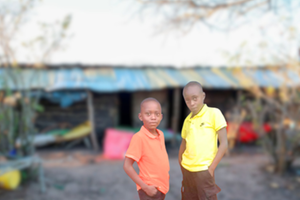
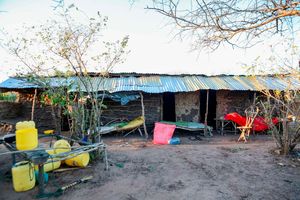
The compound in Kwa Bi Nzaro village where cult members lived and carried out their activities inside Shakahola Forest, in Kilifi County, pictured on august 30, 2025.
They had interacted with Mackenzie during their stay in Shakahola, and he knew them well. When he called again last year, she heeded the call and returned to the forest.
They left Siaya on March 31 after selling their household belongings and arrived in Malindi the following day.
“Anindo and Kazungu Kahindi Garama received us in Malindi. They took us to a house on the outskirts of the town where we rested until evening. They then took us to the forest. We arrived at night, around 7pm,” she said.
They were received into a mud-walled house within a fenced compound, and the door was locked from the outside. A four-litre jerrican was provided for use inside the room.
It was in this house that all six children died, one after another. By the second week of April, around April 15, all six had died and were buried in the thicket.
L.A. recounted being helpless as her children died because they were locked in separate rooms.
“I heard my children cry out in pain for hunger and water, but I couldn’t help. Each time they cried, I could hear Garama and his team, who stood guard outside, flogging them, saying they had come to meet Jesus and had to complete the journey,” she said.
She also described hearing prayers from the guards: “Jesus, help these people complete their journey; they should not get stuck on the way.”
“Tom Ochieng’ Mkonwe, alias Thomas, assaulted me, warning me to stop disturbing them. This is when I asked them either to give my children water or allow me to get them the precious commodity,” she said.
She further recounted how children, weakened by prolonged hunger, attempted to escape the forest in search of food or water, only to be pursued, captured and severely beaten. According to her testimony, these punishments were intended to instil fear and deter escape.
Read: Shakahola confessions: Suspect who pleaded guilty details torture, starvation that killed over 400
The first two children, aged one and three, died on April 3, one in the morning and the other at night. The third child died on April 5, and the fourth on April 7.
Throughout this period, L.A. and J.O. remained locked in their room, hearing the children cry for food and water, unable to intervene.
On April 8, Mackenzie called and urged the couple to let the children continue fasting.
Kwa Bi Nzaro prime suspect Sharlyne Anindo Temba (right) with her co-accused at the Malindi Law Courts in Kilifi County on September 12, 2025.
“Let the children continue with their fast; they are about to complete the journey. They have come from far,” J.O. said Mackenzie told him.
On April 9, the fifth child, aged 16, died at around 6 pm. On April 15, the second-born died at about 7 pm.
“I heard her cry out in pain, calling her father, and then she went quiet. We were then called and told she had completed the journey. When I viewed the body, I saw her neck twisted, suggesting she might have been strangled and her neck broken,” she told the court.
After losing all six children, the couple were given a break following instructions from Mackenzie, relayed through a mobile phone hidden in one of the houses. They were relocated to Malindi town, where they stayed in a rented room for over a month.
“That evening, we were relocated to Malindi; we ate omena (sardines) and ugali. We stayed there for a whole month,” she said.
After spending over a month in Malindi, they returned to the forest to resume the fast. Later, her husband managed to escape and contacted his brother and the local authorities, who rescued them.
The couple attributed their return to indoctrination, claiming they had been influenced after attending a prayer meeting in Matayos, where Anindo prepared food.
“It was after eating that food that I lost my mind and decided to go to Kwa Bi Nzaro forest. Anindo cooked the food; I believe it was laced with something stupefying. I believed I was going to heaven,” he said.
J.O. also told the court that he did not believe his children were in heaven.
“After their death, a spirit came to me telling me they are not in heaven. I don’t want to meet Jesus any more. I believe the decision to go to the forest was not entirely ours,” he said.
The two were testifying in a case in which Mackenzie, Anindo and Garama are charged with murder as crimes against humanity over the deaths of 52 people at Kwa Bi Nzaro forest. They face the charges alongside Mkonwe, Julius Thuva Luwali and Johnson Gona Richard.
The prosecution contends that between January and July 2025, Mackenzie communicated with followers, including those who had escaped the earlier Shakahola crackdown, urging them to relocate to Kwa Bi Nzaro forest.
There, they were allegedly persuaded to undertake a fatal fast with the promise of salvation and meeting Jesus in heaven.
According to the State, Anindo, Garama, Mkonwe, Luwali, Richard, Mutua and James acted as key agents in executing the plan, disseminating the teachings through phone calls and physical meetings across the country.
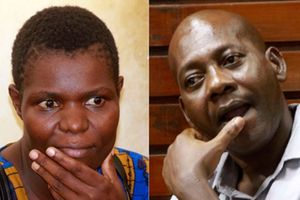
Kwa Binzaro prime suspect Sharlyne Anindo Temba (left) and Pastor Paul Mackenzie.
The eight face 23 counts of murder as crimes against humanity over the 52 cult-related deaths at Kwa Bi Nzaro forest. Prosecutors allege the killings, targeting followers of GNI, formed part of a widespread and systematic attack between January and October 2025.
The victims, mainly unidentified minors aged between six months and 17 years, were recorded using grave reference numbers. The accused also face 23 alternative counts of murder under Kenyan law, while Mutua and James are charged as accessories after the fact.
Chief Inspector Timothy Bett of the Crime Scene Processing Unit testified that investigators exhumed 30 bodies from 19 graves in the forest and recovered 102 body parts scattered across the area. These were forensically examined and associated, forming a total of 52 bodies.
“Most of these bodies were completely naked. They were buried in shallow graves of less than two feet to speed up decomposition and allow easy access by scavengers, thereby concealing evidence of burial,” he said.
Several body parts were found scattered outside graves, suggesting scavengers had accessed the remains and dispersed them.
“Many graves were deliberately hidden within bushes, with entrances covered by thorny branches,” he added.
Investigations revealed that perpetrators in the second phase of the cult deaths adopted burial methods designed to conceal evidence. Unlike the Shakahola victims, who were buried in mass graves near their structures, those in Kwa Bi Nzaro were buried about 500 metres from the homestead used as a fasting site.
“The first grave in Kwa Bi Nzaro forest was located 500 metres from the homestead. This was not accidental but a carefully planned scheme to conceal evidence of death,” he said.
Mass burials were abandoned in favour of shallow graves without clothing, making it easier for scavengers to exhume bodies. Clothing belonging to the victims was either burnt or buried near the temporary structures.
“Of the 52 bodies recovered, only two were intact enough for the cause of death to be established. These showed head injuries consistent with blunt force trauma. For the remaining 50 bodies, the cause of death was determined to be unknown,” he said.
The court heard that fasting took place in five structures within the forest homestead.
Follow our WhatsApp channel for breaking news updates and more stories like this.