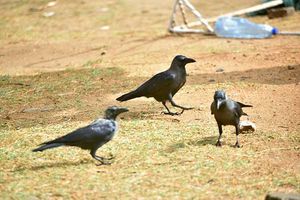
Coast tourism stakeholders are seeking to fast-track strategies to tackle the invasive house crow menace, which has increasingly spoiled outdoor guest experiences and tainted the region’s tourism image.
An ongoing eradication programme in the North Coast areas, such as Watamu and Malindi, has already eliminated 94,288 crows, with officials confirming that all carcasses are being collected and buried to prevent contamination of beaches and public spaces.
Survey figures show that before poisoning began, crow counts stood at 33,000 in Malindi, 19,000 in Kilifi and 12,000 in Watamu. A count in November 2025 recorded only 2,227 birds in Watamu, showing a significant reduction.
However, tourism stakeholders say the invasive birds have increasingly reached destructive levels along the coastline, displacing native species, spreading pathogens and becoming a public nuisance.
Speaking in Mombasa on Monday, Mr Eric Kinoti Kiambi, coordinator of the 'crows no more project' under a Rocha Kenya, said the team working with Kenya Wildlife Service (KWS), Pest Control Products Board, and county governments had adopted Starlicide (DRC 1339) as the preferred method of eradicating the birds since it targets only the crows and leaves no residual poison in carcasses.
An Indian house crow bird.
Photo credit: Kevin Odit | Nation Media Group
Once ingested, the chemical breaks down within 10 to 15 hours, making it safe for scavengers and harmless in cases of accidental spillage. The method involves identifying secure baiting sites away from human and livestock activity, pre-baiting for 10–14 days, and introducing poison only after maximum crow numbers are recorded.
“The house crow has multiplied at an alarming rate and become a serious threat to biodiversity, public health and the tourism economy. We are committed to a safe, science-based and coordinated eradication initiative,” Mr Kinoti said.
Tourism stakeholders say they are pushing to fast-track the programme before the Christmas holidays. Coast Hoteliers Association Chair Dr Sam Ikwaye said the birds have increasingly frustrated visitors who come to enjoy outdoor facilities.
“When guests come to the Coast, they want an outdoor experience but many cannot enjoy it because of the birds,” Dr Ikwaye said.
Dr Ikwaye said the sector needs at least Sh10 million to carry out the exercise and will hold a fundraising event on December 13 at Fort Jesus, bringing together tourism operators, county officials and conservation partners. Hotels, he added, are donating red meat daily to support baiting, but the cost remains high, indicating a huge economic impact.
An Indian House Crow perches on a table in search of food at Reef Hotel in Mombasa in this photo taken in 2015.
Photo credit: File | Nation Media Group
Separately, the Kenya Wildlife Service (KWS) in collaboration with the Ministry of Tourism on Monday officially welcomed participants to the 2025 Kenya Tourism, Wildlife and MICE Week, calling the event an important platform for showcasing the country’s natural heritage and conservation efforts.
Kenya Wildlife Service (KWS) Director-General Prof Erustus Kanga said the week-long event brings together stakeholders from tourism, wildlife conservation, meetings and events management, and cultural sectors to highlight Kenya's strengths as a global destination.
The programme includes exhibitions, policy discussions, conservation briefings, and regional showcases aimed at strengthening collaboration across sectors.
A house crow.
Photo credit: Shutterstock
The event is also expected to support ongoing efforts to promote Kenya as a competitive and responsible tourism destination.
Prof Kanga reaffirmed KWS’s commitment to protecting wildlife resources and working with communities and industry partners to ensure long-term sustainability.