In the bustling transport corridor linking Mombasa Island to the South Coast, motorists are at odds over whether to use the Likoni ferry or the Mombasa Southern Bypass, popularly known as the Dongo Kundu Bypass.
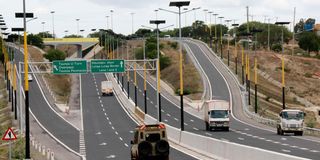
The bypass, consisting of three major bridges and about 17.5 kilometres in length, has become a darling to motorists and commuters travelling from the South Coast to either Mombasa or heading upcountry via the Mombasa-Nairobi highway.
It has also been touted as a time saver for travellers heading to the Standard Gauge Railway station in Miritini or Moi International Airport from the South Coast.
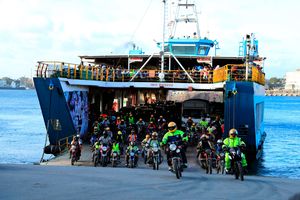
But many motorists to or from Mombasa Island (CBD) still queue at the ferry despite its never-ending challenges.
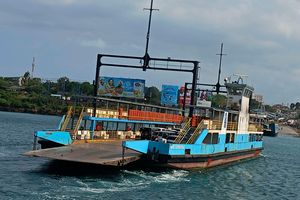
At the Likoni ferry crossing channel, Mr Chai Chaka waits patiently in his truck for his turn to board the vessel.
He is among hundreds of other motorists who have stuck to this mode of transport, despite ongoing announcements and sensitisation efforts by authorities urging motorists to consider the bypass.
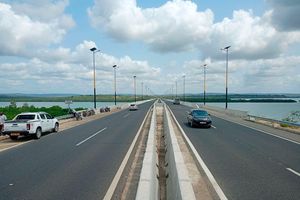
Motorists drive through the Mombasa Southern Bypass, popularly known as the Dongo Kundu Bypass.
Photo credit: File | Nation Media Group
Mr Chaka says his decision is based on the time it would take him to travel all the way toward Miritini from the CBD, about 11 kilometres, before accessing the interchange that connects the Mombasa-Nairobi highway to Dongo Kundu.
After using the ferry crossing to the mainland, getting to the Kibundani/Ng’ombeni interchange where the Likoni-Lunga Lunga road meets the Dongo Kundu interchange is about 12 kilometres.
“I’d rather use the ferry than the longer Dongo Kundu route. I don’t mind the charges at the ferry, what’s important is the distance and time,” says Mr Chaka.
The Kenya Ports Authority (KPA) charges different rates for motorists, ranging from Sh50 for a motorbike to Sh2,500 for a loaded truck. Pedestrians cross for free.
Mr Peter Henry, another driver operating in Likoni, also still prefers the ferry despite the almost daily congestion and crossing charges.
“For me, time is key and when I use the ferry I can keep time,” he says, adding that “I fear using the bypass, especially at night. Security is a concern.”
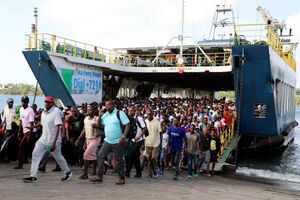
His security fears are echoed by several motorists who revealed that they avoid using the bypass after dark because it is often deserted. On the contrary, the ferry is usually bustling with the presence of security personnel and crowds.
For drivers like Abbas Mngaro who take passengers from the terminus in Mombasa, the route is guided by where their clients are headed. According to Mr Mngaro, the Dongo Kundu bypass is his preferred option most of the time, but sometimes he gets passengers who insist on using the ferry.
Motorists drive through a section of the Mombasa Southern Bypass, also known as the Dongo Kundu Bypass, which connects Mombasa Mainland West to Mombasa Mainland South without entering Mombasa Island on March 5, 2026.
Photo credit: Kevin Odit | Nation Media Group
“Many visitors, especially first-time travellers to Mombasa, sometimes request to use the ferry not out of necessity, but out of curiosity. Some tourists want the experience to explore the ferry with their own eyes, to cross the Likoni channel and take photos, which is part of their adventure,” he noted.
Originally designed to decongest the ferry crossing, the bypass has become a lifeline for motorists travelling from Kwale toward the SGR station, airport or upcountry. Motorists driving from that side of the Coast say it reduces travel time to under an hour.
The bypass is equally captivating, especially to first-time users, as they pass through the Mwache Bridge, Tsunza Viaduct and Mteza Bridge overlooking turquoise creeks, mangrove forests and wide tidal channels south of Mombasa.
Ms Bibi Hamisi, a frequent traveller from the South Coast, says she has missed the SGR several times after relying on the ferry.
“Whenever I’m travelling by SGR, I book a matatu that uses Dongo Kundu because it saves me from the stress of going too early just to beat ferry delays,” she said.
According to her, the bypass offers predictability, which is a rare luxury for commuters accustomed to the uncertainties of ferry crossings.
“With Dongo Kundu, I can leave home at 7:00pm and be at the SGR terminal by 8pm, but if I use the ferry, I have to leave almost three hours earlier because the ferry can disappoint you with long queues or unexpected breakdowns,” she added.
Motorists drive through a section of the Mombasa Southern Bypass, also known as the Dongo Kundu Bypass, which connects Mombasa Mainland West to Mombasa Mainland South without entering Mombasa Island on March 5, 2026.
Photo credit: Kevin Odit | Nation Media Group
The Likoni ferry crossing channel serves over 300,000 passengers daily and as Mombasa continues to expand, traffic volumes will also grow.
On a normal day, five ferries serve the channel. However, frequent breakdowns of the vessels mean that the channel can often be served by as few as two ferries.
Earlier this week, KPA, which oversees the ferry service, reiterated its appeal to motorists to use the Dongo Kundu Bypass instead of the Likoni Ferry in order to ease traffic congestion. Only three ferries were operational at the time.
According to the authority, many motorists have continued to ignore the bypass, constructed at a cost of about Sh40 billion to link Mombasa County and Kwale County, and instead crowd the Likoni ferry crossing.
KPA’s Head of Corporate Communications, Mr Sylvan Mghanga, noted that the authority has been consistently advising motorists to use the Dongo Kundu route to help relieve congestion at the ferry crossing.
He explained that when two ferries had been temporarily withdrawn from service for maintenance, leaving only three vessels operating at the crossing, there was heavy traffic buildup.
“Many Kenyans remain unaware of the Dongo Kundu route and therefore continue to rely on the Likoni ferry, which leads to recurring congestion. Motorists should take advantage of the bypass, which offers a more efficient road link between Mombasa and Kwale,” he added.
Although the bypass is in operation, it is yet to be officially commissioned. Sources told the Nation that plans are underway to have it commissioned later this year.